This is a walk where the lines between teacher and student blur.
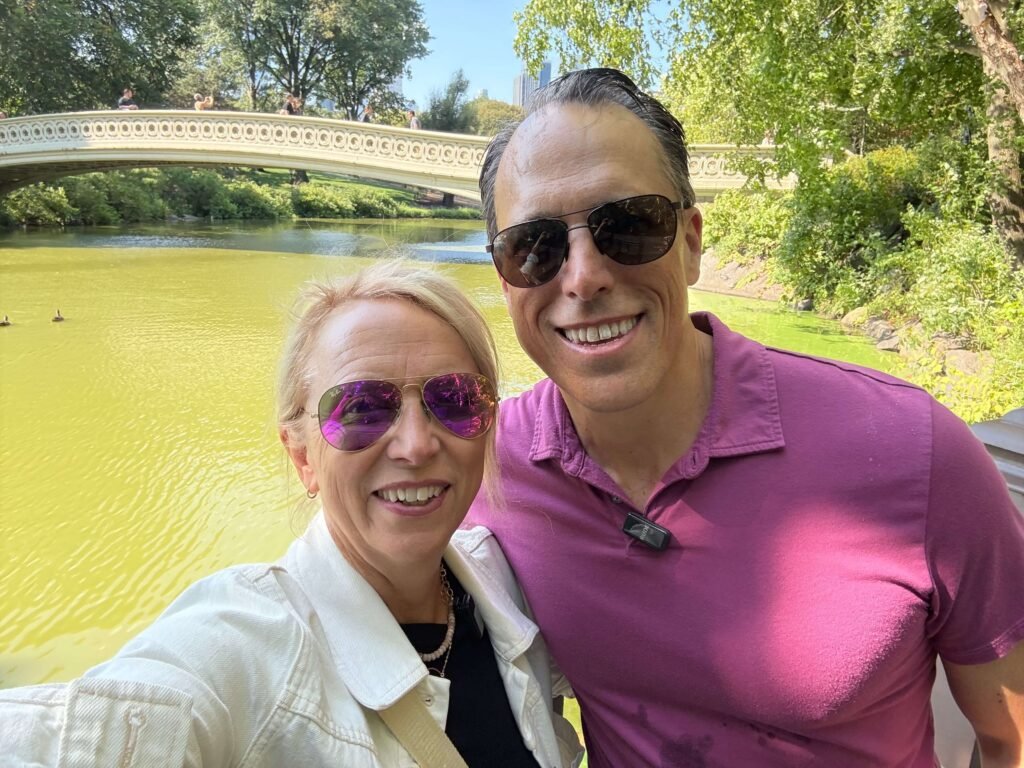
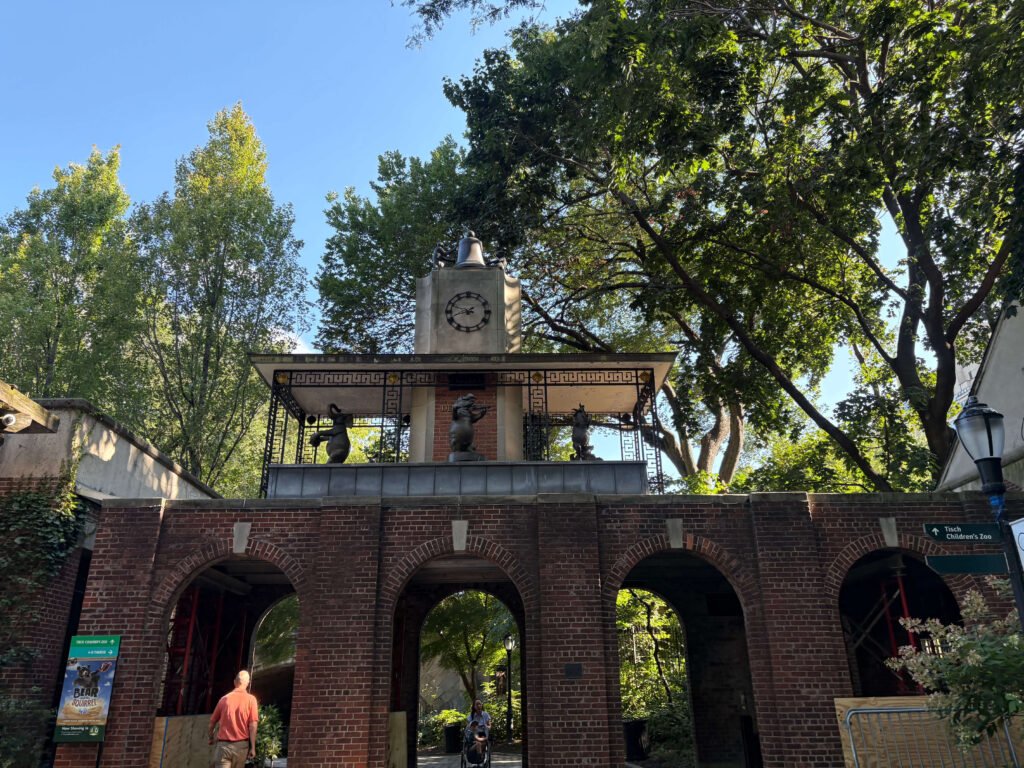
This is the walk that made me understand the Zen philosophy of “beginner’s mind.” In leadership, beginner’s mind is that rare gift of approaching each challenge with fresh eyes. Unencumbered by the weight of “how we’ve always done things,” we can have bold vision. It’s the strategic humility to learn something new. Such leaders understand that the moment we stop being students, we stop being effective teachers.
This is Kermit Cook, the CEO for Penn Foster Group, who finds himself reimagining education for the 80,000 students who walk through their digital doors each year—students the traditional system couldn’t quite reach.
The first word describing him on LinkedIn is teacher. Mine is learner. It’s ironic because I was Kermit’s teacher. Within two years of graduating college, Kermit decided to be a teacher himself and applied to Teach for America (TFA).
Kermit: It turns out if you put St. Louis as your top choice for TFA, you get St. Louis. I coached basketball. I taught physics, and I ended up coaching tennis, even though I’m not a tennis player. I’m a terrible tennis player. The athletic director comes up and says, ‘Hey, Coach Cook, will you coach tennis for me this spring?’ And I said, ‘Well Coach, if you can’t find anybody else, I’ll help you out, but I don’t really know what I’m doing with tennis.
Liz: You know that’s a yes in a school.
Kermit: Exactly. He responded, Great, you’re hired.
There is a line in an independent school contract…and other responsibilities as assigned by the head of school – the catch all. It means you’re driving the van through the parking lot on Grandparents’ Day even if you are the Director of Admissions or folding chairs after the assembly… or coaching tennis.
Kermit’s school wasn’t in the independent ecosystem, it was Gateway Tech magnet school.
Kermit: The school had a very good career education program. That actually directly leads to where I am today. But they had a health care pathway where you had retired nurses who were teaching students. They could roll right into an apprenticeship as a medical assistant.
They had this really cool partnership with the airport, Lambert Airfield, where we had old airplane engines in the basement of the school. And again, retired airline mechanics would teach these kids. And the kids when they finished that program went straight into an apprenticeship at the airport and ultimately became a licensed airline mechanic. It opened a door.
One of my tennis players,
yes…I am laughing at his ownership of coaching tennis all these years later when he was admittedly a reluctant coach at best.
Kermit: One of my tennis players, Keith, is a senior engineer of GE Aviation today. He was a C minus physics student. He had a learning disability. He really struggled with math, with physics. He got through with a C minus because he just worked hard and got in all the assignments on time and came in at 7:00 in the morning before school started. But the airplane engines he just got and he loved it. That experience was just so eye-opening to me about the importance of a path that it wasn’t a traditional two or four-year degree… ultimately, that’s why I’m at Penn Foster.
That is one of those other “duties” that we willingly perform in education – show up at 7:00 to walk a struggling student through the maze of learning because none of us want to be in the business of surviving school. In my first six years of teaching, a day didn’t go by that Denny Hon’s wasn’t the first car in the parking lot. He identified struggling students throughout the school, and he tutored them. One of those students became one the best teachers I know, Joe Jividen. He credits Denny with getting him through math although Joe was never in one of Denny’s classes. Joe has told me that Denny had one non-negotiable – show up. The day you missed was the last day he would work with you. Now “Coach Joe” – so named in that same vein of other responsibilities as assigned by the head – sorry Joe – is carrying on that tradition – he shows up; he cares.
Not everyone has Denny Hon pulling them in before school. There are so many roadblocks to making that a reality. Our traditional systems, for all their good intentions, are riddled with spaces between the floorboards—places where a kid can disappear without anyone noticing the absence. We’ve built these elaborate structures with their rigid schedules and predetermined pathways, but have we installed enough safety nets for the ones who stumble?
Kermit: I would argue in the world of education, I’ve seen a lot of stifled innovation in what the actual education model is … because there’s so much constraint around the infrastructure and the way the funding works and the legacy of something. But taking the traditional system and saying, ‘Okay, we need to be able to get somebody all the way through a high school degree for a total of $1,500,’ you’re insane.
How insane? You should know the public school average to educate a child is $13,500 per student per year. If you are doing the math in your head, that’s $54,000 over the course of a high school career. Penn Foster’s price tag is only 3% of that.
Liz: Well, the other thing I’ve learned is you have to put limits on for true innovation. It’s within the constraints that you can get creative.
The constraints: from my limited research we have 2.1 million students ages 16 – 24 that did not complete high school or earned a high school credential. They did not find their way in public schools. Their socio-economic status left private school out of reach. As a high school drop out their economic forecast is bleak… thus our economy’s forecast becomes bleaker. Who drives innovation that meets students with what they need in a radically different model? Who can navigate that dilemma? Who possesses the beginner mind to see a bold vision? A man whose
Kermit: …collisions of experiences are taking you where you need to go.
Kermit Cook, the son of two educators, a teacher himself, and a professional with 13 years in private equity asks those questions. Clearly, private equity is a different path than most school leaders take. When he was faced with the decision to follow his passion at TFA or follow a radically different path, he found inspiration from his mother.
Kermit: Right at that time, mom and dad moved, and mom decided to retire from teaching and go to seminary full-time. I distinctly remember the conversation when she said, ‘Let’s cut through it this way. I have, God willing, another 20 years, and that’s plenty of time for a whole new career.’ She was almost 60 at the time.
As his mother had the courage to follow a new path after a full career in independent education at The Linsly School, Kermit made a career choice that would stretch his thinking, but ultimately led him back to his passion for teaching and learning.
As my friends in education said, I decided I could do better for the world in private equity for 13 years.
Liz: I fully believe that the path you take leads you to where you’re supposed to be because you can’t be doing what you’re doing if you don’t understand private equity.
Kermit: That was the conversation I needed at that moment to just have this perspective that careers are long. The choice I make tomorrow doesn’t define who I am for the rest of my life. And exactly what you said, going to KKR, the doors that would open from there compared to TFA were just massive.
… and with KKR in Hong Kong, Australia and the United States and
Kermit: at a factory in Malaysia, getting food poisoning every now and then. And so that is one of the beauties of that experience … I would work side by side with companies like that for a year and a half to two years. And then we get to a spot where I work myself out of a job. We hire the right permanent person, and then I get to see another leader’s style because I go work with the next company. So I worked hand in hand with 13 CEOs and leadership teams who I worked with over that time really intensely.
Liz: All right. So you know this is coming. Distill it. Thirteen CEOs, what were the top qualities that took you aback? I mean, wow, this works.
Kermit: I reflected on this a lot before I stepped into my current role. The qualities that I thought really worked actually came back to TFA’s Teaching as Leadership course. So it was
- Set a big hairy audacious goal.
- In the TFA context is to know your students and know your students’ families. In the corporate context, I think of that as knowing your people and investing in the culture. Have a culture that’s aligned to what the big goal is.
- Work purposefully and relentlessly towards the goal…
- and then learn. You’re going to screw stuff up along the way. It’s not going to be perfect. Pull up on a regular basis and create that as a real mechanism for the organization that people are comfortable with screwing up as long as you learn from it and share it broadly.
Liz: The big, hairy, audacious goal needs a really clear story around it. I would assume in your comment on culture, you’re putting clear communication and trust in culture.
Kermit: Yes.
Liz: Because that’s what makes the culture.
Kermit: You absolutely need clear communication and trust.
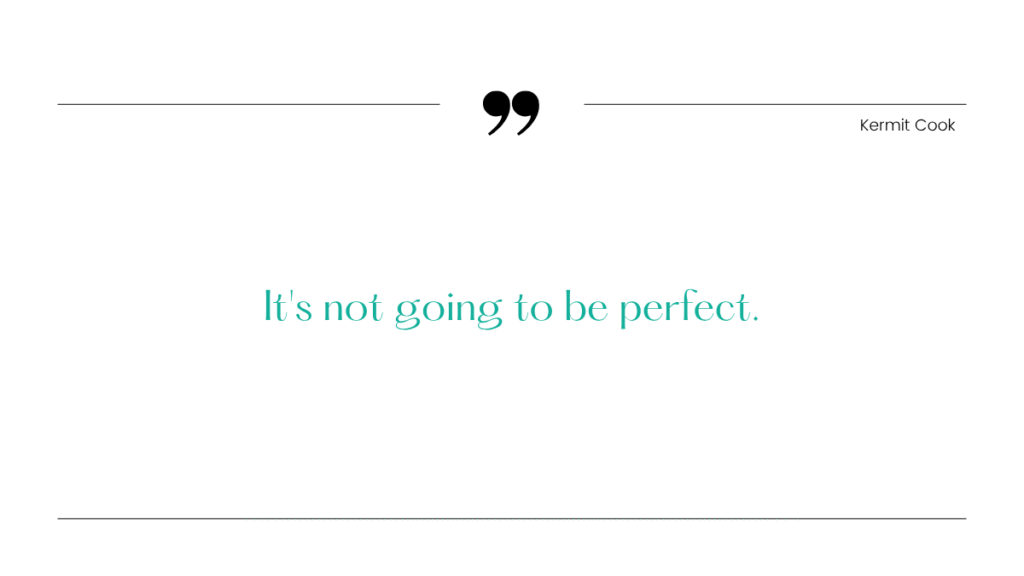
A BHAG asks, ‘Wait, what if we actually could?’ It’s an audacious dream that refuses to be reasonable. When John F. Kennedy declared we’d put a man on the moon, he wasn’t just setting a target—he was issuing an invitation to reimagine what was possible. The beauty of a BHAG isn’t in its achievability but in its power to pull people beyond incremental thinking into transformational action. But to understand the vision of the BHAG, you have to know the context and respect the history of the organization.
Kermit: So Penn Foster was founded in 1890 as a correspondence course for coal miners to help them get more safe jobs. Primarily serving immigrants in the Scranton, Pennsylvania, area. And I tell you, when I go to Scranton, it feels a lot like Wheeling. The mission …even today, while we’re now online and reaching many more people… is still fundamentally the same. It’s helping people who are in positions where the traditional system isn’t really built for them get to better jobs. And so we will enroll roughly 260,000 students this year. We’re an accredited high school and career-focused college.
Liz: What’s the big hairy audacious goal?
Kermit: The big hairy audacious goal, we graduated 70,000 students in 2023. We’re going to graduate 150,000 by 2029. And we’re not going to do it by enrolling more students. We’re going to do it by improving the outcomes for the students who are already enrolled. Our goal really comes down to doubling our completion rates within five years. It would get us to a roughly 60% completion rate, which is on par with two and four year schools across the country as a fully asynchronous program, serving learners with some of the circumstances that are most challenging to continue to progress in their learning. That’s the BHAG.
All of these students who’ve never realized, ‘Hey, failure is how you learn.’ They’ve internalized failure means I can’t do it. That’s probably the biggest challenge we have in getting people through.
Liz: Give me a tangible example of what support you now give to students or you plan to give to students.
Kermit: A tangible example that is both the support, but also just actually giving a great learning experience. Our vet tech program … in the first semester, you have to pass biology… our 90-day completion rate for that biology course was 8%. Imagine most of our learners are working parents, working one or two jobs, minimum wage, squeezing it in, studying at night. You get to the sixth course for a four semester program, and three months later, you’re still stuck in it. How long are you going to stay? You’re going to quit.
We basically had taken a college-level biology textbook, put it online, attached some assignments and essays and writing assignments that had nothing to do specifically with vet tech because the organization was using biology across a few different programs. They just used that same course and said, ‘Good luck. Here you go. Here’s your biology text.’
Kermit: So no wonder. We redesigned that course to be vet tech-specific. You’re not spending time writing essays about the Krebs cycle…with that new biology course… we launched it. Big surprise. You go from a completion rate of 8% to 62% within the first few months. And then our team keeps working on it and refining it, and seeing where people get stuck.
From a culture perspective, one of the principles we spend a lot of time talking about is discovery – don’t think you know what the right answer is. Go put it in front of learners, see how they engage and learn! Learn from that and then continue to refine. So our learning design team now has a principle. Instead of, oh, we’re going to update a course, we’ll put it out there. And then in five years, when re-accreditation comes up, we’ll revisit it and see how it’s working. We put a course out, and with the data that we have, we can watch how students are engaging… Where are they getting stuck in the process? Where do we need to add proactive support rather than waiting for them to call us?
Liz: And that’s part of the beauty of this asynchronous learning, because you literally know compared to… I had no idea what you were going through when I put a blue book in front of you.
Did I mention Kermit was in my Junior English class? I loved watching a student come alive with ideas during an in-class essay. Blue books carried the weight of everything my students poured onto those pages in some allotted time. Each one was a window into a mind at work—unfiltered, unrehearsed, smudged, at times illegible and always authentically human. I knew which students had truly grappled with the material and which ones were bullshitting their way through unprepared territory. AI will give us insights into the data – the content that stumped the argument – the patterns of sentence structures… but will it match the confidence, hope, support and resilience swirling in the air as it did when Kermit sat in my classroom? Will an AI tutor session feel like it did at 7:00 a.m. in Denny’s classroom?
Kermit: We’re now using AI agents that can reach out and say, ‘Hey, Liz, I see you submitted your English essay, and it didn’t pass. Would you like to set up-time with one of our writing coaches?’
Liz: Is the writing coach a human?
Kermit: Yes.
Liz: Okay. But it could be…
Kermit: Well, we actually now have just partnered with a company called Learnosity to build an AI writing tutor to do scaffolding. What’s most amazing is how we see learners engage with it. I saw one learner, well I saw the transcript, one learner literally put in, ‘Are you really an AI?’ And he said, ‘Yes, I’m an AI, Powered by Penn Foster.’ He’s like, ‘Okay, because I’m really nervous about writing. And I always failed in school. I’m not sure how I’m going to do with this.’ And then it’s like, ‘Okay, well, let’s just get started. What’s on your mind?’ And so that they have a chance in a very low stakes way to throw things out there and not feel judged.
Did you catch it? Kermit referred to the AI as he and then it. A brave new world indeed.
Liz: Interesting, that piece of, are you AI? Because I don’t want to be judged by a human.
Kermit: A hundred percent. That’s very true.
And this goes back to your point of talking with some of the learners. I call half a dozen learners every month who graduated to say congrats and talk about their experience. We just had an in-person graduation in Atlanta. Every chance I get, I try to talk with learners. One of the things I took away is, “Man, I got to that writing assignment, and I haven’t written anything that didn’t have an emoji in it in five years.”
Most of the students we are serving hit a wall in the traditional classroom, so they have learned that they can’t do it.
Liz: There wasn’t a Denny to grab them and put them in front of him at 07: 00 AM. It was just an F.
AI will never replace Denny Hon, but isn’t this a powerful use of it? I’m impressed not only by Kermit’s work for students, but his honesty about what’s missing.
Liz: My only question is, are you paying attention to the fact that I would guess you have a large percentage of students with an undiagnosed or diagnosed learning difference?
Kermit: No, we do a terrible job of it today. Absolutely terrible. And we do want to work on it. It’s very front of mind, but it’s like we’re getting a foundation right. That’s next.
Penn Foster is a for-profit education company. That means it needs to make a profit while serving the mission of educating under-served students.
Kermit: Because Penn Foster’s financial model is a pay-as-you-go model. 90% of our students enroll for $20 and pay effectively $50 a course as they progress. And if they drop out, they stop paying.
Dropping out hurts mission and profit. Kermit, the teacher and coach at heart, isn’t going to quit on one of his students any more than Denny Hon did…even if there are 80,000 of them. To prepare for that,
Kermit: I went online. I read every student review I could. I enrolled in high school in medical billing and coding and in elementary education. And I said to myself, ‘Holy cow, there is so much we can do better. There is so much we can do to improve the experience for these learners.’ But at the same time, I saw videos of students who are holding up their credential saying, I’ve got this job as a pharmacy tech because I went through this program, I never thought I would be here.’ And so I knew there was this goodness underneath. And it’s just if we could get the culture of the organization focused on outcomes, where we could go.
He became a student of his school. To all my friends and colleagues who are in school leadership, I ask, have you done that? I hadn’t…yet.
Kermit: When I kicked off my presentation to the board of Penn Foster as part of the recruiting process, I started with, first thing you need to know: I’m a teacher and a coach at heart. And so this is not going to be a presentation. This is going to be a class discussion.
And everyday is yet another class discussion – a discovery of what the students need. Every day is a reimaging of the traditional educational system where students learn that failure is just part of the process of learning. Where students don’t survive school, but find pathways to their passions… like aviation engineering. And that leaves us…
Kermit: …where we started with Keith becoming an airplane mechanic.
Keith and Kermit are still connected today and I would dare to say Keith has taught Kermit a thing or two about learning, about constraints, about creative engineering, about an innovative model for education. The teacher became the student… and 80,000…soon to be 150,000… other students are benefitting every single year.
My best teachers —whether in classrooms, boardrooms, across my dinner table or just walking next to me —share one unmistakable quality. They approach each day as if they’re still figuring it out. It is a courageous “beginner’s mind”—a state of wonder to ask questions – to learn and to help others learn.
Indeed there is more to learn. Maybe 50 walks wasn’t quite enough.
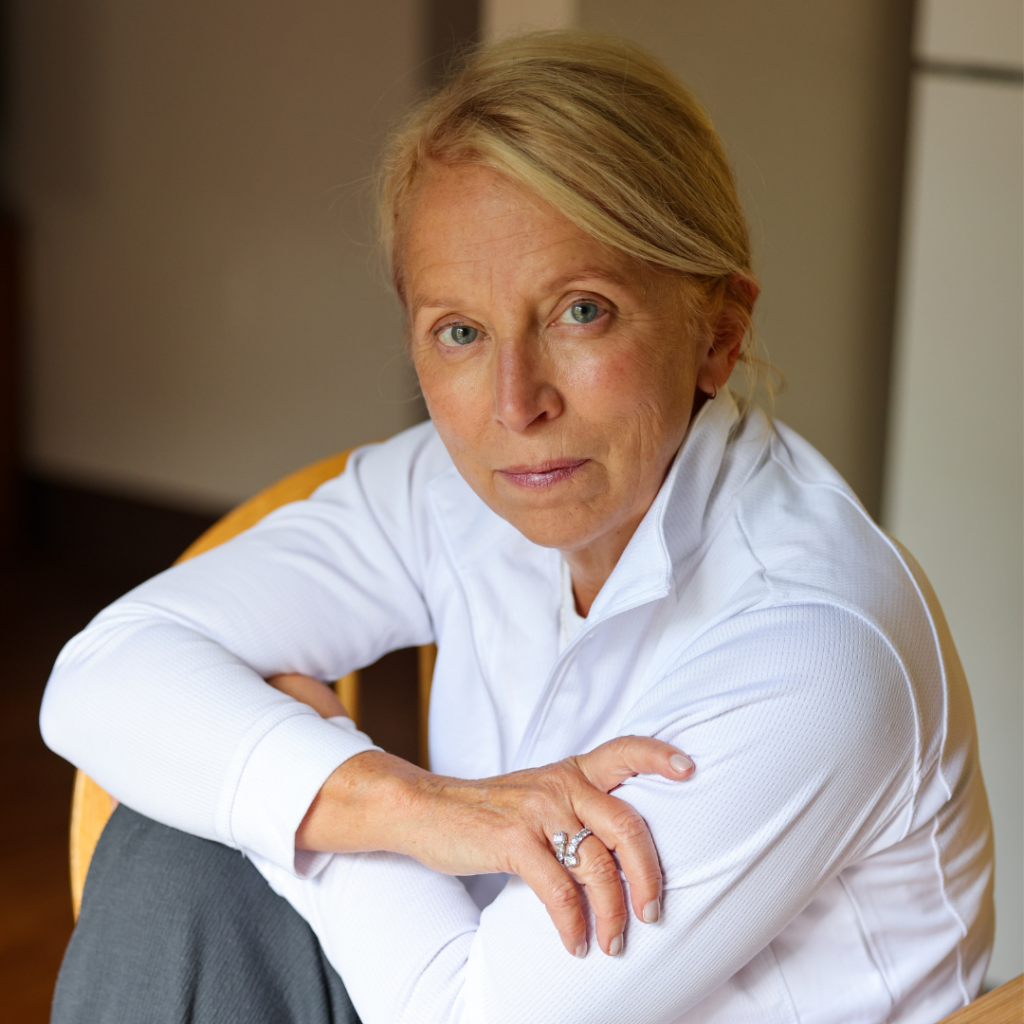
Liz Hofreuter
Founder GEN-Ed
Not your typical researcher or consultant, Liz connects lived experience to transformative leadership. To uncomplicate leadership and education, every story matters and she is just getting started.