Such is the literary description of death as masterfully crafted by August Wilson in the play, Fences. Death is to be wrestled with. It is a fight. Indeed, we often read that one lost a courageous battle to death.
At the end of Act Two, Troy assumes a batting stance, and starts to taunt Death, “Come on! It’s between you and me now! Come on! Anytime you want . . . but I ain’t gonna be easy.” The actor stands alone on stage, the lights go down, and the scene ends. I have never sat in the audience witnessing the theatrics of this play out on the stage. I have only taught this play to my English students decades ago. I can only imagine the emotion that Denzel Washington could stir in his audience. The heartbreak for this man whom you have grown to love from the third row, fourth seat from the right. When the lights once again come up, Troy is dead. Opportunities are missed.
August Wilson’s genius lies in showing us that our mortality gives weight to our choices. Every conversation matters because the number of them is finite. Every relationship shapes the future because our time to influence it is limited.
I have often said I didn’t know it was my last conversation with my mom or my dad. My last chance to say I love you or to hear them say it. What I did know was that the last chance was approaching. Life and literature had taught me to brace myself against death. Life was to be extended as if hours clocked was the metric that mattered most. I watched my father lean into his prescribed medical thinking to extend his wife’s life. I witnessed his frustration then anger as he could not save her… or should I say fix her… or maybe keep her with him. As his hours unexpectedly waned, I did not have the medical background to know how to extend his time or to improve the quality of his life remaining. I turned to a friend from graduate school, William Peters, Bill, as I knew him, who had developed a template for a peaceful crossing from life into death for us both.
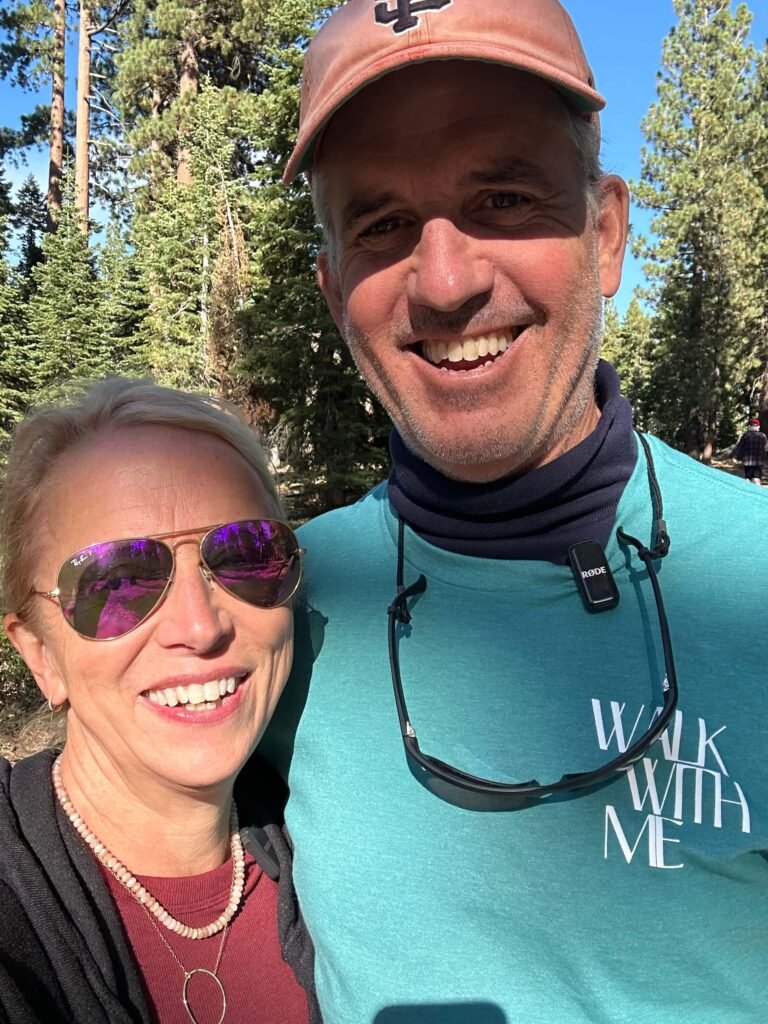
Liz: I started to say to you the other day … I think I lose my mind as my dad was dying if I didn’t have you on speed dial. I had very little understanding of how to come to the end of his life and be the main person there. I wasn’t at all prepared. I didn’t feel like I had treated him well as my stepmother was dying. I mean, I would have been a mess. And you, that’s why I called … I had to get the words right. You helped me so much just taking all the nonsense away and literally telling me what to do.
William: I remember. The truth of the matter is I have been so involved with studying and being present to many hundreds and hundreds of deaths. And probably the most important thing that was shocking to me about this was how little people actually know about what happens at the end of life… you have super smart people like you who have an aging parent…
…and all we know is the unwelcome nature of death. The language we use betrays us: we “fight” cancer, we “battle” illness, we “lose” to disease.
William: You have a medical model who sees death as a failure, and they want no part of that. They are committed at all costs to keeping people alive, even when they know that the quality of life is awful.
Liz: You also… You just called death a failure, but recently in a conversation, you said we have this cultural norm that you fight death.
William: Exactly.
Liz: And that’s wrong, too.
William: That’s wrong, too. I mean, dare say I, because I haven’t, fortunately, at this point, faced my own death. But everything I know about myself is that it is going to be something like this… Well, I have this diagnosis, and I have these choices. And what is the best thing to do here might be that doing a medical intervention is the right thing to do. But as I say that, what really goes through my mind is really very little about me. It’s really about who are the people in my life who need me? Because for me, death is no big deal. I mean, it’s just to transition into another state of being. But for my daughter, for my mother, for my partner, for some good friends, I have to take that into consideration and want to take that into consideration. But I don’t have a personal… How would you say this? Imperative to stay alive. Or even to see my grandchildren. I don’t have that. That, to me, is not… That may not be my destiny. But I do have what I would call a relational imperative to check in with and dialog with my loved ones, honestly, about my situation and make a familial communal decision about what is best for all involved here.
William Peters’ work with the Shared Crossing Project encourages a conscious, connected, and loving experience shared between the dying and their loved ones. Where August Wilson gave us a frantic last stand, alone and without family, Peters’ research reveals something closer to a gentle crossing over, often filled with unexpected calm, bliss, and joy. The three essential expressions he advocates—”Thank you, I love you, Goodbye” as I shared in an earlier walk, allow us to open our hearts for one final act different from the fate that awaited Troy.
Liz: So how did you create the Thank you. I love you. Goodbye. How did you create that? Because if someone else doesn’t have the gift of knowing you or of being part of the work that you’ve done, it’s still so simple that anybody could do it.
William: So for me, when I first got into this, the work with the shared death experience, my aspiration was, well, I know that if people knew this experience was possible, they’d want to say, how can I have it with my loved ones? So I started developing methods to enable the shared death experience, because in my mind, it was the best death possible. You have a shared death experience. You realize that your now departed loved one is alive and well. They’re happy. They’re experiencing joy. Joy and love. They’re reunited with previously deceased relatives. You have a sense you’ll see them again. So this feels like more of a vacation, if you will. A time apart is temporary, not permanent. You have no question about whether they’re alive or nonexistent. You know they’re alive, and your grief is much better. So your grief is just contextualized in the understanding that death is a natural part of life, but you’ll see your loved ones again. So my goal was to give this to people. The truth of the matter is I didn’t even have to think about it. All of a sudden, it just became three things right away. First was to affirm these experiences. You first have to convince people that the shared death experience and other spiritual end-of-life experiences are normal. They happen with great frequency, and you can anticipate that you’ll have those if you are open-minded, if you’re more accepting of death as a natural human process. The second thing that came into my mind is we have to deal with our unfinished business. So you have to really deal with any sense of relational dissonance, acrimony. Those are emotional blocks that will prohibit the SDE. And I learned that, you’ve got to help people die.
Liz: I think those emotional blocks are where this element of fighting death comes from, because even the person that’s dying, they have unfinished business.
William: Correct. In a certain way, some people could say, well, I have more to do here. And that could be unfinished business. But that’s also a misunderstanding that at some point we have to die. And your list is less important than your natural life expectancy. Once you realize that you’re not in control of that, then there’s a real freedom. But for some people, it’s a real frustration, something they resist. Like, I don’t want to die now. But that’s also a cultural piece of the Western mind, which is diluted into this notion of rugged individualism and self-determinism.
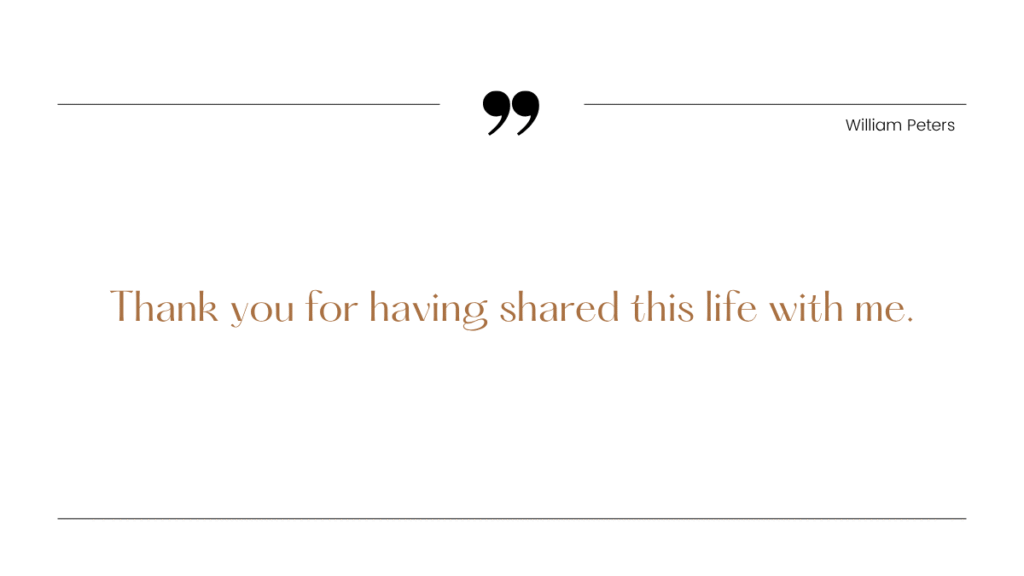
… to answer your question, specifically, the thank you, I love you, goodbye, is the last step in dealing with unfinished business before you start doing the choreographed guided visualization. That’s the step of saying, Hey, I know you’re going to die, or, Hey, you know I’m going to die. I want you to listen very closely to me. I want to thank you for having shared this life with me. I want to tell you that I love you, and I’ve cherished most moments with you and any tension, disagreements, misgivings, regrets that I have for us, for you, for me. I now forgive myself and you of any of that. I absolve us from our relationship, of any of that. And that we are now free to accept one another 100 %. And with that, I want to let you know that I have no illusions that I am not going to be dying soon or that you’re not going to be dying soon.
So I want to say thank you and goodbye. And now that goodbye, I don’t want to miss the opportunity to say goodbye. I hope that we have more time together. But I want you to know as I look at you, our end is near. And so there’s a really beautiful way of just stepping into that. And so doing that, that opens us up to the next and final step is, how do you prepare for the greatest transition in a human life outside of or equal to birth coming in. So that’s how I came to all that.
This gentler notion of death has its roots in William’s own life.
William: My grandmother was dying and when I was with her, I realized she was having these conversations with people, and they felt real to me. And I’m like, ‘What the hell is this?’ And I started getting interested in what is happening at the end of a human life. I had already had two near-death experiences, one when I broke my back on a ski slope, and a second one when I had a rare blood disease, idiopathic thrombocytopenia, where I was drowning in my own blood, and so I had an out-of-body experience.
While I was watching my grandmother, I was like, ‘She’s both here and somewhere else.’ And that was very interesting to me. And she was having conversations with what I would call a being from another dimension. I couldn’t see this person. Maybe this person was in this dimension. I couldn’t break through to even get to my grandmother. I walked in, she didn’t even know I was there. So with that, I got interested in the end of life.
I decided to join Zen Hospice in San Francisco. And when I did that, here I am sitting at the bedside of many, many people dying, 24-bed, open ward hospice, public hospice, county run. So indigent people with nowhere to go. And we get the opportunity to sit with these people at the end of life because no one else is there for them. Think homeless people, what have you. So I start having these experiences where I’m sitting with somebody, and all of a sudden, I’m out of my body, looking down at them and my body, and the whole shape and dimension of the room is completely different. I’m in a different dimension. And I’m like, this is really interesting. Well, It’s interesting in and of itself, but it’s also like, hey, wait a minute. I’ve been here before in my two previous NDEs, and this is really interesting. And why isn’t anybody talking about this? So this began a very deep exploration of what really is death and dying, what does happen to us. But it took a while because I was reticent to go off in this direction because it’s pretty extreme.
Talking with Bill had me thinking about death from a new perspective. One my father didn’t have. As a doctor, death must have felt like the ultimate professional contradiction. He spent years learning to read vital signs as data points—when blood pressure drops, you give pressors; when the heart stops, you start compressions. My step-mother’s death must have been not just a medical failure but a personal one, the moment when all his knowledge and skill proved insufficient. What pain that must have been for him. I am rethinking our final weeks together.
My mother, on the other hand, spent the last decades of her medical career bearing witness to many deaths. Perhaps she understood better than anyone the strange mercy in knowing when to step back from the machines and medications, when to shift from curing to comforting.
Liz: I think my mom had done her own training throughout her medical career once she left my dad and was working at that state hospital where no one got discharged. Every single patient died because it was major head trauma or end of life or dementia. And what she was so good at was helping the families accept it. And I think it’s a shame that she never got to talk to you about her work as a physician doing that, because I think she would have had a great deal of wisdom.
William: Yeah. Well, your mom sounds like she was one of those angels in the system who had found her place where she was more than her role.
Liz: …she was throughout her career. My dad would be furious with her because she would spend so long talking to the patient and asking the patient questions. She wouldn’t see as many patients in a given day as he had created the business model for them to see.
William: Well, and there you see it. When medicine is a business model, I think you’re at odds with humanity. And then, of course, then again, maybe it’s not on medical doctors to do the rest of that. Maybe the best use of them is to use their training and just do the diagnosis and treatment models and offer them that, but then get out of the way and let someone else engage them in their choices. If that’s the case, I’m perfectly fine with it.
Liz: As you’re talking, I’m thinking about metrics and how this cancer center tells you working with us gives you five extra years of life. Well, if that’s your metric, that’s great. But is your metric how much quality of life you had in those five years and how peaceful the end was?
William: I always say two years of fun and enjoyment to each other with a swifter, nonmedicalized death is better than five years, of which five of that is on medication, and throwing up, and sweating, and losing hair, and aches and pains… a lot of the dying will say, I don’t want to do this to my partner.
Liz: My mom said all the time, I don’t want to be a burden.
William: Exactly. And that’s not an unhealthy response. Sometimes it can be a little bit based on shame of not feeling they’re worthy of care. But a lot of times it’s just like, yeah, I’ve lived a full life. And I don’t want it to be a burden to my family who’s got bigger fish to fry than taking care of somebody who’s lived their life. Go hang out with the grandchildren and know that I love you and support you. And we’ll be cheering for you from the other side. Let’s do a hug and a kiss. And I love you and thank you. And you go live your life fully and don’t stay a day longer than you have to.
Liz: My mom was ready to die. She would say, the Lord will take me when He’s ready. I knew that, and she said that a lot. And I know in the quiet of her place, she had to pray. Aren’t you ready yet? And yet it was very difficult to administer morphine at the end of her life.
William: Well, this is a very sensitive area in end-of-life care.
Liz: I feel like I killed her.
William: So there it is, right there. Terminal sedation is one of those things that happens quite regularly… I always say, treat the pain. And if you end up sedating them so much that it hastens death, then you need to understand that that’s compassionate care. If death comes, death comes. A lot of people come into my office feeling guilty, ashamed, like they did it wrong. And my job in those situations is, “Yeah, I see how you struggled with this. And you did the right thing. You did the right thing.”
Liz: We just all want somebody to tell us we did okay.
William: Exactly.
Liz: There was a point, and I think even you were surprised how quickly I was calling you because my mom was dying soon after my dad died. And you said, What’s going on? And I told you what was going on. And in the tone of voice that only you can have, you said, ‘Oh, yes, she’s dying.’ And I told you she had just said to me, ‘Elizabeth, everyone will know your name.’ And I had said back to her, ‘That’s because you’re my mama.’ And you said, ‘No, she is trying to give you a gift. You have to accept it.’ And I was so glad you said that to me.
When my dad died early, early, early on a Sunday morning, and I left Saturday morning when the caregivers got there. I’d spent the night, and I went to his bedside, and he said, Am I dead? And I said, Dad, I know I have the face of an angel, but no, This is not heaven. You are not dead. And he chuckled, and I chuckled. And I went into the kitchen to do the thing you do. Here’s the last time he had his meds. Here’s where we are, all those things. And because he and I had just had this exchange, I expected to come back later that day to still have my father. As I was getting ready to go, with as much strength as I’d seen him have in months, he screamed, Elizabeth, I love you. And I didn’t go back to him. I screamed it right back. I love you, too, dad.
When I got back, he no longer was communicative.
William: Unresponsive.
Liz: Completely unresponsive. And that night, I was changing his diaper. I was using the glycerin lollipops to moisten his mouth. And he willed his death quickly in my mind because there was no way that was the relationship he wanted with me. You had told me about soft lighting and good music. And I sat down on that bed next to him, and turned the lights down. And I played the music that I played when my son died. And I wouldn’t have done that if you hadn’t told me to.
Bill walked me through my parents’ deaths. I cannot think of a more profound gift.
William: People say, oh, my God, you’ve made such a contribution. I mean, we go to these conferences and there’s hundreds of people after we give a talk. It’s even sometimes hard for me to take it in because I do what I do because this is what I’m called to do. But when someone comes to you and says, you, your book changed my life. Your talk made all the difference in the death with my mom. And we hear this all the time. I’m grateful that my life has had that effect on people. And at the same time, I say, it’s not really my business. I did what I came here to do. And I think I just followed the breadcrumbs and made the best … I mean, look it. I made the best of it. But I think it’s really important to note that I would be not authentic if I said this was the life I wanted, I planned, I worked hard, I manifested. None of that is true. This was the life that was the process of taking the best available option, knowing what my knowledge base was, knowing what my gifts were, knowing what I was capable of doing. And yeah, I definitely work hard. I was going to work hard no matter what. That’s just who I am. I work hard. But like I said. I don’t know. I just did what I could do.
That’s all any of us can do.
Standing alone on that stage production of Fences, taunting death with his baseball metaphors, the character of Troy embodied everything our culture teaches us about how to face the end. Fight hard. Go down swinging. What if, rather than seeing death as the pitcher trying to strike him out, he had recognized his family as the teammates ready to walk him home? Troy’s defiance, though dramatically compelling, left him alone under those stage lights—isolated in his struggle, cut off from the very connections that might have made his crossing something shared rather than solitary. And for those who’ve never sat vigil in those quiet hours, trust me, it’s there, in the dim light of 3 AM when the rest of the world sleeps, that you discover death isn’t a violent intruder we’ve been taught to expect. Instead, you find yourself not in the audience but in a supporting role for one final act of profound connection.
Thank you.
I love you.
Good bye.
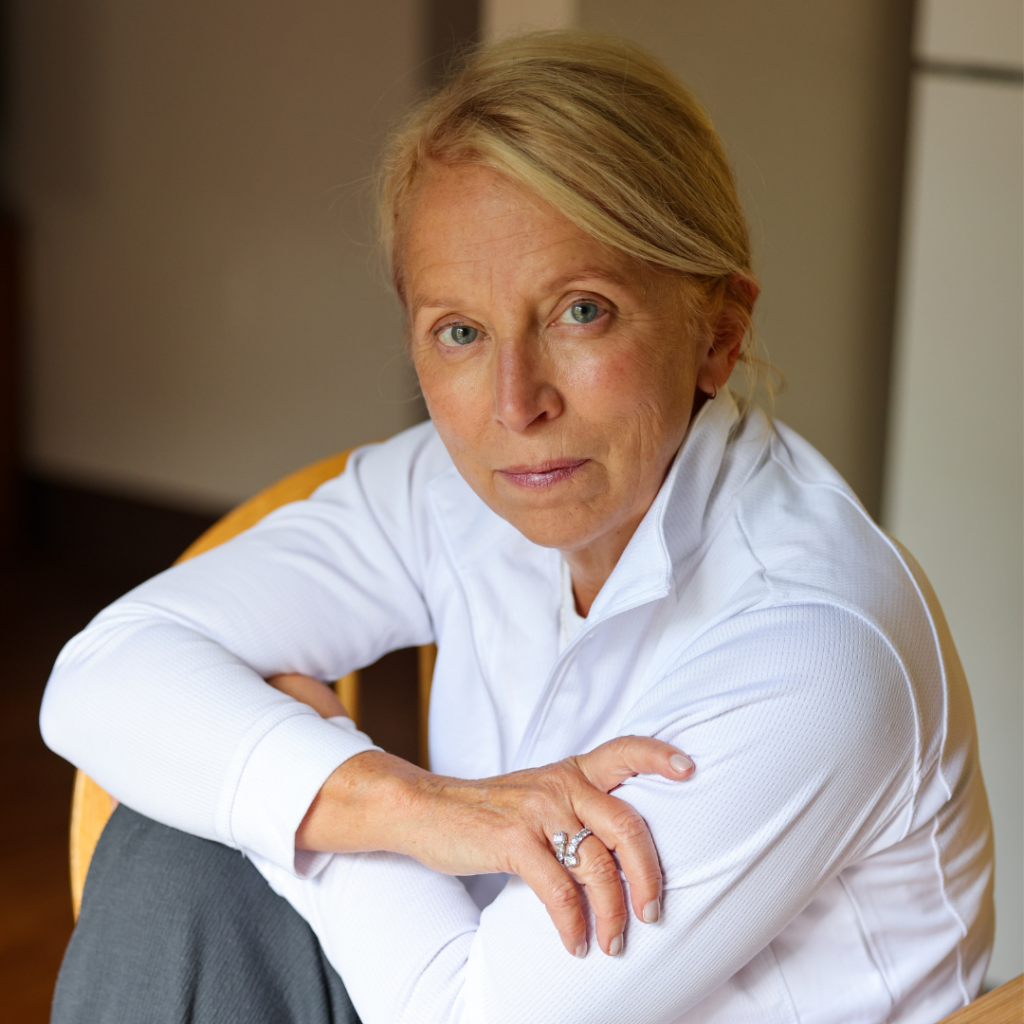
Liz Hofreuter
Founder GEN-Ed
Not your typical researcher or consultant, Liz connects lived experience to transformative leadership. To uncomplicate leadership and education, every story matters and she is just getting started.