In Our Nation’s Service… for our babies

On August 9, 1963, in a small room at Boston Children’s Hospital, a father stood helpless as his newborn son struggled for breath. Patrick Bouvier Kennedy, born five weeks early, would live only 39 hours. Those moments between first cry and last breath break your heart. The President’s grief was private, but the questions his son’s death raised were not. Why couldn’t medicine save a baby born to unlimited resources and the finest doctors? In the wake of that heartbreak, researchers who had been quietly working on the mysteries of premature lungs suddenly found themselves with funding, urgency, and a nation’s attention. Although Patrick’s life was cut short, the death of the Kennedy baby sparked a revolution in neonatal care. The science of keeping premature babies alive was about to change forever, born not from textbooks or lab experiments, but from the raw, universal heartbreak of parents who refuse to accept that some babies are simply too small to save.

On February 17, 2004, Grace Hofreuter Landini, born eight weeks early, survived. Until I walked with Dr. David Myerberg, I didn’t know about the Kennedy baby. I didn’t know the impetus for neonatology. I just knew I wanted to walk with this man who knew the name of every baby and parent he saved for over a decade. It is on his shoulders that Grace’s doctor stood to save my little girl.

Dr. Myerberg: The Kennedy baby was the point. Do you know about the Kennedy baby? 

Liz: I don’t. 

Dr. Myerberg: Okay. So John F. Kennedy and Jackie had a baby who was 35, 36 weeks gestation. So your baby was much smaller than that. And this, of course, was in the early ’60s, I believe. He was in the White House. They had this baby, and the baby died. Died of hyaline membrane disease. And I’m sure that the politics of it just exploded at that point. God, it was the President’s baby, and the baby should have survived. And we got to start doing some research on this. It just took off. Politics matter. I don’t think any of the people whose babies were saved over the next 50, 60, 70 years, realize how that happened.

But it happened. And I believe that there were some pretty good units already, and good research in Europe and in Australia, so US was able to take from the rest of the world. But man, it happened. And it happened primarily because of that. Now, I’m sure, go back and read the history of this, that there were people who were talking about this for a long time before the Kennedy baby.

Liz: But it didn’t get the momentum. The story wasn’t told. 

Here’s what’s remarkable: it wasn’t just the tragedy itself that sparked a revolution in neonatal medicine—it was the power of a story that the whole world could understand. Respiratory distress syndrome, as it is now known, wasn’t an obscure medical condition affecting nameless premature babies; it was the thing that took Patrick Kennedy from his parents’ arms. Scientists who had been working in relative obscurity found themselves with government backing and public attention. The story gave the research a face, a name, a family that millions knew and grieved with. There’s something profound about how narrative can accomplish what statistics never could. Stories transform us and demand our attention and action.

Every story matters… especially the stories I heard from Dr. David Myerberg as we walked through the trails at Cooper’s Rock outside of Morgantown, West Virginia. He made this his home after medical school because…

Dr. Myerberg: They were just starting a neonatal unit, and it was like, okay, build something. You’ve had all this incredible training. Build something. And so that’s why I came here.

Liz: When you say they were just starting it, how far along were they? How responsible were you for the building of the neonatal unit?

Dr. Myerberg: It wasn’t just the building, but it was the spreading of neonatology doctrine over the rest of the state. They had built a unit, which was eight beds, and they were doing it. But they were doing it with one person who had done her residency there and with the support of the rest of the staff, so they didn’t have enough people to really run a neonatal unit. And so I came in as the second.

It was fun. It was great. I swear, The first 10 years or so that I was there, I remembered almost every baby.

Liz: Oh, my goodness.

Dr. Myerberg: And all the parents. It was wonderful.

Liz: And are all the children in a neonatal unit at serious risk?

Dr. Myerberg: Yeah, they wouldn’t be in the neonatal unit unless they were. They’d be in a normal nursery. At one point, I had a kid who came into the NICU brain dead. And we had to tell the parents that that was the case, and there was nothing more we could do. And so the baby died. And this baby was a SIDS case.

SIDS – Sudden Infant Death Syndrome. If you have been pregnant, you know exactly what that is. It is the reason Grace and Ella slept on their backs on a sheeted mattress with no bears, bumpers or blankets. The list of don’ts goes on. The warnings come at you from everywhere once you know to listen for them. Your hospital discharge nurse reviews safe sleep practices before you leave with your newborn. Your pediatrician reinforces them at every well-child visit. Even the tags on baby products remind you of the rules. It’s not fear-mongering—it’s evidence-based prevention delivered with the kind of repetition that ensures you’ll never forget, even at 3 AM when you’re so tired you can barely remember your own name. The safe sleep guidelines aren’t a guarantee against heartbreak; they’re simply the best tools we have to tip the odds. 

Or so I thought. In West Virginia, we have another tool: The Birth Score.

Dr. Myerberg: I began to understand what these parents go through and how important it is for doctors who do neonatology to understand SIDS. Not just understand it, but maybe do something to prevent it. So In the late ’80s, I got a federal grant for this, and started a program that was called the SIDS Prevention Project.

He learned

Dr. Myerberg: …sometimes these babies have apnea, and it’s unknown to the parents.

Liz: At birth, they have apnea?

Dr. Myerberg: Well, no, they have apnea when they go home. And it’s unknown to the parents. Sometimes the parents notice it, but sometimes they just notice it when the baby’s dead. There was some literature at that point that led people to believe that if you monitored these babies, you found out who they were first. Based on certain criteria, you monitored these babies, and you could keep them from dying.

Liz: Wow.

How did I not know this? I knew “Back to Sleep” but there was more.

Dr. Myerberg: That was part of the SIDS Prevention Project. The other part of the SIDS Prevention Project came from England. There was a guy named Robert Carpenter, who was basically a statistician and a pathologist there, who did some studies that showed that these SIDS kids didn’t grow properly before they died and that they had problems. This was where the pathologist came in, he went back and he met with the families. They said, “So I need to know, were there things going on?” Well, yeah, there was this. They weren’t growing well. They weren’t eating well. 

Liz: Failure to thrive? 

Dr. Myerberg: Yeah, failure to thrive. Occasionally, they would say, Yeah, baby had some spells where I thought the baby stopped breathing, but then it started, so I didn’t do anything. And so they put together a program with their visiting nurse group, and they increased the number of visits that the nurses made. And they developed what they called the birth score. 

The birth score was this thing that they developed in Sheffield, England and what it did was treat the top 15 % of the kids with birth scores that were that high, and gave them special treatment with the visiting nurses. 

Liz: So just those babies the most at risk.

Dr. Myerberg: Risk scoring has been around for a while, but this was the first time they ever did that. I read about that and I thought, we could put together a program in West Virginia where we not only taught the doctors how to recognize the ones that needed to be monitored. And at the same time, we could convince the public health service in West Virginia to do more visits on the kids who were more at risk. 

What it showed was over a relatively brief period, the number of SIDS cases in West Virginia dropped precipitously.

Liz: Wow.

After their remarkable work with the SIDS Prevention Project Federal grant, Dr. Myerberg was asked by the American Academy of Pediatrics to join two other researchers to evaluate the world literature on whether the Academy should recommend “back sleeping” to prevent SIDS. The results of this were published in 1992, which is considered a seminal publication that supported the “Back to Sleep” initiative adopted by the AAP.  He was asked to travel around the US to speak about this research 1.  Turns out… my walking companion is at the heart of all I had known about “Back to Sleep.”

Dr. Myerberg: And that then was followed up a few years later, I was gone by the time they did this… I wanted to do this, but I was in law school at the time… but they went to the legislature and they had this program, the birth score, passed by the legislature to continue. And my bet is that your little twin got a birth score. 

My little twin. Grace of my heart. Born

Liz: At 32 weeks, I didn’t know anything was wrong. I went in for a regular checkup, and there was only one heartbeat. 

Dr. Myerberg: How was the little girl?

Liz: She, God love her, fought like crazy. I got very upset any time any of the doctors from the NICU would talk to me because they would talk to me about she’s really a miracle baby, be part of our miracle network. And I’d get mad because to me, that meant there was still a chance I could lose her. 

Dr. Myerberg: And How big was she? 

Liz: She was three pounds, six ounces.

Patrick Kennedy was four pounds 10 1/2 ounces.

Dr. Myerberg: Okay, so 29, 30 weeks. Three pounds, six ounces.

Liz: She was 32 weeks by the time she was born.

and the babies next to us were one-pound babies, and they had cocaine in their system. 

Dr. Myerberg: Oh, boy. That’s something else, how much of them are, how many of them are affected by drug addiction.

Liz: Would that be what you saw the most of?

Dr. Myerberg: No, I didn’t. 

Liz: You didn’t? 

Dr. Myerberg: Because see, I was out of there by ’92, ’93. I went to law school.

Law school. That is the second time he referred to the pivot in his life. After championing neonatology for over a decade, Dr. Myerberg went back to law school. Like many mid-career pivots, there was a confluence of reasons he made that decision. Some of them echo mine.

Dr. Myerberg: I don’t think that I was appreciated because… And I don’t know. That’s ground-breaking. Maybe egotistical, but I felt like it was the work that should have been recognized by the department. I was an associate professor. I left as an associate professor. And it just seemed to me like getting promoted to professor was the next step. Never happened.

Liz: So any story of pivoting in your career, there’s not just a single catalyst. 

Dr. Myerberg: No. 

Liz: There’s a couple of things happening.

Dr. Myerberg: Oh, yeah. Oh, no question about it. I told you that I remembered all the babies. From about ’88 to ’90, I didn’t remember any of them. I didn’t remember the parents or anything. It was just like slogging through to get it done. 

Liz: Believe me, I can feel that moment of not knowing the baby’s names anymore because that’s partially why I left my headship.

Dr. Myerberg: I was wondering.

Liz: It’s very similar. There was an email asking if it was okay if a boy was tutored at a specific time on two different days. It was mid-school day. I said, “That almost seems impossible. How’s the family going to get him here? Is he homeschooled?” The email came back, “Liz, he’s a second-grader at Country Day.” I don’t know what the tone was. It was an email. But what my mind heard was, “Liz, come on. You don’t know this kid. You should know this kid.” And that was the first rock out of the dam that I said, this school and every child here deserves a head that is focused to know them all. 

Dr. Myerberg: So that was one side of it. From the beginning of my medical practice, I became very interested in medical ethics. I became a part of what was known as the Ethics Group at WVU in Morgantown. I had some knowledge of the medical side. I had some knowledge of the ethical side but there was always this little thing that kept creeping in. It was the law. And I look at it as a three-legged stool, and I didn’t know anything about that leg. 

I finished up the research that I had done on Sudden Infant Death Syndrome…and I needed something else. And I thought, I’ve always really wanted to understand this legal stuff as part of the three legged stool.

And so Dr. Myerberg traded his stethoscope for legal briefs. A lawyer with medical expertise brings real clinical experience to the courtroom, thus he adeptly defended hospitals, doctors and nurses through Jackson Kelly PLLC for the next twenty years.

Liz: You weren’t turning your back on medicine. You were adding to your body of understanding. 

Dr. Myerberg: Right.

It turns out Dr. Myerberg and I share a common history: we were both Sociology majors at Princeton. It was there in the hollowed office of Dr. Marvin Bressler that I learned to say, “I don’t know” and then take the admission as a catalyst to learn something new.

There’s something beautifully brave about the three words “I don’t know” that we’ve somehow trained ourselves to fear. We sit in meetings, classrooms, and conversations, nodding with what we hope looks like understanding while our minds scramble to catch up with concepts that sailed right past us. The moment you say aloud “I don’t know,” you create space for real learning to happen. You give the other person permission to slow down, to explain differently, to meet you where you actually are instead of where you’re pretending to be. That honest admission transforms you from a passive nodder into an active participant in your learning. It signals curiosity over pride, growth over appearances. And perhaps most importantly, it models for everyone around you—especially children—that not knowing isn’t a failure, it’s simply the starting point for discovery. The courage to say “I don’t know” is actually the courage to say “I’m ready to learn,” – added proof that vulnerability is in service to understanding. 

Dr. Myerberg is more than his professions… I love adding the plural to that word. He is a father and a husband.

Liz: And where in the story do you meet your wife?

Dr. Myerberg: So I met my wife at the time that I was putting together this SIDS Prevention Project.

Liz: Before the sabbatical?

Dr. Myerberg: Right. A few years before the sabbatical. Actually, I met her because of an ethics consult. 

Liz: Oh, really? 

Dr. Myerberg: She was an obstetrics nurse in Cumberland, which is about an hour away from Morgantown. And they had a baby who had what’s known as anencephaly. And I don’t know I don’t know whether you’ve ever heard of that. 

Liz: I’ve not. 

Dr. Myerberg: It’s about as bad as it gets. The head just doesn’t grow. The brain doesn’t grow, so the head doesn’t grow. Some of them can breathe on their own. But many of them have serious problems and die within the first week or two of life. And there’s a debate as to what you should do with such a baby while it’s in the utero and also when it’s born. And they had a problem in their unit. She was a head nurse of the OB unit, and they were having a problem between the nurses and the doctors. And the doctors basically said, “Look, we’re just not going to give anything to this baby. The baby’s going to die.” And the nurses were saying, “Well, the baby’s hungry.” so they needed a mediator… so I went up there and I met Cynthia.

I had met her before this, but I didn’t really focus in on her and talk to her a lot because… And she remembers this. I told you about neonatology not having enough staff. Well, we had to to go out on transports. And I got a call that there was a transport. I don’t remember what year this was. It might have been ’82, ’83, something like that. I got a call at home, there was a transport of twins from Cumberland to Morgantown. And they weren’t terribly sick, but they were too small for them to take care of.

I think we took an ambulance up there and got the twins. And when I went to go to the ambulance to leave from Morgantown, I just put on anything that I could find. And it happened to be one of these what are the Jean things called that have the…

Liz: Oh, the overalls?

Dr. Myerberg: It was an overall. I just put on these overalls. And I had a big beard at the time. And so I went out there and she said… She told me this later. They were standing in the background while we were getting the babies ready. And she said to one of the nurses, “Do you think we ought to let him take these babies?” She didn’t know me from Adam. I introduced myself. I said, “I’m a newborn intensive care doctor, and we go on all these transports.” And she nodded her head, and she turned to this nurse.

Liz: Oh, that is too funny.

Dr. Myerberg: Here I was looking like I came out of the holla.

The West Virginia holler. If you know, you know.

After such a rich life, Dr. Myerberg is very grounded.

Dr. Myerberg: I wake up in the morning and I say six words. I want to be reminded of them every day. So the first word is gratitude. And gratitude comes from just being grateful that I’ve lived a charmed life. And more than that. Gratitude for my wife and gratitude for my kids and so forth and so on. And the second word is compassion. And that’s been very important in my life. When I drive by a dead deer on the road. I go, oh, shit. You know? I don’t know what other people do. 

Liz: So I picked up the habit in my divorce of writing down three things I was grateful for as soon as I woke up in the morning. And it’s amazing when I looked back how many times I wrote ceiling fan. I wouldn’t let myself constantly write my daughters. It just didn’t It seemed like I was being creative enough. And so I would write ceiling fan every once in a while.

I am, afterall, a woman in her late 50’s. A ceiling fan can be the difference between a good night’s sleep and a bad day. Again, if you know, you know.

Dr. Myerberg: The third one is love. And I’ve had wonderful love in my life, from my parents and grandparents and friends and wives. But then following that is patience. Because you may get love, but you don’t keep love. You don’t keep any of those things without patience. And so we’ve got gratitude, compassion, love, patience. And then the the fifth one is self-respect. I don’t think that I can have self-respect without following that credo from Princeton. 

He is referring to “Princeton in the nation’s service.”

Dr. Myerberg: I don’t think I can. I wouldn’t. I wouldn’t have that. But it’s even more than that. I mean, there’s all sorts of stuff that I do where I say, Wait a second. Have a little self-respect here.

Liz: So it encompasses treating yourself kindly?

Dr. Myerberg: Yeah, treat yourself kindly. But at the same time, you can’t have self-respect unless you treat others kindly. You just can’t.

Liz: And the sixth?

Dr. Myerberg: Humility. And that is one that I see so many examples, especially today, of people who have no humility whatsoever. They just want to slash and burn. You got to have humility. When you have humility, you can see other people and what they need. I mean, it goes along with compassion. It goes along with love. I just say it every day. I thought a few years ago maybe I ought to change up the words.

Liz: Change the order or change the actual words?

Dr. Myerberg: No, just change them up. Just find some other words. And I thought, no, these are fine.

Liz: It would be hard to take one away. I could see adding something, but I can’t imagine replacing something. Humility to me is what changed everything or what made me a good teacher all along. But what changed me as an educational leader was realizing how we have to humble ourselves to learn something and when you ask children to learn something, you forget that they, too, have to humble themselves, especially at a time in middle school where they’re just figuring out the bravado, that façade they have to have in order to make it in the world socially. And then you’re asking them in front of those same peers that they’re trying to navigate around landmines, you’re asking them to publicly show, “I don’t know how to do this.” And what compassion was necessary for a teacher to have in order for those children to really be able to learn and not just complete work, but actually learn it. And that was a game changer for me.

I walked with Dr. Myerberg because his son, Jonah, told me to. Jonah had been a student of mine decades ago. We caught up at the Boston Celtics game when I walked with Ashley Battle. He bought me a beer and a burger before tip off. He asked about Grace. He suggested I reach out to his dad who had been instrumental in the neonatal unit, so I did. Honestly, I did it as much as a thank you for the conversation and the burger originally. Now I owe Jonah an even greater thank you. Walking with his dad was yet another game changer for me. It has pivoted a plan for how these walks should show up in the greater universe. It has reminded me that our lives touch so many other lives – our reach is unknowingly exponential.

It also reminded me that a young life lost can spark hope for many others. In 1963, 10,000 babies died like JFK’s son. Today those babies would have a 95% chance of survival. In looking up that data, I read the following:

“In the days surrounding tiny Patrick’s death, [the President] was seen weeping on three occasions; alone, after the boy’s death; when telling his bedridden wife about the ordeal; and at the funeral, so “overwhelmed with grief,” Cardinal Cushing recalled, “that he literally put his arm around the casket as though he was carrying it out.” 

That story needs to be told. John F. Kennedy was not an emotional man. His tears speak to the devastation of the loss of an infant. The story was lost in our collective history because 15 weeks after the death of his baby, President Kennedy was assassinated.

Dr. David Myerberg picked up that story and did his part to rewrite the narrative for countless babies in West Virginia… in the nation’s service. I feel called by the humility and compassion of this man to further that cause for children. I could not be more grateful to him.

  1. Kattwinkel J, Brooks J, Myerberg DZ: Positioning and SIDS: AAP Task Force on Infant Positioning and SIDS, (1992), Pediatrics 89,6,1120—1126. ↩︎
Liz Hofreuter

Founder GEN-Ed

Not your typical researcher or consultant, Liz connects lived experience to transformative leadership. To uncomplicate leadership and education, every story matters and she is just getting started.
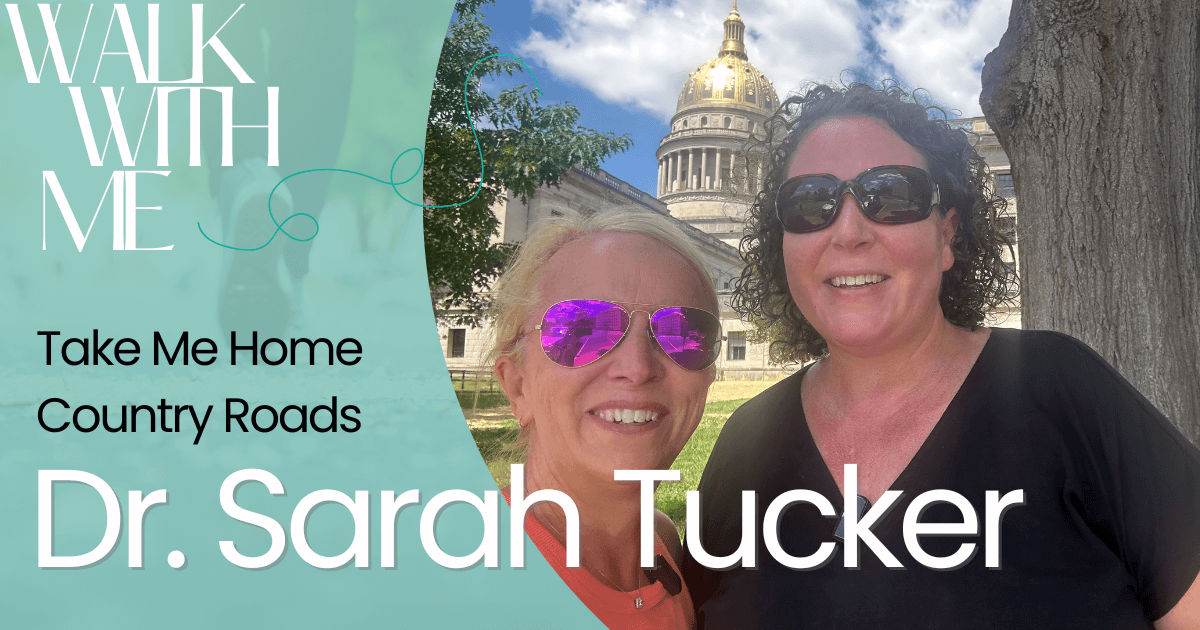
Take Me Home Country Roads

They say, “Never forget where you came from.” For me, West Virginia is responsible for the very best of me – my humility, my empathy, my pragmatism and maybe my self-reproach. 

It was 1989 when Marvin Bressler, my advisor, said to me, “Well, you’ve done it.” I thought we were embarking on a congratulatory conversation about my defending my senior thesis. We were not. He continued, “You will forever live with one foot firmly planted in the world that shaped you in West Virginia and one foot stretching as far as it can to plant itself in the world at large. What you will make of that challenge is up to you.” 

Before I had any idea of the depth of his insight, I could feel the tension he predicted in my future.  The die was cast – create meaning, serve others, and let the weight of where you are from be your compass.  Don’t get me wrong. When I travel, I yearn for those country roads to take me home. I also wonder if it’s time to stretch beyond. At 58, I sometimes ask, have I stayed home too long?

Sarah

I don’t have any feelings of regret for being back here. I think probably because I’m here, I was able to achieve things more quickly than I would have been if I was someplace else. And there’s just a lot of work to do here. There’s a lot of work. And so I enjoy doing the work.

Liz

One of my college roommates told me 10 years ago “You could do what you’re doing anywhere, but nowhere needs you as much as where you are.” And I like that.

Sarah

Yeah, it’s fair. It’s true.

Liz

What do you mean?

Sarah

Well, there just aren’t that many people that stay. So many people move out, particularly the people with big ideas.

Liz

What was your big idea?

Sarah

For here? Oh, I have lots of them. Free community college –  that passed. We got dual enrollment passed. So for the first time, students in West Virginia can take college classes for free when they’re still in high school. Right now, we’re redesigning financial aid. We have 15 different financial aid programs for students, which means they have 15 different applications and 15 different sets of rules that they have to follow. It doesn’t make any sense. So we’re just going to flatten it and we’re trying to figure out how to do that – how to get kids access to post-secondary education. We just got written up in an article for increasing our FAFSA completion numbers pretty dramatically… that’s all the work that the folks in my office are doing to try to get kids to really think about what comes next for them. And we do a lot of that.

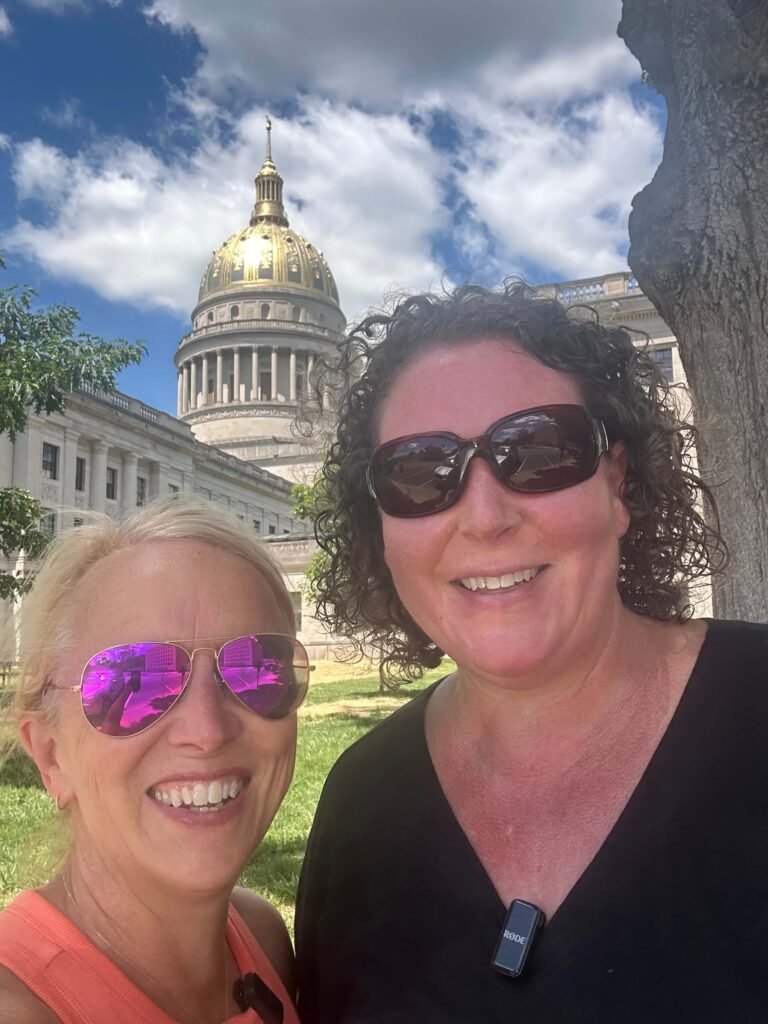
This is the voice of Dr. Sarah Tucker, Chancellor of the WV Higher Education Policy Commission. This is also the adult voice of one of my favorite students from my early career as an English teacher at The Linsly School. She and her best friend, Chrissy Hoag, were a touchstone of creative and critical thinking even when they were juniors in high school. Today we are fortunate that Sarah is channeling that same intellectual curiosity and innovative spirit into transforming higher education policy and serving the students in West Virginia.

Liz

But finance is only one hurdle. When I went to the WV Higher Ed Summit sponsored by you, I was shocked to hear transportation was such a hurdle in West Virginia.

Sarah

Transportation is a big issue. Food insecurity is a big issue. We’ve been able to get food banks at each of the institutions, so that’s helpful. But it’s more than just food. It’s the things that you need in your everyday life. I’m always amazed when I go to a food bank and I hear that they need things like feminine hygiene products. There’s a lot of unmet need for our students that we have to try to meet. 

Liz

That’s fascinating. Here you are, Chancellor of Higher Ed, and you have to think as much about food insecurity as you do education.

Sarah

Every year, there’s a bill that goes up, sponsored by students. It’s happened for the past four or five years about food insecurity. Fails every year.

At that summit I had the opportunity to sit with a high school guidance counselor from southern West Virginia who explained that finances and transportation had a third deterrent affecting matriculation in post secondary education: families.

Liz

Truly the obstacle was grandparents and parents who didn’t want students to leave them. They needed them for basic care, which continues the generational poverty. 

Sarah

And we had that a lot during COVID. Kids were able to work different types of jobs than they were before. A lot of kids ended up making money for their family that sustained the family. A lot of kids dropped out of college for that very reason.

But that’s why I was so vocal last year when we had the FAFSA debacle at the federal level. I lost my mind because we had been doing so much work to get kids in school.

If you’re living with your grandparents, but your grandparents haven’t taken legal custody of you, or you don’t know where your parents are…you’re out of luck. And that’s really hard. It’s a really hard thing to face. I was meeting with students several years ago, and six kids came up to me. They were waiting in line to talk to me at the end. I’ll never forget it. And they were like, “Can we talk to you about Promise?” And I said, “Sure. What’s up?” Every one of them was living in some situation other than with their parents. All six of them qualified for the Promise [scholarship which provides free tuition]. None of them could get it because they didn’t fill out their FAFSA. And I said, “I’m going to fix this.” And they said, “What do you mean?” I replied, “I’m going to fix it. Let me go back and talk to my staff. I’ll figure it out.” And I went back and asked my staff, and they were like, “Oh, yeah, this happens all the time.” … “Not anymore.”

It was close to the legislative session, and I went and explained to them what was going on, so they passed a law that lets us waive that parental requirement under certain circumstances. And so we were able to waive it for those kids and any others like them so they can get the Promise. It’s crazy what happens with financial aid.

Liz

It’s also crazy that you have been doing this so well and for so many years that you have the power that you have in order to do what you just did, to go to lawmakers, be able to tell them a story on behalf of six kids, even though it’s representative of more, and get something done quickly.

Sarah

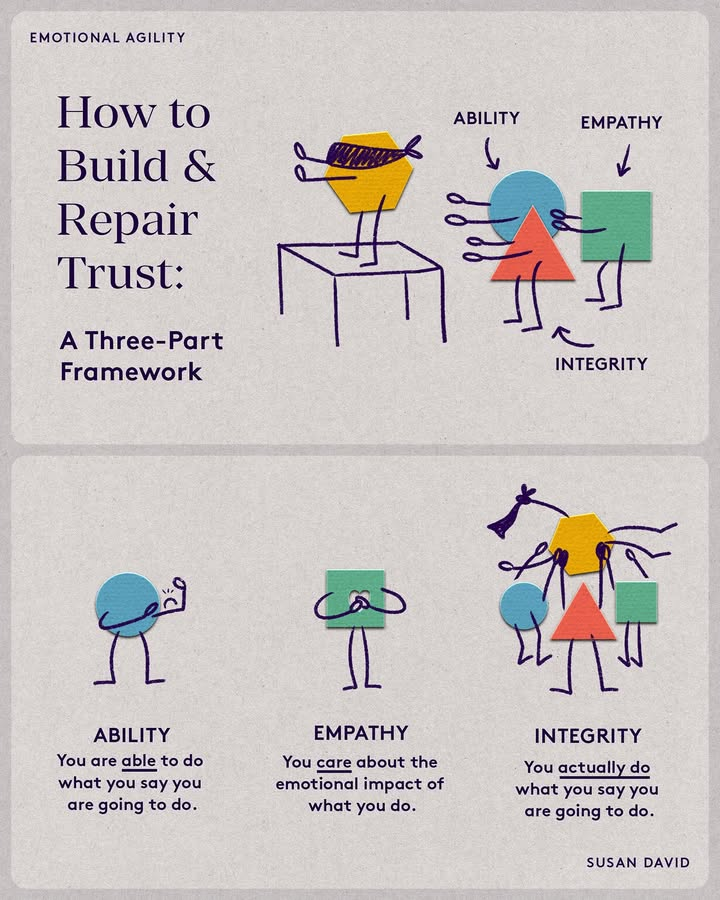
There’s a lot of trust there that’s taken a long time to build up. It wasn’t there immediately, but I tell the truth and do what I say I’m going to do. And if you do that enough times, they trust you. You can get things done faster. 

Liz

So what are the characteristics that have made you a good leader for education in West Virginia?

Sarah

Oh, gosh. I don’t know.

Liz

Clearly trust.

Sarah

Trust is a big one. I have a really good team of people. I have really, really smart people, and they’re really dedicated to this mission, and they will always figure out a way to make it work. And that’s huge because lots of people hold the belief about state government that you have a bunch of bureaucrats who just say, No, no, no, no, no, And that’s the opposite of the way my office works. They do everything they can to say yes and try to figure out how to make things happen for our students. I always talk about “we” because I can’t do it without them. We also don’t take a situation for granted, right? If something is a problem, we don’t just go, “Oh, that’s a problem. Yep, that’s a problem.” We make it not a problem anymore. We fix the problem. And I’m with a big crew of people who are fixers, and that’s really nice. It’s really nice to have people with that mentality. Try to make things better. 

There is no doubt that a leader is stronger with a supportive team. Indeed, the whole is greater than the sum of the parts. And yet, at the end of the day, even with a strong team surrounding her, Sarah must take to the podium alone as the female face of Higher Education in West Virginia. She is one of the few women who have attained her level of authority in our state or in the industry.

Liz

So I’ve paid a lot of attention to the idea that one or two women in a room are still treated with some token mentality that it takes three for a tipping point. 

Sarah: That’s interesting.

Liz: Have you experienced that at all?

Sarah

I have certainly experienced my fair share of misogyny, but for the most part, when I’m in a room, I’m taken seriously. It was not always like that. And there are times when that is not the case. But for the most part, now, if I say something, they know I mean it.

Liz

Which circles back to trust. You weren’t taken seriously partially because you were new?

Sarah

Partially because I was new, partially because I was young. I remember telling my boss at the time, I would go in to testify in front of the legislature, and they would call me “Honey” and they would call my male counterparts, who did not have PhDs, “Doctor,” but I had mine. I was like, “This isn’t cool. I’m not okay with this.” That doesn’t happen anymore. But it did for a while.

Liz

Now it’s Dr. Tucker.

Sarah

Yes.

Liz

Isn’t that amazing? I come from a generation where the women older than I had to work very, very hard to even shove their foot in the door to make sure there was some access. And my generation thought we had arrived because we got a woman in the room. But what I’m paying attention to is a single or two women in the room really wasn’t the change. So we still have a responsibility to the next generation not to go quietly into the good night, but to use our voices and be loud and pull that third and fourth woman into the room. And it’s hard.

Sarah

It is hard. It’s interesting because there’s an organization for my position. They’re called SHEEO’S, State Higher Education Executive Officers.

Liz

God, if everything in education doesn’t have a…

Sarah

An acronym …you’re right they all do. I think there might be five of us.

Five women. One just retired, so I’m not sure where that leaves us, but we have an affinity group every time we meet. And it’s just so startling how few women there are. We have this big lunch, and we can all sit around one single folding table.

Liz

Wait, tell me you get a folding table because you’re women?

Sarah

Well, a nice round folding table. A banquet table. But it’s crazy to me. And we talk about how to get more women into these roles.

Liz

Do you ever walk into one of those rooms and wonder why you’re there?

Sarah

I used to. I really don’t anymore. But I absolutely get nervous. I have very specific ways that I hold a lectern before I talk so that I don’t shake. But I don’t get worried about imposter syndrome anymore. I used to. God, it was awful. I used to have horrible imposter syndrome.

Liz

Even with an Ivy League undergrad and a doctorate… a PhD after your name?

Sarah

Yeah, I was always convinced I was going to be found out. Always. I don’t know when it switched, to be honest.

Liz

Me too.

Sarah

You feel the same way?

Liz

My whole life, I did. I’ll be honest with you, Sarah, it switched. I left a job where people trusted me and I did well, and it came back. 

Sarah: Oh, no. 

Liz: Yeah. And it has taken a lot of this year to put it down again. The best thing I can say is I don’t walk into a room afraid anymore. But when I started these walks, just these walks, for example, I was afraid to walk with the first head of school that wasn’t a friend. Who am I to be asking questions?  Ashley Battle called them reps. I think the reps are what slowly puts the imposter syndrome baggage down. The times somebody says, Who do you think you are? Or You made this bed, so lie in it. It no longer hurts. No effect. It’s just, okay, that’s just your opinion. That’s not who I am. 

There are negative voices in our heads that amplify the imposter syndrome. There are also times when you hear the words come out of someone else’s mouth, “You deserved what you got”… “You’re not who I thought you were”… with practice you can hear them without allowing them to land on your spirit. You can remember them with a more positive intonation. I did get what I deserved because I worked hard to learn from the lessons in this life. I am not who you thought I was because your thoughts about me have no impact on who I truly am. With those kinds of reps, the imposter facade falls away. 

Liz But I can’t tell you that it’s gone for good.

Sarah

That’s scary. I want it to be gone for good.

Liz

So in a lot of these early walks, there was a clear theme of imposter syndrome, and then Luke noticed it dropped away. I wonder if it’s because it dropped away for me. 

Sarah: I bet it is. 

Liz: I wasn’t hearing it the same way.

It’s easy to lose sight of what truly sustains us. I’ve watched too many people, myself included, get trapped in the exhausting cycle of trying to overcome imposter syndrome at work, staying late to prove we belong, checking emails during family dinners, and missing bedtime because we’re convinced we need to do more to be enough. The cruel irony? All that extra time spent trying to feel competent or more deserving leaves us feeling like we’re failing everywhere—mediocre at the office and absent at home.  Whether it’s choosing to stay home for your kid’s soccer game instead of attending that networking event, or simply putting your phone down during dinner to really listen, these small acts of prioritization create the foundation for life itself… and from what I’ve learned create the safety net that catches you when life gets messy. 

Sarah

The other thing that served me well is my family.

I mean, people thought it was crazy when I had Oliver. They were like, how can you be with a toddler? And the thing is, when I come home, he needs all my attention. And so I can put [work] away. I can’t always. I mean, during the legislative session I spend every night on the phone. But for the most part, I have to put it away, and I have to pay attention to him, and play soccer, or baseball, or listen to, I don’t know, 18,000 different versions of Pokémon cards.

Liz

But it sounds like you have a really good balance. I like that you said Oliver demands you, so you put it away. I assume it wasn’t like that before Oliver. 

Sarah

No, it was 24 hours a day. It can’t be now. And that’s nice I’ve been super proud of him this year. This spring said that he wanted to pick his own extracurriculars. So he picked musical theater and baseball. And I knew he would be okay with musical theater, but I was convinced that he would hate baseball because he doesn’t like having all the pressure on him. And I thought being up at bat would be too much. Damned if he hasn’t hit the ball every single time he’s gone up to bat. Every time. Every time.

Sarah relishes the details in her family’s life. She learned that lesson before she ever had a family of her own.

He’s got a busy little passport. And he loves seeing new cultures and telling us how they’re different from what he knows and what he experiences. Very upset in Italy, but they don’t have playgrounds. No playgrounds in the whole country.

Liz

Only a child could see that.

Sarah

Yes. He asked me if we could write a letter to the President and ask the President to send them playgrounds.

Liz

And the only answer to that is yes. Yes, of course. I love that even with the job that you have and the responsibilities that are so great, I can only imagine that when Ollie wants to sit down and compare cultures, you sit right down at the table with him with the same level of attention that you would give the governor if he called.

Sarah

I’d probably give him more attention. I mean, the truth is, my mom died when she was 52. I’m almost there. Right?

Liz

Right. So you think that piece of your own history has made you better able to attend to your family.

Sarah

I know it has.

Liz

Can you say more about that?

Sarah

I am very protective of them, and I’m very protective of my time with them. I will not let things interfere with it, just because who knows? And so I make sure that we always go to bed saying, I love you. It’s cliché, but it’s not. And that we take time. I pick him up every day from school or try to.

Liz

That’s a gift.

Sarah

Just try to be there. And part of being in West Virginia is that it’s easier to do that here. I think people may understand it a little bit better than if I were in DC.

Liz

“It” being the balance?

Sarah

Yes. And the importance of family. I think people really understand how important family is in this state and honor it when you say, “I’ve got to do this thing.” One of my points of pride is that I have had multiple men say to me at some point, “You know I’m okay saying that I can’t do this because I got to go to my kids’ thing because you do it.”

Liz

The speaker at [Virginia Tech’s] commencement was in charge of car racing for Toyota, and he’s talking to a room full of engineers. So he’s the coolest dude in the room, right? But he mentions, I missed a lot of birthdays. I haven’t been back for a reunion. You could hear the note of regret. And then he said, “Trophy’s rust.” I thought to myself, but can these 23-year-olds really hear that message? Because I remember Jim Squibb telling me, I don’t need you to direct the school play. And my thinking, I can do it all. And I wasn’t ready yet to understand that I was off balance. That’s the best way to put it. So I no longer say “I have to work.” I say “I have to write.” So when Ella comes home from school, I now say I have to write because for so many years, my kids heard me say I have to work as if that was more important than them.

Sarah

Yeah.

Liz

As if work was an acceptable “out.” And I’m so sorry I ever used that language. I did learn it fairly. I did learn it from my dad, but I’m so sorry that I used it.

Sarah

I get upset sometimes. I’ll find myself if I’ve picked Oliver up from school, and I get a phone call in the car, and he doesn’t get to finish telling me about his day. Once I get off the phone, I kick myself for like, Come on, really? That person could have waited. He just wanted to tell you about his day.

She gets it as if she has already been a parent for an entire lifetime.

Liz

So with your mom dying when you guys were so young and being the older sister, did you have to do any parenting? Or did you do any parenting? I’m not saying anyone made you. 

Sarah

Yeah, I did parenting. I did parenting with my dad at the time. I think we all did, right? I mean, it was so shocking. I mean, it shouldn’t have been. It was cancer. It’s not like it snuck up on us. But it just changed everything.

Liz

Everything.

Sarah

Everything.

Liz

Do you talk to her?

Sarah

Sometimes. At the beach.

Liz

Was that your place with her? 

Sarah: Yeah. Look, you got me crying, Liz. 

Liz: I’m sorry. I don’t know, Sarah. I miss my mom every day. I can’t imagine if I had to start missing her at …

Sarah

24.

I cannot even imagine. I miss my mom everyday. Every. Day. It overwhelms me sometimes. I want to talk to my mom again. Walk with her and ask, “What should I do? Am I getting it all wrong?” She would probably just ask a question back, “Who is to say?” And then add, “And why does their opinion matter in your life?” Like it or not we grew up with definitions of good mom, good woman, good girl. I am still trying to put that down.

Liz

There’s a big piece of the definition of good girl that is being successful.

Sarah

That’s tied up with money.

Liz

That’s tied up with financial success, job title. And I’m really trying to put it away. And you asked me a question that I don’t even think you know how it landed. We were chit-chatting about what I was going to do, and you said, “Do you even want that job?” And I hear your voice every time I get ready for a job interview. And the truth is, I have applied for a few jobs that no, that’s not what’s right for me. But it’s the title, it’s the compensation, 

And if I’m being honest…

Liz: It’s the response, “Oh, of course she left Country Day. Look at what she’s doing now.” And, wow, none of that is the reason to do something with your life.

And why would what someone else thought matter anyway?

Sarah

I just can’t imagine spending as much time as you have to spend with your work, spending it doing something that I don’t believe in or that I don’t care about. And it’s time away from Oliver. To me, at this point, it’s all relative to Oliver. Is it worth me not being with him? Is it worth me not hearing him giggle? Is it worth me not getting to go to the beach with him? Is it worth not sitting on the front porch? If it is, then I do it. If it’s not, then I don’t. 

And I struggle with that sometimes, Liz, because at some point, there’s going to be a next step. And what is going to excite me enough to make me be okay with being away from him?

Liz

It’s interesting. I’ve been thinking a lot about there’s a July 1 coming for all of us that live fiscal years. There’s a July 1 coming with some year attached to it that you are no longer responsible for Higher Ed in West Virginia. And what will that transition be like for you? Because I love the years that I dedicated to the work that I did. But on July 1, there was someone else, and it just ended. We talk so much about the way we launch people into careers and so little about the landing, so little about what it’s like to stop doing the thing that you poured yourself into.

Sarah

I think that’s a lot of why my dad lives with us, right? He was like, What am I supposed to do?

Liz

Yeah.

Sarah

But it’s a really fair point. I have spent a lot of time setting up my office so that when I’m gone, and again, I’m not planning on leaving anytime soon, but so that when I’m gone, they’re okay. Because that wasn’t done before.

Liz

But the truth is, you don’t know that.

Sarah

I don’t know that, but I’ve gotten us involved in enough things with enough different groups of people, enough different organizations, that the relationships are there, not just for me. They’re not Sarah Tucker’s relationships. And it’s important to me that the office functions, whether I’m there tomorrow or I get hit by a bus tomorrow.

Liz

Shit, that’s exactly what I used to say all the time. 

Sometimes putting family first requires us to make the hard choices. When we decide to step off the path we have been following—relinquish a position … sell the house … file for divorce … we get to decide what path comes next. For us. Not what comes next on that old path, not what others expect, not what looks good on paper. The beauty of these pivotal moments is that they hand us back our agency…and remind us of our limits. 

The path forward might be uncertain, might require starting over, might mean disappointing people who liked the old version of your life. But when you make a choice for your family’s wellbeing and your own authentic purpose and joy —you’re coming home to yourself.

Sarah

But I haven’t thought a lot about what’s next for me. 

Liz

Well, when you’re ready, I’ll be there.

Yep, I’ll be there to welcome her home.


Liz Hofreuter

Founder GEN-Ed

Not your typical researcher or consultant, Liz connects lived experience to transformative leadership. To uncomplicate leadership and education, every story matters and she is just getting started.
It’s Simple

As I round the final bend toward 50 walks, I am beginning to process all that I have learned. A strong inner voice urges me to keep it simple. We make things much too complicated. Starting to reflect on the insights I’ve learned, I am seeing that I knew most of them all along, but I had to get a little lost to truly see their wisdom. That’s the thing about learning – it’s not a checklist. No one and done. We learn some lessons over and over. And the best you can do is keep learning, keep growing and keep asking good questions. Embrace it all – the good, the bad and the ugly. 

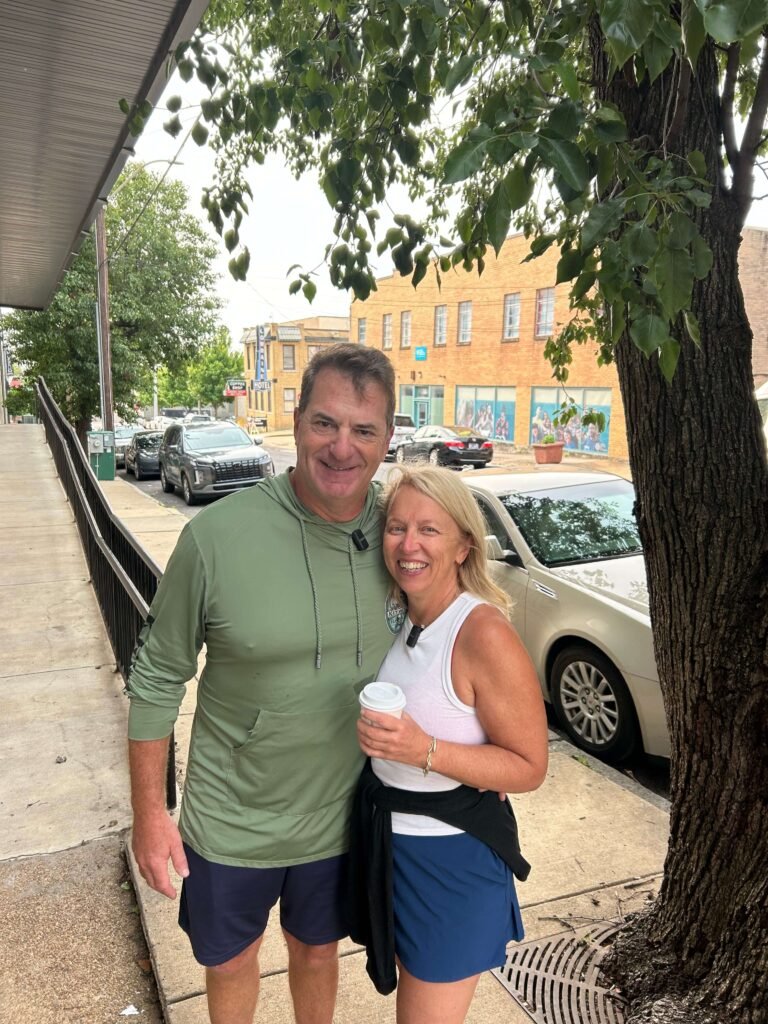
If you’re lucky enough, you have someone in your corner to simplify it when you can’t. I’ve developed quite a network. Where I find myself in the last three years… navigating a start up, understanding SaaS, unpacking leadership and now interviewing for the next chapter… I have turned to someone I have known almost my entire life for advice, Ed Lando. Our fathers were friends, so my dad trusted Ed. When I would ask to go somewhere, my dad would reply, “Is Ed going?” Whether it was true or not, I’d say yes, just so I could secure permission to go. I also knew if Ed were going to be there, it would be a good time. Ed lives every moment to the fullest. Better yet, he is present with you in every moment he is in. 

Ed: We have so much going on in our lives between kids and siblings and family and friends and all these things. You get pulled in so many different directions, which means you have a busy life, which is great. But to lose one’s way, I mean, it’s common. It happens. It doesn’t happen all the time to everybody. But if someone says, I’ve never lost my way ever, whatever that means, it’s like, “Come on. Come on. So you broke the DNA strand?” I mean, it’s life… that happens. It’s natural. And so I think the key is when you realize it,  fix it. If you want to fix it, fix it. I mean, again, keep it simple. Things aren’t complex. Life can get complex if you allow it. But what’s the simple solution? If it’s a relationship, work on the relationship. If it’s unworkable, then fix that. 

Liz: I really appreciate that you added, “If it’s unworkable, fix that.” Not meaning to stay married or stay in the job, but okay, the time came…now we’ve got to pivot. I appreciate that because my inner voice, which sounds a lot like my dad, is to stay with it, fix it. His generation stayed with the same job forever. And jumping jobs was only because you were elevating up on the corporate ladder or the medical ladder or whatever. Never because there was just something else you wanted to do. That is not the way our world is anymore. But I can still hear him disappointed that I gave up on something because that’s the way he would have seen it.

Ed: So I’m not sure that’s the way it was. Again, you can only steer someone’s perceptions and thoughts so much. But I know you forever, you’re not a quitter. 

Ed is right. It’s all about perception. What one person calls quitting, another calls pivoting. But ultimately, it comes down to knowing yourself—listening to your instincts and recognizing when both your head and heart are saying it’s time to move on, then having the courage to act on it. During those pivotal transitions, Ed becomes an invaluable ally. He’s built his career around seizing opportunities and connecting people with exactly the right resources to help them capitalize on their next chapter.

Ed: Really for me, I’ve always felt that one of the biggest benefits of being a headhunter or a recruiter leader is how much I’ve learned over the years about how business is run, how people manage teams, the difference between what are great leaders and average leaders. I ask them about what makes them great leaders or what they learn from other great leaders. And I’ve always said, my style, good, bad, or different, it’s been built based on all the smart people and all the talented people I’ve talked to and interviewed through my life. So it’s been a real advantage.

Liz: I love that. I love that you see all these people you’ve interviewed as people who gave something to you. So you brought it up. What is the difference between a good leader and a great leader? Or an average leader? 

Ed: Yeah, I always tend to try to keep things really simple. So I’ve come to realize that in my opinion, it really comes down to two things: sincerity and trust. 

The trust factor is that the team trusts that you have the knowledge to lead them. You know your craft, you’ve got the experience, you’ve had the education, whatever it is. But the sincerity part is they can believe what you say.  

As for sincerity…

Ed: So one of the things that I learned to build into my feedback was, if someone wasn’t performing, one of my first questions really became, Is everything okay at home? I don’t want to get into your personal life, but is everything okay at home? And they say everything’s been great, then it’s like, Okay, well, you failed at this. I mean, if something was not going well at home, I understand how that would come into your professional life. But if everything’s okay at home, then the expectations are A, B, and C, and you’re missing B. So how can I help you get back on track because the company needs you to hit B, or whatever that is. But that, again, people want to know you care about them. I mean, you can’t fake it.

Ed includes sincerity. I have been using the word, authenticity, but I think we are using them interchangeably. I think my walks have collectively painted a picture of authentic leadership as deeply human, courageously vulnerable, and fundamentally about creating a culture where both leaders and those they serve can show up as their genuine selves while working toward shared goals and purposes. Authentic leadership isn’t a solo journey. The team around you matters in that culture. I always referred to it as getting the right people on the bus. 

Walk with Me - Liz Hofreuter and Ed Lando

Ed: I worked for a CEO that used to say this all the time, “Software is software. It’s really all about the people and having the right people who want to be a part of the team who want to do great things.” Culture trumps strategy all day long. And I’ve been fortunate enough to be a part of companies that had great culture. And I’ve watched as leaders turned on that company, how fast the culture went downhill. For me, if I’m interviewing, that’s what I’m looking for… Can I trust the person? Do they know what I’m hiring them to do? Are they skilled for that? And do I want to be around them? Are they good people?

Liz: Well, I think a third one is that you’re in a constant state of learning. I mean, to me, that’s a good leader as well.

Ed: Well, so first of all, that’s a huge thing for me. Every team I’ve either been on or helped build or whatever, should always be in a constant state of learning. So that’s just a life thing for me. What’s the old saying, “When you’re green, you’re growing, when you’re ripe, you’re not.” So it’s one of those things. If you’re done learning, what’s your life about that? 

If there is a third pillar, I would say you can always tell the successful leader because the successful leader gets people to work harder than they’ve ever worked in their life and love every second of it. I don’t hire people who don’t want to be great, who aren’t passionate. To me, I’ve always been around high growth entities, And to have a high-growth entity, you’ve got to have everybody all rowing together and love rowing…or at least the result of rowing.

Liz: Spoken from somebody who sat in the back of the boat, when the boat is rowing together, there is a transcendence that lifts the boat, and it feels like you’re not working anymore.

Ed: Yeah. How many times we’ve heard people say, If you love what you do, you will never work a day in your life.

Don’t get me started on rowing… or actually just wait until I really talk about rowing and the impact it had on my life. I was the Princeton varsity coxswain for three years. I know rowing. When eight rowers and a coxswain come together, there’s this moment of transcendence that happens – but only when everyone stops trying to prove they’re the strongest and starts pulling with their genuine effort, flaws and all. You’re sitting backwards, unable to see where you’re headed, completely trusting the person calling the cadence and your teammates most of whom you can’t see. There’s nowhere to hide your authentic effort; every catch of the oar, every weak pull, every moment you’re not fully present ripples through the entire boat. But when you find that sweet spot – when the collective rhythm tops individual glory – something magical happens. The boat begins to sing through the water, moving with a power that’s exponentially greater than the sum of its parts. That’s authentic leadership in action: creating the conditions where people can show up genuinely, trust completely, and move together toward something they couldn’t possibly achieve alone.

Ed: Leaders have to lead, but it’s also the leader’s job to develop the team and the people on the team that want to be developed to a higher level.

So the leader doesn’t do everything. That’s not the job of the leader. You have to empower. You can never have too many high-quality people, because in the end, people do run to the speed of the leader. So if the leader is a high-performing, great communicator, that’s how fast that team is going to run. I don’t care if you have all first-round draft picks. If your leader does not run fast and hard like the company needs them to, they will inherently slow down the team. So they will run to the speed of the leader and the quality of the leader.

Liz: And you’ll lose some people because of that speed.

Ed: Absolutely. It’s always the best ones you lose first because they want to run faster and harder, and they’re not getting that fulfillment. So it’s always the ones who are the average performers who don’t quit because it’s easy. They’re average performers. Nobody’s on their case because they have an ineffective leader. And the ones who are high performers see it. They don’t want to be on a team like that. 

Good teams have a good culture. Rarely can a team be successful on the water (or the field… or the court) if there is turmoil in the locker room.

Liz: One of the things that’s been driving me nuts, in this past year especially, is the defensiveness that people have. You say something honest, you ask an honest question, and they’re immediate response is to be defensive. How do you counter that?

Ed: I just ask, why are you being defensive? I wasn’t attacking you personally. I didn’t say you were a bad person. I’m just saying, you didn’t do this. Don’t get defensive. Let’s talk through it so this doesn’t happen again because you’re not happy about it. That’s why you’re defensive. It’s not helping the company. So let’s work together to solve it. So there’s a piece of sincerity that comes with directness. I’m pretty direct just because I want to solve the problem. I want to help that person solve the problem. 

Liz: You also told me no matter the conflict you have with somebody, you can put that aside and go have a beer with them at the end of the day.

Ed: If the culture is built the right way. The way you know you have the right culture is when that conflict happens. In the end, leaders have to lead. So the best way to come to a decision or an agreement is with a whole group agreeing, but that doesn’t always happen. So you have two or three different points of view, and there can only be one answer. That’s where the leader has to step in and say, “I’ve heard all of you. You may not like the decision, but this is the decision. This is the path forward for the company.” If you have the right culture and you build that, when you’ve hired that way, you’ve reinforced it… everybody is locked and loaded. So you may not agree with the decision. That ship has sailed. Execute to the best of your ability to make sure that decision is the best decision, because in the end, the paths are important, but it’s really the execution along the way that matters.

Liz: Lock in, baby.

Let me recap our conversation so far. I’ll set aside the rowing analogy for now and save that for another walk—let’s return to the bus. Picture a leader who’s always learning, someone who decides to take on a real challenge. She steps onto that empty bus because she wants to make a difference in her corner of the world. She invites, cajoles, and inspires the right people to join her, then builds a positive culture in those rows of seats. She does this by consistently following through on her commitments, by being authentic in both her vulnerability and empathy, and by offering the right balance of trust and accountability. That strong culture can weather the inevitable conflicts—like when seatmates in the third row start butting heads. But here’s what we haven’t discussed yet: everybody needs to know where they’re going. Before anyone steps on that bus, there needs to be a clear destination —that bright, unmistakable headsign that tells everyone exactly where this journey is taking us.

Walk with me - Ed Lando talking into a microphone

Ed: One thing I’ll absolutely say is, I don’t care how skilled and how good one is. If they’re not a good communicator, it’s hard to be a leader, an effective leader, because it is, going back to what I said earlier, it is about the presentation.

Liz: Trust, genuine, learning, communicator.

Ed: Being able to articulate. I mean, if you have all the thoughts, but you’re an ineffective communicator, you’re brash, You don’t use the words correctly. Whatever that is, your inability to communicate your skills, thoughts, and what you’re trying to motivate people to do are irrelevant because they just don’t pick it up.

If they don’t hear you the same way you intend for the words to be meant, that’s where you get offline. And I forget who said it, but a little bit of variance in the beginning becomes a huge variance down the road because you’re going in different paths.

Liz: And the thing you have to communicate the best is the vision for where we’re all going, where that boat’s headed.

Simon Sinek argues that it’s not enough for a leader to know their Why—they must be able to paint that vision so vividly that others can see it, feel it, and want to be part of it. When they do, you can feel it in the room. Meetings have a different energy. Conflicts get resolved differently because everyone’s arguing from the same foundational beliefs about what matters. When a leader successfully creates a shared vision, the effects ripple through every aspect of the organization. Hiring becomes easier because you’re attracting people who are already aligned with your purpose. Customer relationships deepen because your team’s authentic belief in the mission shows up in every interaction. Innovation accelerates because people aren’t just following instructions—they’re solving problems in service of something they care about. Your culture Sinek would argue becomes a “Circle of Safety” – where people feel safe to trust each other, to take risks, and to admit when they don’t know something.

Arrogance destroys that circle.

Liz: What do you do about that, arrogance?

Ed: I tell people this all the time. I have no problem with egos. The difference between ego and arrogance… Ego is I’m good, and I know I’m good, and I am good. Arrogance is I’m smart, you’re stupid, just do what I tell you.

Liz: Well, isn’t part of ego, I’m good, I know I’m good, and I know I can be better?

Ed: Absolutely. But my point is, arrogance is the exact opposite. People tend to interchange the word. They’re actually two different words. People tend to use them incorrectly.

Liz: How do you interview for arrogance? 

Ed: Let him talk. Ask an open-ended question. Hey, tell me about a team you built and who’s the best person? Why were they good? How did you help them become better? I mean, it’s an attitude. You can usually pick up arrogance in people pretty quick. Hiring is more of an art than a science. 

Look, my mom once gave us a book of sayings, and one of the sayings is, “Never try to teach a pig to dance. All that happens is you get muddy and you frustrate the pig.” And I use that all the time because it’s true. You don’t take a thoroughbred and have them plow fields. That’s not what the thoroughbred does. So you have to make sure… and this is the essence of hiring … or when you’re being hired, and you’re taking a job to make sure you want to work in that culture, and the problems they have are what you’re passionate about solving.

Liz: You really are talking about how a good leader has to have a balance between head and heart. 

Ed: People want to work for people who care.

Liz: Yeah. And it’s amazing how many people are in jobs where they feel like they’re not working for somebody who cares, and they stay.

Ed: The other thing that most people who understand sales will tell you, the biggest competitor in the world, I don’t care what you’re selling, is apathy. It’s to not make the change. 

Liz: Devil I know versus the devil I don’t.

Ed: It’s too much work to change. It’s inertia.

Liz: It’s inertia.

Ed: So in other words, you’re so used to going this way. For you to go this way takes a lot of effort. It’s a change of path.

Liz: But you would think changing jobs would be a priority. I know so many people in so many industries who are miserable, and they’ve just decided to stick it out.

Ed: It’s a lot of work changing jobs. I mean, number one, you’ve got to get your resume together. You have to find time. You got to hide it from your current boss. And then you got to go into a new culture. You got to meet people and there’s a lot that goes into it, psychologically, to really make that change. One of the things I’ve always felt… is everything works out in the end. Just make a decision. It’s going to work out in the end, mainly because you’re going to make it work out in the end.

What’s that saying? “Everything will be okay in the end. If it’s not okay, it’s not the end.” My dad paraphrased it differently. He would say “This too shall pass.” Four simple words that carried both hope and persistence. Without knowing any of this, a friend gave me a hand-painted magnet with those exact words. It now lives on my refrigerator, a daily reminder that feels like my dad is still speaking to me —telling me that challenges aren’t roadblocks, they’re simply part of the journey.

But Ed Lando takes it a step further, adding something my dad’s patient wisdom didn’t quite capture: agency. The power to act. While “this too shall pass” asks us to endure, Ed reminds us we don’t have to be passive passengers. If something isn’t serving us, we can change it. We have the courage to shape our own path through it all. 

I have had an image of Ed in my mind throughout the process of writing this. As he approaches me, he is smiling…always smiling. Yes, he is present as I said at the outset, but he won’t allow me to wallow in reflection. Ed urges me to take positive action with a succinct cadence to his words and simple responses. For example, I texted him recently, “This situation is toxic.” He texted back, “You’ll fix it.” The simplicity is powerful and brings agency to the forefront.

His advice reaches far beyond business or hiring or even leadership. Be genuine. Build trust.  It’s that simple. 


Liz Hofreuter

Founder GEN-Ed

Not your typical researcher or consultant, Liz connects lived experience to transformative leadership. To uncomplicate leadership and education, every story matters and she is just getting started.
Small Wins

Jadon: I don’t like making my bed because I feel like there’s no point in doing it unless someone’s coming over because no one else is going to see your bed besides you and your parents.

Liz: Yeah, but they say making your bed in the morning is the best thing you can do to take care of yourself and to get your day started the right way.

Jadon: They do?

Liz: Yeah. I’m going to have to look that up and explain it better to you. And God knows I haven’t explained it well to Grace or Ella because they don’t make their bed.

Jadon: Yeah, I definitely don’t see Grace making her bed.

It’s not really about the bed, of course. It’s about the person you become. The little things matter. Addressing University of Texas graduates, Admiral William McRaven shared the profound truth he’d discovered when he was training as a NAVY Seal: “If you make your bed every morning, you will have accomplished the first task of the day. It will give you a small sense of pride, and it will encourage you to do another task and another and another.” Making your bed creates what psychologists call a “keystone habit”—one small behavior that naturally triggers a chain of other positive actions throughout the day… a domino effect for your entire life. These “small wins” activate our sense of agency and self-efficacy.  The same mental processes that help you make your bed—planning, follow-through, delayed gratification, consistency —get stronger each time you use them, making it easier to exercise self-control in other areas.

But instilling such a simple habit – this first small win of the day –  is also the very thing that can make a mother feel like she is losing the battle.

Jessica: This was one of those mornings, I feel like as a parent…Am I doing anything right? Or am I doing literally everything wrong?

I think that everything I asked him to do, I asked him 900 times. And by the end of it, he’s looking at me like I’m crazy, and I’m looking at him like he’s crazy. And I’m not really sure which one of us is crazy. But it was just one of those mornings where it’s a million times to do one thing. And then it’s like, we’re at that pre-teanage where it’s like, well, why do I have to do that? Why do I have to make my bed?

Now you have met Jadon and his mom, Jessica Maxwell. Jadon is a very active 12 (jadon: so tomorrow I will be twelve and a half.) Sorry. 12 ½ year old boy. He is the very young man I worry about in our traditional school settings. His body needs to move and his mind races even farther ahead of his legs. I walked with Jessica to talk about parenting a child with so much energy, but felt like Jadon deserved his own voice in the matter, so I tried my best to keep up with Jadon on a walk of our own.

Liz: So sometimes I think of your life as living in the eye of a hurricane because you have a dog, a son, and a husband who all move at warped speed at times.

Jessica: Everybody in my life moves at warped speed.

What’s next? What meal is next? What are we doing next? And trying to teach Jadon the ability to be bored, to just relax. I feel like he should have learned it when he was younger, but somehow I’m still trying to impart how to be calm and maybe sit down and read a book. And that’s just not his personality. 

Jadon: Basically, my brain has to do something all the time to keep myself entertained because I get bored very easily.

Liz: And bored is bad?

Jadon: For me, I feel like boredom is the worst.

Liz: Why?

Jadon: Because there’s nothing ever to do when you’re bored. I’m wasting a lifetime being bored, not enjoying it.

Another one of my heroes, Wendy Mogel, has spent decades telling parents exactly the opposite: she wants children to be “unhappy, frustrated, bored” because these uncomfortable feelings are actually essential ingredients for raising resilient human beings. Yes, Jessica, this is wisdom from her book, The Blessing of a B Minus, I have been encouraging you to read.

Drawing from Jewish teachings, Mogel understands that struggle has always been part of human development. The rabbis instructed fathers to teach their sons to swim—not because water was unsafe, but because life requires us to navigate uncertain waters. When we constantly rescue them – even from boredom’s discomfort – we’re essentially telling them they’re not capable of handling their own inner life.

Perhaps most importantly, Mogel understands that what we call boredom might actually be the gateway to something sacred. In Jewish tradition, there’s profound meaning in ordinary time—the moments between the holidays, the spaces between the prayers, the quiet hours when nothing special is happening. These aren’t empty spaces to be filled but holy pauses where growth happens quietly, where children learn to befriend their own minds, where creativity blooms and where they learn that they are enough, just as they are, even when they’re doing absolutely nothing at all.

But they won’t get that… at least not at first… and not at 17 in my house… they will ask, Why? Why would you want me to be unhappy, frustrated and bored? Why?

Liz: Yeah, they say the why stage is when they’re three? But whoever said that didn’t have the teenager yet. 

Jessica: They definitely didn’t have a teen or a pre-teen because it’s like, well, why do I have to brush my teeth? Why do I have to brush my hair? Why do I have to do any of it? But I think it’s definitely 12 years old. 12, for us, seems to be the why. And I feel like as a parent, I’m consistently stuck between giving you answer and just being like, “Please, I’m going to yell at you. Stop arguing with me. Just brush your teeth because I said so.” And I swore my whole life that I would never be the “because I said so” parent. Because that’s what my mother said… It was always “because I said so.” I feel like some days right now with a 12-year-old that’s just where we’re at.

Liz: So how does that compare to your memory of you at 12?

Jessica: I don’t think I was anything like Jadon at 12. I didn’t argue quite as much, but I was much less sure of myself.  I was definitely very shy. I was very quiet. We moved a lot, so I never really adjusted to big circles of friends that carried over with me. So I was definitely a very different child. I was very unsure of my own voice. Jadon’s got a lot to say all the time. He really is as you said he’s so colorful. Well, that’s his personality. He’s just big, and loud, and bright, and not always happy, but he has a lot to say. I think it took me having him to learn how to really find a voice and speak for myself.

Jessica: I want him to find his voice younger and use it well. Just not to argue. 

Liz: Just not with you. 

Jessica: Just not with me, with everybody else, right? But no, I was much quieter. I think I lived life really, really small. I didn’t like to take up a lot of space. And I want him to learn to take up space.

Liz: How do you think you learned to be small?

Jessica: I think, well, my childhood was just very different from Jadon’s. There was a lot more trauma and a lot more turmoil and not a lot of financial comfort, not a lot of mental comfort. And that’s just what it was. My mom was a single mom. There were four of us. And all of our fathers, for the most part, were alcoholics. So it was just different. You learned, I think, a little bit more when you had to be quiet. And then I think I just carry that quiet with me. Even still, sometimes you pick and choose when you want to be loud. 

I was a really poor kid in really rich towns. We grew up in Connecticut, and my mom, it was a big priority to her to have us in good school systems. So she made sure that the towns that we lived in, even if the living situation itself wasn’t great, she always made sure that we were in a town where we could get a good education. I definitely felt really out of place. To me, as a child, they all seemed so comfortable and confident in their lives and their families with their mom and their dad and their dog. It all just seemed, from the outside, really perfect.

As an adult, you look back and you realize they all had their own things going on. But at the time, it just made me feel small and quiet.

Liz: One of the themes I keep hearing in our conversation is that it was like this for me. I don’t want it to be like that for him. I used to say, “I don’t want my kids to end up like me.” And a therapist said to me, “Just stop for a minute. Your children love you. The sun sometimes sets in you for them, and yet you tell them, ‘Don’t be like me’.” And it made me realize, I’m not so bad. I don’t have to be small. They don’t have to be big. 

They are their own sentient beings, our children. They will be who they want to be perhaps in spite of us. We look ahead and worry about what’s next and they are trying not to waste their lifetime being bored. In Mogel’s book you’ll read, “Jewish wisdom holds that our children don’t belong to us. They are both a loan and a gift from God, and the gift has strings attached. Our job is to raise our children to leave us. The children’s job is to find their own path in life.”

Jadon: I don’t want to grow up. Being a kid is the best.

Liz: That might be the best statement anybody’s ever. How do you know that?

Jadon: Because I just see how stressed-out parents are when they’re older. Always having to do work, not having a lot of time. But when you’re a kid, you still have to go to school, but you have a lot of free time after.

I mean, I am excited to be my own person, but there’s no need to rush to it.

Liz: What does that mean, be your own person?

Jadon: Like, get to be able to make my own decisions. Like, If I don’t want to go to something, I don’t have to go to it unless it’s mandatory, and choosing the rest of my life.

I would probably like being a professional coach. I feel like that would be pretty fun.

Liz: For hockey? Or does it have to be that sport?

Jadon: It could be any sport. Just not baseball. I feel like baseball is so boring.

Liz: Why?

Jadon: It’s a lot of just standing there.

As I said, Jadon’s is a body in motion. 

Liz: So I can’t imagine what it’s like in Jadon’s brain to try to be present when his body needs to be moving to what’s next.

Jessica: I feel like, unfortunately, Jadon’s most present when he’s having really bad anxiety. When I was a kid, it was about social situations and public speaking in school and being in very traumatic home-life situations. That’s when I would have them. He has them about something I can’t even help him control. It’s about a natural disaster. It’s like storms, thunderstorms, lightning storms, wind, anything like that. Last year, he had a panic attack and had to leave a Yankees game right before he went away to camp. And just couldn’t… They ended up… He was with Justin, and they got a taxi, which I don’t know. I wasn’t there. 

Jadon: Yeah. Actually, I went to the Yankees Mets game around this time last year.

Liz: How was that?

Jadon: It was good. It got canceled halfway through because of a storm, though.

Liz: So they actually had to call the game? That’s not fun.

Jadon: If it was rain, it would have been fine, but it was lightning.

Liz: What’s it like for you in storms?

Jadon: I have a phobia for them. I hate them. They make me nervous.

Liz: How so?

Jadon: I just don’t like lightning or thunder. It scares me pretty bad. I’m really sad.

Liz: What does it feel like in your body when you get scared?

Jadon: It feels like my stomach isn’t there.

It feels like it’s empty with no bones, nothing in there, no blood, just empty. Empty space. And I constantly check the weather on my watch.

Liz: Does that make it better?

Jadon: Sometimes. I sometimes have to just put my watch away so I don’t have the temptation of looking at it.

Liz: So how do you get through it?

Jadon: A lot of the time I just go in my room, close the blinds, and just pretend, try to get to sleep for a little bit.

Liz: Can you?

Jadon: I just normally can shut my eyes. I normally can’t fall asleep.

Liz: What do you have to say to yourself? I assume you have to talk yourself through it.

Jadon: I just say there’s nothing bad going to happen. It’s going to be over soon or eventually.

Liz: Do you ever talk to him after an anxiety attack? “Hey, pay attention to right now when you don’t have it,” so that he can start to learn for himself that he will get through it?

Jessica: We talk a lot after they’re over. I’ll talk about how you’re feeling leading up to it, one, so you can try to recognize it. Because I feel like if you can recognize the symptoms coming on, then you might not be able to stop it, but you might be able to work on some of the techniques that we’ve talked about using to keep yourself calmer. But I think we probably need to do a better job after the fact of having more conversations about it.

Liz: Yeah, not we, you and Justin. We, the entire world.

Somebody once told me, your hardest feelings really last 10 minutes, and then they cycle into something else. And if you go into that, I’m going to have to fact check that time. But if you go into, I don’t know if I can make it through this, whatever it is, knowing in 10 minutes, I’m not going to feel this way… 

Then you can make it. I did fact check it. I was wrong. Neuroscientist Dr. Jill Bolte Taylor’s research reveals that any emotional response lasts only about 90 seconds physiologically. After that initial chemical cascade, any remaining emotional response is simply the person choosing to stay in that emotional loop.

Jessica: With Jaden, I’ve tried to speak very candidly that these feelings are normal, and they’re okay. It’s okay to have panic attacks. It’s okay to be anxious. So he speaks about it, his anxiety. He speaks very candidly about it, whereas as a kid, I was very quiet about it. I felt wrong or weird, and you didn’t want people to know. And Jadon and his buddies at school all talk about the things they have anxiety about. It’s a normal conversation.

Liz: That pendulum shifted. 

Jessica: I mean, for him, it did. I don’t think that’s the case for everybody. But I’m so grateful that it has for him and that our conversations around his anxiety are spoken about very candidly and not swallowed down because I tell him all the time, “We can’t do anything about it if we don’t talk about it.” I can’t do anything about it as a parent if I don’t know about it.

Liz: Can you do sleepovers pretty easily?

Jadon: I wasn’t the best at sleepovers the first time, I got nervous. But now I’m a good at them.

Liz: Does it matter who you’re with?

Jadon: Yeah, it does. I have to be comfortable with their parents.

Liz: You’re talking a lot about your having to feel safe with the people you’re around. Whether it’s teammates or…

Jadon: So Frankie had a sleepover for his birthday, and I’m like, I don’t know his parents that well, but Lincoln and Johnny do. So I asked Lincoln, “What are they like?” And he explained to me what they’re like. And I’m like, “Okay, I’ll try it, but I’m not comfortable sleeping over.” 

Liz: That’s pretty good to know yourself and figure out the boundaries and figure out how to take care of you. Most people don’t know that.

Jadon: Sometimes I am just too nervous to tell people something.

Liz: Then what’s that like?

Jadon: I don’t want them to think I’m weird for it. But then I also think they might not think I’m weird for it. So I’m stuck in a circle not knowing what to do.

Isaac, Lincoln, Johnny, Franky, Silas all know that I have a fear of thunderstorms. 

Liz: I like that you surround yourself with people who understand who you are, your fears, and your strengths.

As an elementary Head of School I assumed my main objective was to teach children how to walk through the halls of high school and later the streets of life without us… to know how to find their way from homeroom, to recognize a false friend from a true friend, to advocate for themselves, to fail and to learn from that and then to try again.

Jessica: I think as a parent the ability to tell them that the way you’re handling the situation is not the best way to handle it, hopefully, helps us to teach them that it’s okay to change course. With your kids, even as they’re older, it’s like, “Okay, well, you handled this poorly, but that’s not the end.” It’s not just like, I handled it poorly, and now everything is ruined and kaboom. But I want to teach them, “We handled it poorly, or you handled it poorly. So what do we do now?”

Liz: But it’s not going to go away until it’s taught him the lesson he’s supposed to learn, and that might take 15 tries.

Jessica: Oh, my goodness.

Liz: And that’s fail forward, fail better. I mean, that’s where that comes from. You are going to make mistakes. And to think that you’re not or to think that it’s one and done is only more pressure. And I think that perfectionism is what leaves a lot of women feeling small.

Because if I’m going to be bigger than this little space in the world, I have to do it right. And that’s a lot of pressure.

Jessica: I think it is. I think even as an adult, it’s a lot of pressure. It’s hard as an adult to learn to take up space and not continue to be small or feel small.

As a student at Mount de Chantal, I wanted to try out for The Comedy Team at Linsly’s Extravaganza, the main event at our brother school. I went to my drama teacher for advice. I’ll never forget her words, “Liz, you’re small. But you have what it takes to fill that whole stage with your heart and your voice.” I did. I may not take up much space physically, but… ‘Though she be but little she is fierce’. Thanks Shakespeare…and thanks Katie Crosbie.

Liz: So yours is going to be special. I’ve never done one like yours because I walked with your mom, and a lot of what she said was about you. I decided that you should get to say something about you. How do you feel about that?

Jadon: What do you mean?

Liz: How do you feel about the fact that it wasn’t just going to be your mom’s story about you, but you were going to get to tell your own story?

Jadon: She probably told her story about me, basically, because I’m everything to her. She loves me so much.

To Jadon, Jessica is not small. She is larger than life. Her love fills his entire space. If we could see ourselves through their eyes and hearts instead of through their actions or reactions, we might begin to believe that. We should practice. We should rejoice in some small wins. 

Thinking about it…maybe the most beautiful thing about making your bed is what it teaches you about hope. Every morning, you’re essentially saying, “I believe this day matters enough to start it with intention. I believe tonight I’ll want to come home to something welcoming. I believe tomorrow will bring new unexpected joys, and when it does, I want to be ready.”

It may be a small win but that’s not such a small thing after all.


Liz Hofreuter

Founder GEN-Ed

Not your typical researcher or consultant, Liz connects lived experience to transformative leadership. To uncomplicate leadership and education, every story matters and she is just getting started.

A Love Story

Sometimes I look back at my life from 30,000 feet and all the odd tangents, twists and turns actually look like a straight path leading where I was meant to arrive. When I was walking that path it didn’t always feel like it was heading anywhere.  Still doesn’t. There were unexpected dead ends… breathless uphills… shin-crushing downhills… and of course awe inspiring vistas. I had no map to allow me to look ahead to see the destination… nor an app to telegraph every turn.  Still, I’ve made it… so far.

Growing up I thought the path was more of a ladder — set a goal, work as hard as you need to achieve it, reach for the next rung higher than the last… and so on.  Lather. Rinse. Repeat. I knew nothing of tangential paths, nor pivots.

And then… I took a walk off-campus with one of my dear friends, Sharon. The year was 1987.

Liz: You are literally the first person in my life that I watched step off the treadmill and say, I need a break.

Sharon: Yeah, I am off the treadmill.

Liz: I’m talking about sophomore year in college.

Sharon: Oh, sophomore year in college.

Liz: How did you have the courage to do that?

Sharon: I think it was just from paralysis and not having the foresight to know something was off, and I just wasn’t happy. And looking back, yeah, that was a pretty big move. In the day when there was no mental health guidance or it wasn’t accepted.

Liz: So I don’t know if you’re going to remember this or if I’m remembering it wrong, but we went for a walk. And on that walk, you told me, Hey, we’re not going to be roommates next year. I’m leaving. Do you remember that?

Sharon: I don’t remember that. But that was a pretty shitty thing to do.

Liz: No, I don’t think of it that way. I just think now, given where my life is, it’s hilarious that we were on a walk when you told me. I remember just thinking, “You’re crazy and fearless.”

Sharon: Fearless. Well, in hindsight, it’s a good thing it all worked out. I mean, I have to hand it to Princeton for being so accommodating and so laissez-faire about the whole thing. It was like, “I’m leaving, and I’ll come back someday.” And they said, “Oh, okay.”

In hindsight, I’m very proud of myself because I think it was a very mature decision. But I also think I went to college fully unprepared, coming from a public high school in the Midwest, going to a very competitive university with very high achieving people and not knowing or understanding what major I wanted… Did we have counselors? Did I have anybody in my corner telling me this would be a good major for you… It was just like, here, pick some classes. And you picked some classes and you hoped for the best. So I didn’t know what I wanted to major in. I didn’t want to squander the time and the money not knowing what I was doing. And then I think the Rooming Draw fueled my awareness that I just really wasn’t happy, or this wasn’t what I wanted.

Liz: So the Rooming Draw was a catalyst?

Sharon and I had met on that same floor where I met Anne Chen… fifth floor Witherspoon. It was an all-girls hall on the top floor of a building with only staircases. When we moved in, we didn’t know we had been assigned to one of the least desirable locations on campus. Months later, with five other close friends, we entered the sophomore rooming draw. We were top of the list. Sharon and I, along with Stacey and Josie, chose to live in Blair Arch – one of Princeton University’s most iconic and beloved architectural features. There’s something about that magnificent stone arch that has a way of making even ordinary moments feel significant… and we lived above it.

Daily we could hear the sound of footsteps echoing through the arch below – that distinctive acoustic signature of stone and space that you can’t replicate anywhere else. Living there, you became acutely aware that you’re just one small part of this arch’s century-long story. Generations of students have passed beneath your floor, and generations more will continue long after you’ve graduated. It’s humbling and magical – you’re both deeply connected to daily campus life and removed from it.

The following year as “luck” would have it, we were last in the draw. There were no rooms left. A group of seven of us, including Sharon and me, would have to live off campus.

Sharon: The Rooming Draw was definitely a catalyst. I didn’t want to live off campus.

I think it was as simple as that. And I didn’t want to necessarily live with people that I didn’t know very well. I mean, I’m not a very outgoing person to begin with, and it just felt forced to me, and I didn’t think it was going to be for me.

Liz: How much discussion was it with your parents?

Sharon: Very little. Being a parent now and understanding how important communication is, I think it’s a generational thing. But I had no dialog with my parents about anything, really. Not even when it was time to apply to college … basically, they knew where I was applying. But there was no talk about affordability, location, is it the right fit? It was just you get in and you tell them where you’re going, and they say, “Oh, okay.” So when it was time to leave, it was a very quick conversation, “I’m not going back. I’m not sure what I’m doing.” I think the only thing they said was, “You need to do something, and you need to go back.” And that was the conversation.

Liz: And you went home and lived at home for that year?

Sharon: I lived at home for a while, and then I got a job in Chicago. I worked for a construction company. So that’s where I learned that I was interested in construction and building, and I was able to come back and say, “I’m going to major in architecture.”

I also remember one of the reasons I really wanted to take off is that I was very disappointed that Princeton didn’t have a travel abroad program, because now that I know that is so much of who I am – travel and experience and adventure. And I think that would have solved the problem had it not been so uncommon, and they made it so difficult.

Liz: You don’t know the relief you just gave me… the stories we tell ourselves… I have always thought I just didn’t take advantage of it.

Sharon: Oh, no, it didn’t exist. No, that’s what I really wanted to do. I wanted to study abroad.

Well, I did travel abroad. So after I worked that year in the construction company, I created my own “travel through Italy” summer to look up all of Palladian architecture. I didn’t get very far. I got to Verona and outside of Venice, and then I ran out of money, but that has telegraphed throughout my life: travel. That is what has been a consistent theme through everything I have done in my life: travel and adventure. In fact, I’m just sitting back wondering when the next one is going to be. But it’s Henry’s time. It’s Henry’s era.

Henry is Sharon’s son. He is entering his senior year of high school.

Sharon: I feel like it was my era for so long. I mean, there’s so many things that I missed in his younger years, never, ever picking him up from school. Never, ever was the teacher’s aide, the in-school reader, never brought the treats… because I was working.

Liz: So you couldn’t get there.

Sharon: I couldn’t get there. Until we moved to London, I would say, I was not present in his school life at all. There was a nanny that picked him up or he went to after-school programs. And the irony is that he doesn’t remember. He doesn’t remember that I wasn’t present because he thinks I’ve never worked a day in my life. He’s like, “Well, you’ve never worked.” I was like, “Well, actually, I did work. I worked really hard, and I worked a lot.” So somehow it hasn’t scarred him or fazed him that I wasn’t around, because now I’m very much around, and he’s going to be sick of me being around because I’m going to relish every moment with him, because when he’s out, I know he’ll be out.

I get it. As Ella grows into herself and needs me less, I feel this urgent pull to drink in every remaining drop of her childhood. I understand why Sharon wants to be present in a way she wasn’t always before. These final years are both precious and fragile, like we’re trying to pour an ocean into a teacup, desperate to capture what’s left. It’s for us…not them…if we are honest. I know we can’t go back, but maybe we can love them fiercely forward.

Like so many other things I missed, I didn’t soak up those last moments of being their whole world before they stepped into their adolescent independence. I didn’t know it was the last time I’d read a story at night or the last time I’d toss her in a pool.

Just like I didn’t know the “lasts” with my parents – last trip, last meal, last “I love you.”

Liz: Is there a life event that you can see as the pivot turned?

Sharon: Oh, absolutely. The death of my brother.

Liz: Really?

Sharon: Absolutely. And it took me maybe a little time to figure that out because you’re still processing, you don’t realize. I was a full-on workaholic. I still had my job. I was commuting all over. Henry would have been in second grade. And his death really, really, really triggered a need for family in me. I just felt that San Francisco wasn’t home, the West Coast wasn’t my home. I didn’t know what I was doing. I was working a lot. So that’s why we moved to Chicago. We picked up and left San Francisco. And it started our pattern of not settling down and just picking up and continuing to move. I thought Chicago would fill some void that I was having with the loss of him, but it didn’t.

That was a catalyst in realizing that my family was just me, Richard and Henry. And I was going to do everything just to protect that, …nothing else mattered.

So that started the journey of, “Okay, what’s the best thing for our family?” Richard had grown up in South America. He lived in Peru when he was in middle school and just thought that was a really, really great experience. So he thought that would be fun for Henry. So we chose London as a path of least resistance.

What is that Yiddish proverb? Man plans. God laughs. Once settled into their life in London…

Sharon: Henry had the courage at age 13, in eighth grade, to say to us, “I want to go to high school in America.” And it caught us off guard because that was not in our plan.

I was actually proud of him. He wanted to come back because he wanted to play American football. You say to yourself, I’m uprooting my life. I’m changing everything that we have planned for so my kid can play football, which I have avoided. I’ve always put him in a school where there was no football team. I’ve always kept him out of any contact football league because of the statistics you read and the head injuries. So it’s like, my kid’s never going to play football. And lo and behold, when your kid comes to you and says, “I want to play football,” because he says it in the way of It’s all I want. And when your kid has never asked for anything, says, “It’s all I want,” you move back to America and you let him play football.

Liz: And did he? He still plays?

Sharon: He still plays, yeah. And he loves it. I mean, he’s not Tom Brady, and he’s not going to play in college, but there’s something about the sport that he just absolutely loves.

I do have to hand it to him for having the nerve… for him to be able to express that he wanted something different for high school. I really admire that. So we honored that. And here we are in suburban Michigan.

Liz: After moving everything across the Atlantic.

Sharon: Across the Atlantic.

She doesn’t see the similarity. I do. Sharon had the courage to step away from an ivy league education. That same courage echoes decades later in her son Henry, who at thirteen had the clarity to ask for what he wanted most. There’s something profound about how the capacity for brave pivots can pass between generations, not as learned behavior but as inherited permission to trust your own compass.

Liz: I feel like there are two directives you need as a parent. Listen and love them. And if you do those two things, you make mistakes, but you’ll get it right.

Sharon: And I’m thankful that I’ve caught it just in time because he’s still at home. But being a working mother while a child is growing up and having a pretty demanding career and being an older mother, I feel like so much of his younger years, I was managing him like an employee… if I could take it all back, I would spend so much more time loving than managing. It’s the sleep schedule… it’s the right food… They have to be eating this. They have to be reading this. They have to be in this club sport. They have to be doing this. And none of it matters. Absolutely none of it matters.

I saw a man holding his son’s hand the other day, crossing the street. And it made me cry. One, because I don’t have that young child anymore, but almost longing for opportunities I missed at some point to hold his hand rather than to make sure he was doing the right thing.

Liz: And yet, he says he didn’t know you ever worked. So maybe he didn’t feel managed.

Sharon: Maybe he didn’t feel managed. I think my take on parenting has also just evolved since I’ve also jumped off the big treadmill. You just have a different perspective on what’s important, and what matters, and what doesn’t matter.

Liz: Some nights, I put my head on the pillow, and I’m like, What did I do all day? And then there are other days… I probably did more this morning sending that email than I did some days, but I was in an office. So it felt like I achieved something just because of where my body was.

Sharon: Where your body was, right. But it’s the quality of what you do. I’m an example of that. So when I was working at Gucci, I was burned out. I’d been doing the job for a while, and it’s based out of New York.

Liz: And your job was to design and open new stores?

Sharon: Design and open new stores. And it was very demanding in different cities globally all the time and with big teams of people. But I was just burned out. I was single. You’re in your late 30s. You’re never going to meet somebody. You’re tired. You’re working all the time in the office till nine o’clock every night. And so I just went to my boss and I said, I need a change of scenery. The head office is based in Florence. So I want to move to Florence.

So I moved to Florence, and it was very quickly living there that I learned you could work far fewer hours, you could get just as much done, and you could have a much better quality of life. You stop, you have a coffee, talk to somebody, and get to the office by 9:30. Whereas in New York, you’re at the office at 8:00 and your coffee’s at your desk. In Florence, there’s no such thing as a to-go cup. You talk to the people that you’re having coffee with. You talk to your favorite barista that you see every morning. And then you go to the office, and then you work hard, you get your work done, and then you go have lunch. They go to lunch every single day. They don’t go get a salad and bring it back and sit at their desk. And then 5:00, you’re off. You go have an aperitivo, and you go socialize with people, and then you go have your night. You get just as much work done, and it’s just a better quality of life. I had the exact same job in two different locations, and I worked far fewer hours.

So when I was in New York, you’d get back into the grind of getting to the office early, sitting at your desk, not talking to anybody, never going outside…and I would catch myself like, Wow, I’m back in the rut again. I’m back on the treadmill.

You don’t know what you have not experienced. Life cannot be lived in the rearview mirror. If only we could bottle hindsight and give it to ourselves when we need it most—but maybe that’s the point. Maybe we’re supposed to stumble through blindly, doing our best with what we know, so we can appreciate the clarity that comes with distance and teach the next generation of women to be gentler with themselves in the fog.

Sharon: The irony is after living in New York 18 years and being single for much of it, I met Richard the minute I moved to Florence.

Liz: Are you willing to tell that story?

Sharon: What story?

Liz: How you met Richard…

Sharon: Oh, sure.

Liz: It’s one of my favorite meet cute’s of all time.

Sharon: Meet cutes? Oh, sure. So I was working at Gucci, and I was going back and forth between Florence and New York.

Richard had been divorced for 10 years, hadn’t really dated much, never felt ready. And then he woke up one day, he’s like, You know what? I’m ready. And so he asked Kelly, Do you know somebody? And she said, As a matter of fact, I do,

And I think Kelly just sent me an email saying, Oh, I work with this great guy. You need to meet him. And I was like, Oh, yeah, right. People say that all the time. When you’re single, people are like, Oh, I know somebody for you. I’m going to set you up with somebody.

Liz: Yeah, that’s part of the club membership. You got to bring somebody else in the club.

Sharon: You got to bring somebody else. So lo and behold, I actually get an email from him and after probably only two or three emails back and forth he said, “I’m going to come to New York. Would you like to go to dinner?” I said, “Okay, sure.” He said he was coming on Valentine’s Day, and even though I wasn’t busy. I said, “No, I’m busy. I can’t. It will have to wait until the next day.

I can hear the theme to Love Story even as I write this… or is it the music of Love, Actually…

Sharon: He had bought play tickets for the 14th, just in the event that I might be free. And I said I wasn’t free. I only found out later that he had theater tickets, and he went by himself because I feigned that I was not free.

Liz: And you owned up to it?

Sharon: I owned up to it. Oh, yeah, for sure. So we met for dinner the next day, which was February 15th at my favorite restaurant, and we had a great time. And then I was like, well, “I got to go. I’m going to London. I got to leave” because that was the reality of my life in those days. I was never really anywhere for very long. He said, “Okay, it’s nice to meet you.” And then we texted a little bit, or he emailed me. I guess we didn’t really have text. So he said, “Where are you going to be next?”

“Well, I’m in Florence.”

“Would it be okay if I came to Florence, I’ll come to Florence to see you.”

“Sure, come to Florence. I don’t care.” So he came to Florence and we went to dinner.

And we had a great time. And then he said, “When can I see you again?” And I said, “Well, I’m going to be in London in April. My brother’s running the marathon.” He’s like, “Okay, I’ll meet you in London.” So he came to London, and my mom was there, and my brother was there. And they’re like, “Who’s this guy?” This is Richard. And we had a great time.

Now this is a Lather. Rinse. Repeat. cycle I could listen to forever.

Sharon: He said, Can I see you again? “Well, I have a week off. Do you want to come to Italy? We can travel.” So I picked him up at the Rome airport. We went to Puglia. We had a great time.

Wait for it…

Sharon: And one day, he said, “I think I’d like to marry you.” I said, “Well, you’d have to ask me.” He said, “Okay, I’m asking you.” I’m like, “Okay, let’s get married.”

Three months since they had met.

Sharon: So the next morning, I was driving him to the airport because he had to go back. I drove down from Florence and he flew out of Rome. I said, “So are we getting married?” “Yeah.” 

“Okay, let’s call my dad.” So he called my dad and starts telling my dad, “I really love your daughter. I’d like to marry her.” And my dad said, “Oh, you can put that marketing material back in your suitcase. If my daughter loves you, it’s okay with me.”

When Sharon again strayed far from the prescribed path—when she stopped chasing the next rung on the ladder and started chasing what felt right, when she took a year off, when she moved to Florence not for career advancement but for a better way of living— it opened the door to everything she’d actually been searching for, including love and eventually the family that sustains her. She remembers,

Sharon: Jim had just died. A couple of years had passed since his death, but it still was with me. And it was a turning point of nothing mattered but my family and my own happiness. So whereas they always say, Don’t sweat the small stuff. I was like, I don’t sweat the big stuff. It’s like, nothing really phases me. Been through family death, then through breast cancer, then through moving ump-teen times, uprooting my life, changing schools, changing this. It all gets done. And we’ll be fine.

I have listened to and reread those final lines umpteen times now, and every time I get a sense of comfort and peace. She is right. We’ll be fine. Sharing Sharon’s story feels like tracing the constellation of a life—how scattered moments of courage, loss, and unexpected moves eventually form a recognizable pattern when viewed from enough distance.

We had convinced ourselves that constant motion equals progress, that being physically present at a desk means we’re achieving something meaningful. In our shared longing for the simple act of holding a child’s hand, we cut to the heart of what we actually lose when we’re too busy optimizing our “serious work” lives to live them.

The story suggests that our most important journeys happen when we’re brave enough to listen—to ourselves, to our children, to the quiet voice that says “something’s off” even when everything looks right from the outside. Sometimes the most direct path to where we need to be is the one that looks, to everyone else, like we’re walking away.

I titled this one A Love Story not in reaction to the meet-cute between Richard and Sharon although you might think that the reason and it undoubtedly fits. Nor is it so titled in reference to a mother’s love that runs so very deep. It’s not even the love between lifelong friends. It is realizing over decades that the greatest love story all along was to fall in love with our own life. 

Sharon: It was meant to be.


Liz Hofreuter

Founder GEN-Ed

Not your typical researcher or consultant, Liz connects lived experience to transformative leadership. To uncomplicate leadership and education, every story matters and she is just getting started.
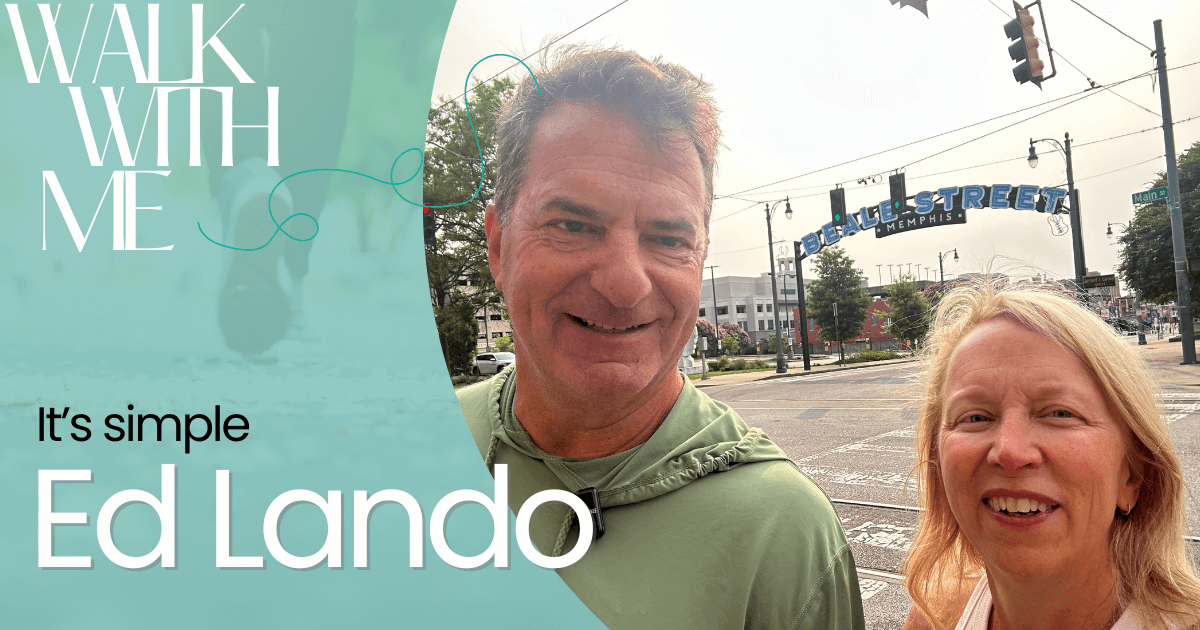
Rubber Ducking

If you are following along with these walks, you know I told you I want to walk with more children. I do. Many more of them… long after the 50 have been posted I would hope. It got me thinking of children I taught who now have children of their own. Case in point: Justin Hinerman. I met Justin when he was at the age of his son: 13.

I was his “computer teacher” in 8th grade, so in his world I was a rockstar.

Justin: That would have been in 1997, I think. Eighth grade. I have a memory of seeing you before I took the class. You were in the computer lab working on the computers somehow. Because anyone that was near the computers, I was locked in to. I was like, How do I get involved here?

Can I just pretend I was a rockstar for a minute? His version makes it clear that the attraction was the computer. Sigh.

Justin: My grandma had a computer, an old Tandy computer. And from the first time I saw it, I was like, this was it. I was glued to it. I had to figure out how it worked. It wasn’t just like I plugged in the disk and played a game…the big floppy floppy disk. 

Somewhere along the line, I got AOL. And in fact, it was early as second I was using AOL without supervision, mind you. There’s no notion of like, “Oh, maybe this isn’t the best thing to do.” I remember even I got my account suspended once on AOL for, quote, impersonating an employee. All I did was go into a chat room and say, “Hey, just keep in mind, if you send 10 messages in five seconds, you’ll get blocked for a minute.”  I learned something, and I wanted to be like, Hey, check this out.

Liz: You wanted to share it and you got blocked. 

Justin: They said, “You’re impersonating an employee.” I mean, I got a letter sent to my house and everything. I couldn’t use it for a month. Those were the days when that was the worst that could happen, right?

Did we all feel that way? Every AOL commercial promised the future had arrived, delivered through almost primitive means in hindsight. It was clunky and impossibly slow, yet somehow still revolutionary. Access to this brave new world required a ritual: loading software from a CD-ROM that arrived unsolicited in your mailbox like digital evangelism, then surrendering your phone line to the shrill screech of a modem negotiating with forces beyond our understanding.

It feels absolutely foreign now, and ridiculously taxing—waiting minutes for a single photograph to materialize line by line, getting kicked off when someone needed to make a call, paying by the hour like we were renting the future itself. But none of that mattered the moment we heard those three magic words: “You’ve Got Mail.” We didn’t know we were training for a world where a dopamine hit would come from every buzz, ping, and ringtone. We just knew that something fundamental had shifted… but to what extent we had no idea. 

Liz: You have a 13-year-old. I have a 17-year-old. Not that big a difference. So I feel like I should be much more aware of what she’s doing online. With all the knowledge you have, what freedom or restrictions do you have?

Justin: Well, first of all, he does not have a phone. 

This is the same person who could wander around AOL at an age younger than his son. As a computer programmer AND a father, his son does not have the same free range.

Justin: That’s the biggest thing. Even though all of his friends… I mean, he’s begging. He needs a phone. Everyone in his school has a phone. Whenever it’s time to have free time in class and it’s like, Hey, the teacher says, Get out your phone, and you can look on YouTube for 10 minutes. He doesn’t have a phone, so that’s hard. I take the approach of, okay, just almost teaching by talking to him about what’s appropriate and what’s not, and then monitoring that.

Liz: When will he get a phone?

Justin: That’s the question, isn’t it? I don’t know. We thought about eighth grade – next year. He’s just left seventh grade. And then we thought about ninth grade… eighth or ninth grade, probably he’ll get a phone.

Liz: And will social media be part and parcel of that? 

Justin: No. That is one thing we’ve talked to him about, is even once you do get a phone, I’m going to… Whatever Apple restrictions work, they’re going on there. I have to approve all apps. I have to… On and on and on.

Liz: Is Snapchat a social or a text?

Justin: Oh, I consider that a social.

Liz: My kids wouldn’t… that is the only way they use to communicate with friends. 

Justin: Really? Snapchat? Wow.

Liz: Because I’ll say, “Text your friend…” “I snapped her.”

Justin: “I snapped her.” See, I feel like I’m falling behind.

Liz: Oh, God. If you’re going to be behind, there’s no hope for the rest of us.

Justin: It’s terrifying. I mean, you know.

We’ve gone from celebrating that first “You’ve Got Mail” to locking phones away as if it were possible to put the digital genie back in the bottle. The data is stark: rising rates of depression, anxiety, self-harm, and suicide among young people who came of age with smartphones welded to their palms. What we thought was connection turned out to be isolation with better graphics. What we celebrated as progress turned out to be rewiring developing brains in ways we’re only now beginning to understand—and regret.

Liz: So you’re in the industry? What would you do if you could have an impact on it?

Justin: Well, that’s tough. I think part of it has to be to slow down, particularly when it comes to AI, because the Silicon Valley mindset is just fast, fast, fast, iterate, break stuff, whatever, let’s try again, boom, boom, boom. And that’s fine, but sometimes you need to have some common sense of what are we exactly doing here? And at least give some time to catch up for things like regulations, sensible safeguards, things like that. Because unchecked, the tech mindset will just keep churning stuff out, and particularly with AI, just in an exponential pace of innovation. 

Liz: I’m glad you explained that’s the tech mindset, and it is, and not in a negative way. We want it in all the other technological advances.

I think we can all agree we need the speeding bullet train of AI to slow down. But… it already left the station and a slow pace is antithetical to the technology mindset. Justin describes it accurately – go fast, get it wrong, iterate, try again. That is the way to get your MVP – your minimal viable product – to the market, but it is not the way we want a technology we hardly understand to impact our lives and our children’s lives.  However, speed is not the only polarity – yes, I am frightened by its potential, but personally, I am already dependent on AI as a resource. As is Justin.

Justin: On the other hand, I use those tools on a daily basis to bounce ideas off of, to brainstorm, particularly working remotely. It’s not like I can just turn to someone next to me and be like, Hey, what do you think of this and that? And get a whiteboard or whatever. So oftentimes there’s this term in programming… there’s this thing called rubber ducking, where if you can explain the problem you’re trying to solve in your code to a rubber duck, typically, as you go through the explanation to the rubber duck, you’re like, I can’t figure this out. This happens. You solve the problem in your head, that’s rubber ducking.

Liz: You actually have your hand out. Is there a rubber duck?

Justin: Well, it’s like, I’m holding a pretend rubber duck.

Liz: Okay, so there’s not a rubber duck on your desk.

Justin: There’s not a real rubber duck. No.

Liz: Well, there should be.

Justin: Right. There should be a rubber duck. So to me, it’s like a modern version of rubber ducking, where you ask the thing like, This happens, or whatever, quick answers. That, to me, is…

It’s not only acceptable, but the tool is there. It’s like the calculator. Use it. But yeah, with some appropriate guardrails. But that’s the crux.

Liz: But I’m old enough that early in my Linsly career, we were discussing whether we were going to give kids demerits for having calculators. Because that was cheating. And now we don’t see it that way.

Justin: So to me, it’s a tool, but it’s a much more powerful, dangerous tool. And there’s lots of opportunities for abuse there that we need to reckon with.

Liz: So I feel like it’s 1996, ’97 all over again.

Justin: Okay.

Here we are again. Facing another brave new world, another promise that the future has arrived. This time it’s not AOL’s friendly voice saying “You’ve Got Mail”—it’s AI saying “How can I help you today?” The same breathless excitement, the same wild predictions, the same sense that everything is about to change. We’re installing apps, learning prompts, marveling at machine learning.

But we know this story now. We’ve lived through the arc from wonder to addiction to regret. We know that every technological revolution promises to solve our problems while creating new ones we never saw coming. The question isn’t whether AI will change everything—it’s whether we can hold onto both the wonder and the caution. 

Liz: And you were there. You were at the beginning of it. And as you said, it was a great time to be you. 

Justin: Sure. 

Liz: We were basically putting the world at the fingertips of kids, so you had access to everything. 

Justin: Right. 

Liz: I was fighting the battles in the administration. If I can get whatever manual I need for anything online, why do I have to have manuals on a bookshelf in my office? Let’s put the curriculum online. No, then they’re not learning responsibility. They’re not learning organization. Well, they’re going to need a different level of responsibility and a different level of organization. Now, here we are again. I mean, somebody who is in eighth or ninth grade today, like your son, has the world at his fingertips in a creation way the way you did in a user way.

Justin: Very much so, yes.

Liz: But now you’re a parent afraid of it? 

Justin: For sure. 

Liz: Instead of a fearless teenager. 

Justin: Just diving into it.

Liz: Just diving into it. Are the stakes higher?

Justin: It certainly feels that way for sure. I mean, everything’s… With your own children, it’s a whole different- Isn’t it? It’s a whole different thing. It’s remarkable. Because with your own kids, you’re just fighting this. You just want to keep them here. And yet you need to also give them the freedom and growth and all that. It’s scary.

Liz: There was a line in Finding Nemo where Dory and the dad are in the whale’s mouth. And the dad says, “I promised I’d never let anything happen to him.” And Dory, in that amazing voice, says, “Hmm. That’s a funny thing to promise.” Marlin responds, “What?”

Dory: “Well, you can’t never let anything happen to him. Then nothing would ever happen to him. Not much fun for little Harpo.” And I didn’t have kids when I was sitting in that movie theater watching that movie. I’m pretty sure I was watching with Lisa Bryson Ames. And it just hit me. That’s part of the process. And you hope, as a parent, that those failures, those challenges, aren’t life-ending or life-altering. Well, I can’t even say life-altering. You want them to alter. But in a way that still gives them the possibility of a future.

Justin: Right.

Liz: It’s hard to let go of that control. 

We are not in control. Even if we think we are. Once we accept that, we stop spinning plates, chasing what-if catastrophes, and living with the twin thieves of fear and regret. We have to trust that they may just fly when they get pushed out of the nest.

Liz: The number one thing you want is communication. Period. At work, at home, everything. Because if they can talk to you, if you and your wife are talking in front of them, then you’re going to make it through all kinds of challenges. I guess you have to talk to more than a rubber duck. 

Justin: Well, yeah. Machines are simpler than human beings.

I wasn’t a parent in 1997, I was a teacher. I was Justin’s teacher. I trusted him. I trusted Matt…and Erik and Steven. For me machines weren’t simpler… children were. They trusted me. In our mutual trust, I handed over control.

Liz: I like that you made the comment that you went into that chat room because you wanted to help people. And that’s the way I think of you. We used to call it “just in time” training because it was Justin training. That’s the way I think of you – you could slow down and really talk to a Luddite.

Justin: How did this even come about? Because I just… Again, I tell my kids, Oh, yeah. I worked at my high school. 

Liz: I saw your strengths, Steven’s strengths, Matt’s strengths, and fill in the verb. I exploited them. I empowered you.

Justin: Well, I mean, empowered for sure… It’s almost like at the time, I didn’t appreciate it enough. It was just like, Oh, this is fun. Like I said, anything with a computer, I’m there. But also to have a feeling like, Oh, this is my thing as a middle schooler going into high school, trying to figure that out. I see that with my own kids now, right? Trying to figure out where they fit in life and with other people, to have that opportunity starting in eighth grade, ninth grade. That’s huge.

It’s funny. I remember even getting pulled, not just summer, maybe after school, whatever, but getting pulled out of one class to walk down the hallway to help another teacher. It was just like, “Let’s find Justin to fix this computer thing.”

Liz: I remember that very well. I remember one day being asked what I was doing to monitor you guys. I thought, oh, my God, they’ve passed me up. I can’t monitor them. We just have to trust them. 

Trust—informed trust, earned trust, trust with guardrails—remains the antithesis to our fears…even today. Not blind faith, but something wiser: the ability to remain open to transformation while insisting on our humanity. The courage to believe that we can learn, that we can do better, that the future doesn’t have to repeat the past’s mistakes… but also to cherish the moments from the past that weren’t mistakes at all, but unexpected joys.

Liz: I think back to the video you made me for softball at the end of your senior year. 

When I think back to that now, I think that is the seed that you planted in my life, that everything, anything, could be a multimedia experience. Not a lot of head of schools do videos the way we did. Not a lot of schools would even consider some of the things Country Day did early on. And I can’t find where it begins except for that year in softball.

Justin: Okay. Wow. I remember being down in that Linsly basement in that cement room.

Liz: Oh, you mean my office? Yes.

Justin: Was that your office? 

Liz: Yes. 

Justin: Lovely views. 

But just waiting for that thing to render. Because I remember it would get like hours and hours, and then it would fail, just on and on. But yeah, I was…

Liz: And now it gets one rotation, whatever it is, and it damn well better be finished, downloaded, uploaded, whatever the case may be. 

Justin: Yeah, it’s remarkable.

Liz:  It is remarkable. 

So what does it take to succeed in this fast-paced world of computers today?

Justin: I think to me, it all gets down to trust. And it might sound… I don’t know. But psychological safety to me is so important that it took me a long time to be able to say, “I don’t know.” Not to just be like, oh, it’s… Because not knowing something is curiosity. And that’s how you learn and grow. No one knows everything. So it took me a long time to get to that point and a long time to recognize that everyone is pretty much in the same position there. Because it’s difficult over remote… I can’t read body language. Tone doesn’t come across in your Slack, or text messages. I could put it in my head through my processor and it’d be like, Oh, this person is really pissed at me… even though they weren’t. All of this is to say the biggest thing to me is just the trust aspect.

Liz: I learned “I don’t know” in college, but I really learned “I don’t know” in practice with you because it was fine to say to you, “I don’t know how that works.” And we’d figure it out. 

Justin: See, it took me years to figure that out the “I don’t know”

Liz: Well, that might be an apology that I owe you. You were my answer guy. So I didn’t make, “I don’t know,” acceptable. So I’m sorry.

Justin: Well, don’t sweat it. I think that for a long time, I felt like I had all the answers. Certainly when it came to my software and things like that, my profession, that not having the answer was so uncomfortable. And a really vulnerable place to be.

Liz: Oh, you said a lot right there. What age is it that it’s okay to be vulnerable? Have you hit it?

Justin: I hope so. I feel that way on a daily basis. I try to… When you talk about building a culture in a team at work, I try to be very upfront now. “I don’t know. I’ll have to check into that. I don’t know.” Instead of just trying to hide behind some fake answer, pretending. 

Liz: Well, maybe that’s the best gift we could give our kids.

Justin: Yeah, for sure. 

Twenty-seven years later, Justin sits where I once sat—the adult making choices about the intersection between technology and children. He talks to AI the way he once talked to me: bouncing ideas, solving problems, finding answers. His rubber duck has gotten smarter, but the need for trust hasn’t changed. He won’t give his thirteen-year-old the same freedom he had at thirteen, and maybe that’s wisdom, not fear.

I think about that basement office, waiting hours for a video to render, working alongside a young man who didn’t know he was teaching me to be present – that the future was already here. Now we’re both older, both saying “I don’t know” easily, both trying to figure out how vulnerability makes us authentic and relatable.

Maybe the most important lesson we learned together wasn’t about technology at all—it’s about trusting each other enough to admit we’re all just figuring it out as we go.


Liz Hofreuter

Founder GEN-Ed

Not your typical researcher or consultant, Liz connects lived experience to transformative leadership. To uncomplicate leadership and education, every story matters and she is just getting started.