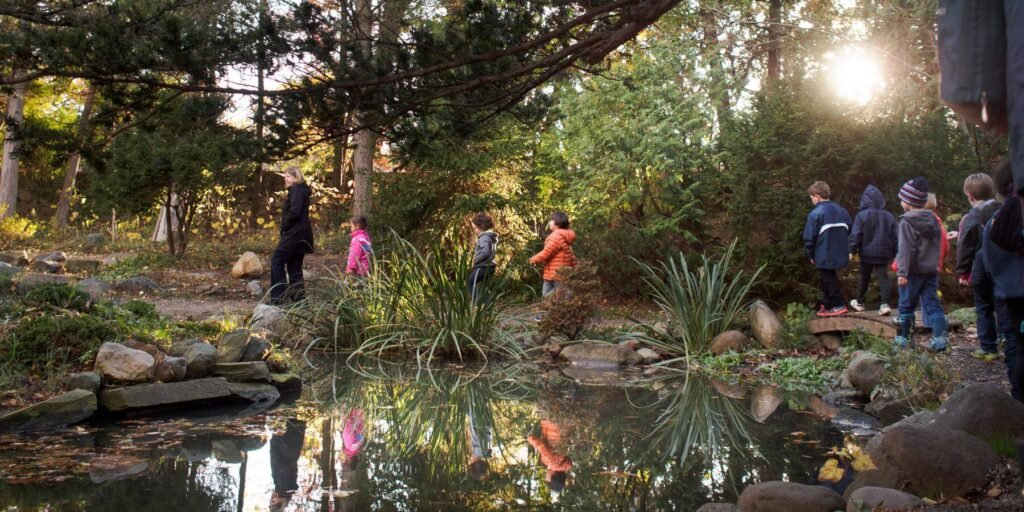
Every once in a while you read something that resonates with you, and you carry it around – pulling it out when you need it, but always having it tucked away in your mind. This is one… “Try to see your child as a seed that came in a packet without a label. Your job is to provide the right environment and nutrients and to pull the weeds. You can’t decide what kind of flower you’ll get or in which season it will bloom.” Wendy Mogel, the author of The Blessing of a Skinned Knee shared this wisdom that I carry.
The teaching of the wildflower seeds asks us as parents to respect our children for the individuals they are. My daughter may not have been able to read as soon as others did, but one day it clicked – letters made sounds – sounds made words and words had meaning. My job as her parent was simple – provide the right environment where she could learn and recognize learning as a reward in and of itself — not keeping up with her classmates.
It is hard to remember that we don’t get to decide what kind of flower will bloom or when that will happen. When we embrace that, how could we be disappointed? Or spend so much time worrying?
Finally, after preaching the words I found leafing through Mogel’s wisdom, I decided to plant a wildflower garden this summer. It was difficult to find a packet of seeds with no label or promise of what was to come. In rows and rows of options, I found only one. I also found a moldy set of discarded bulbs in a ripped bag. I bought that too. I didn’t observe the way the sun played in my yard. I didn’t test the soil in various places. I didn’t analyze the clay or the acidity. I just picked a spot to which my eyes are naturally drawn. I cleared the grass in that spot and loosened the soil. I poured a bag of top soil over the loosened dirt and mixed my DYI compound.
I dug small holes for the bulbs and then simply scattered the seeds around them. I watered them but not as regularly as I should have. I let them be. I was resolved that it may take years for me to enjoy the fruits or should I say the flowers of my labor. Each day as I walked out my patio door, I would glimpse their way. One morning, I noticed tall green shoots. The next there was a vine-like green tubing protruding from another spot. I only pulled the grass that tried to grow up again – ironic, since I cannot get grass to grow in other areas of the yard. I plucked the clover out. Otherwise, I let all that sprouted simply grow.
I always deeply believed Mogel’s words, but I wasn’t truly living them until I planted my wildflower garden. I am so happy with every budding flower, every green leaf in all of their varieties… and the purple flowers that are just opening delight me. It doesn’t escape me when I tend my small garden that this is exactly how I should parent my daughters. Delighting in the unexpected ideas and kindnesses, marvelling at the way they grow, forgiving myself when I lose my balance standing up and step on a leaf. Unlike other planters, I didn’t arrange the color scheme, plant heights or trailing vines…this is a wildflower garden. I don’t control it, I care for it and I let it impress me.
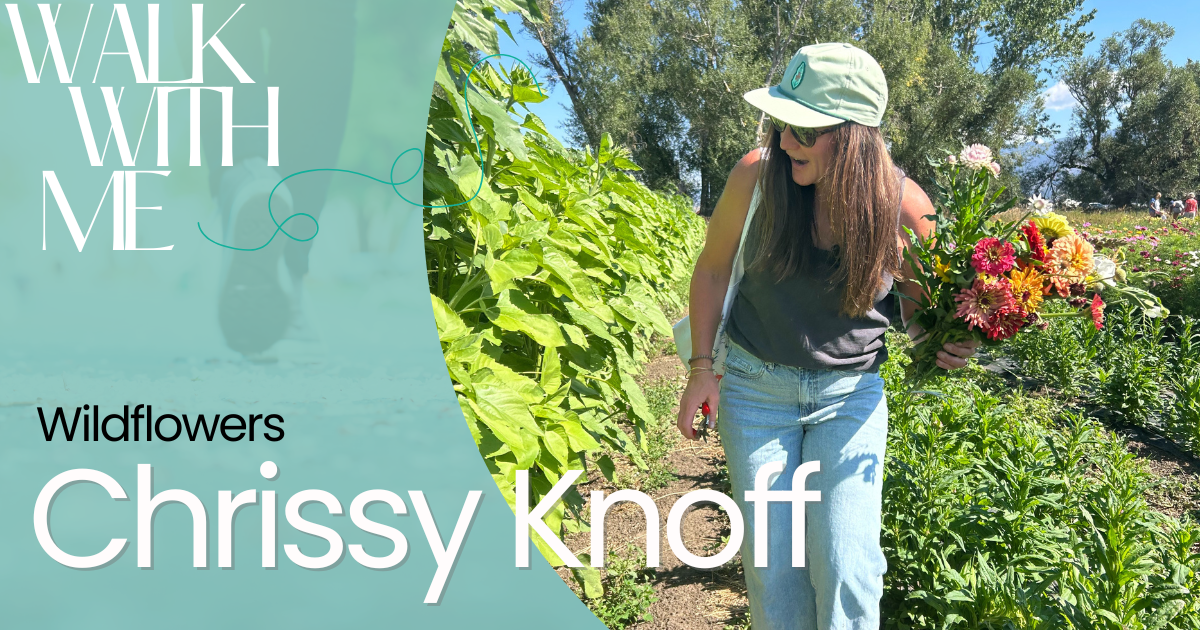
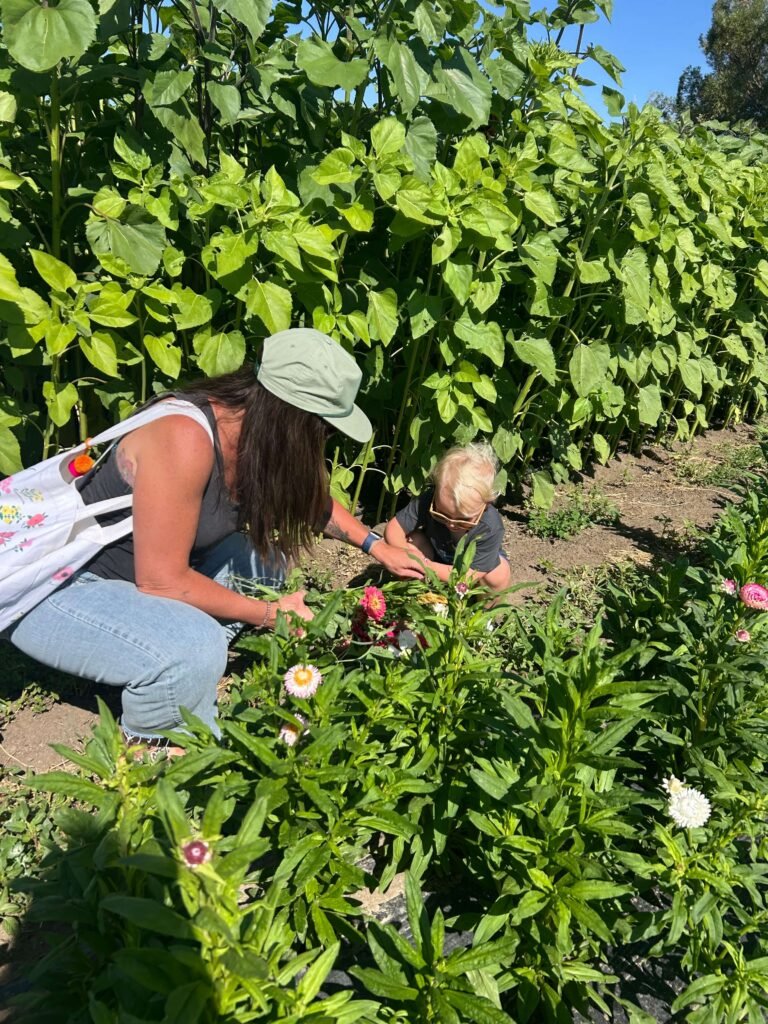
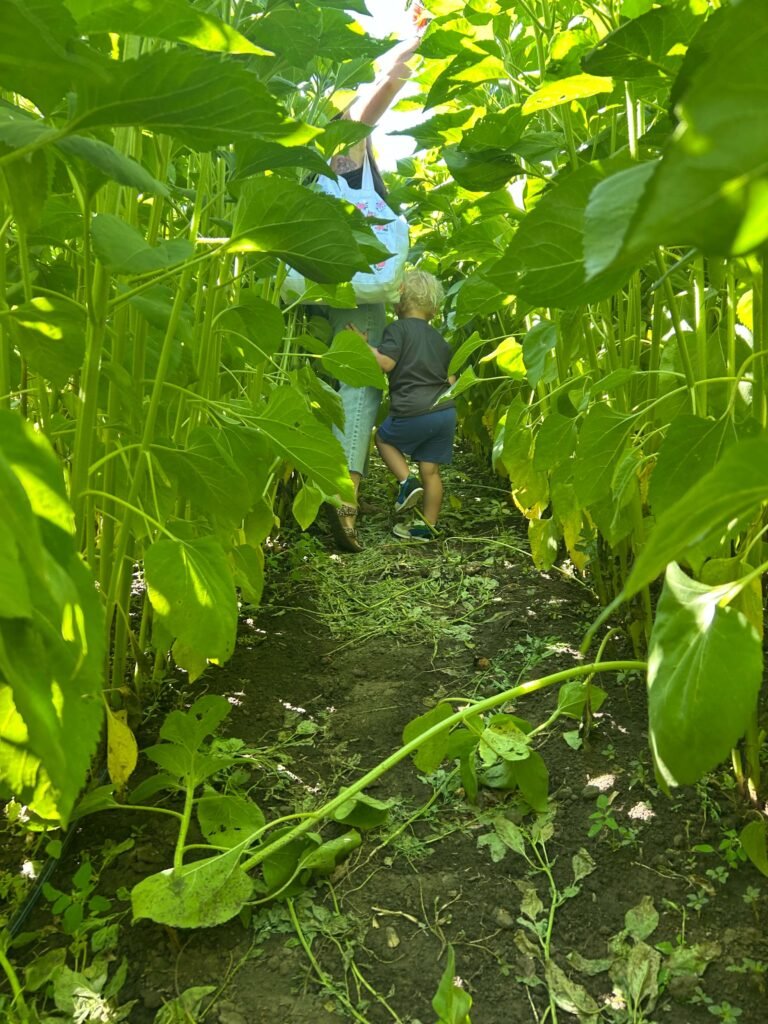
When my former student, Chrissy Hoag (Knoff), asked if I wanted to pick flowers as an activity for our walk, I was exuberant. Yes, I would meet her and her son on a back road behind the airport in Bozeman, MT. I would not miss it. It would be a slight, subtle glimpse into being a grandparent for Chrissy had been like a daughter to me when I was a dorm mother at The Linsly School years ago. What I found on that dirt road was a front row seat to a mother delighting in her sons’ curiosity.
Chrissy: Do you want to come see the castle flowers with me? Yeah. Okay. But watch running with your claws.
Child: Look at these red flowers.
Chrissy: Those are cool. You could pick those. Do you see the… You could pick it way down here.
Child: This? Cool.
Chrissy: But remember, down at the bottom.
Child: Got one. Let’s pick some more of these I want these.
Chrissy: Okay.
Chrissy: Here, can I show you a different flower that’s in here that I love? These are called paper flowers. Do you see how it looks like a piece of paper? But go all the way down to the bottom.
Child: I am.
Chrissy: Okay.
Child: I go right down to the bottom.
Chrissy: But feel it. It feels different than the other flowers, huh?
Child: Oh, good. It’s like popcorn.
Just as natural paper flowers surprise us with their pointed petals unfolded in their own time — our children reveal their curiosities and personalities in seasons we cannot rush. There’s something deeply humbling about this uncertainty, each child holding secrets we cannot predict or control; each child deserving the richest soil our hearts can offer. As a social worker, Chrissy knows all too well that not every child experiences such trust.
Chrissy: CPS is this entity that I didn’t really understand. I didn’t have kids. I didn’t know anybody had ever dealt with CPS, but it was this idea of being a social worker, if you will. It changed my life, and I saw some really intense things that I don’t think I ever will unsee or unfeel. And it really pushed me into this idea of, you need to do more.
Liz: I have to ask, when you say you need to do more, do you mean you weren’t doing enough? Was it that feeling? That treading water and the water’s rising?
Chrissy: Yeah. And for the kids, for these people going into the system for the lack of the…
I mean, the system is broken, not because there aren’t great people.
I moved out here when I was 40, I had gone through a lot with being in child welfare and had a very particularly impactful case where a father died from a heroine overdose.
I was the last one to see him with his child the day before he overdosed. And it was just a really impactful case. I think about that kid a lot…. Right after that happened, I took a minute, stepped back, telescoped out, and was like, I think I need to think about my life in the way that I want it, not just this grind to keep doing something next.
I have to wonder if I chose to do a series of walks outside because I could simply no longer breathe on the treadmill of next and next and next.
Liz: Do you think your experience with social work impacts how you mother?
Chrissy: Yeah. And I think, honestly, I mean, I had him when I was 45. I was way more aware. …the level of gratitude to have him is pretty cool.
It is a whole other story to think about what I went through because I was 44 when we started the process. She said that your best chance of having a healthy baby is a donor egg because I can’t harvest your eggs here. They’d only do it past 42 in Montana, and we’d have to go to a different state, and we’d have to blah, blah, blah. And I was like, I had a plan. I was on a one-year trajectory. We’d pick out an egg donor and think about it for a night. And then the next day, all of her eggs, the lots of eggs would be gone.
And we joke about it. We were like, it’s like Tinder for eggs.
So the first egg completely failed, didn’t even stick at all. And then we had one egg left. And I remember when she called me and she said, well, it didn’t work. And I said, okay, sign me up for the next one. And she was like, well, wait a minute. Let’s talk to Adam, your husband. And I said, yeah, we can talk to him, but we’re going to do the next one.
Wait a minute? Nope. I know all too well that determination to have a child. I wasn’t 45. I was only 35, but still considered ‘advanced age.’ You find yourself bargaining with time, with your body, with whatever forces might be listening once you embark through the maze of infertility treatments. You travel through your days with syringes and hormones – scanning every public bathroom for the red disposal box. You learn there are enough follicles, but not as many eggs as we would like, but still you hold fast to hope. Friends and family hover at the edges with well-meaning questions you can’t answer …yet. After embryos are transplanted in a very sterile, clinical, scientific setting, you shift back to acupuncture, meditation and bargains. You research obsessively: what’s a good first beta hCg level, how quickly should it double, what number is ideal? You visualize that number. 25, 50, 200 – your future being quantified. You do all the things you can – like a die-hard fanatic moving through superstitions before the big game – because doing nothing at all is incomprehensible.
Chrissy: And, yeah, three years later, here he is.
Liz: Had you given up on motherhood at one point?
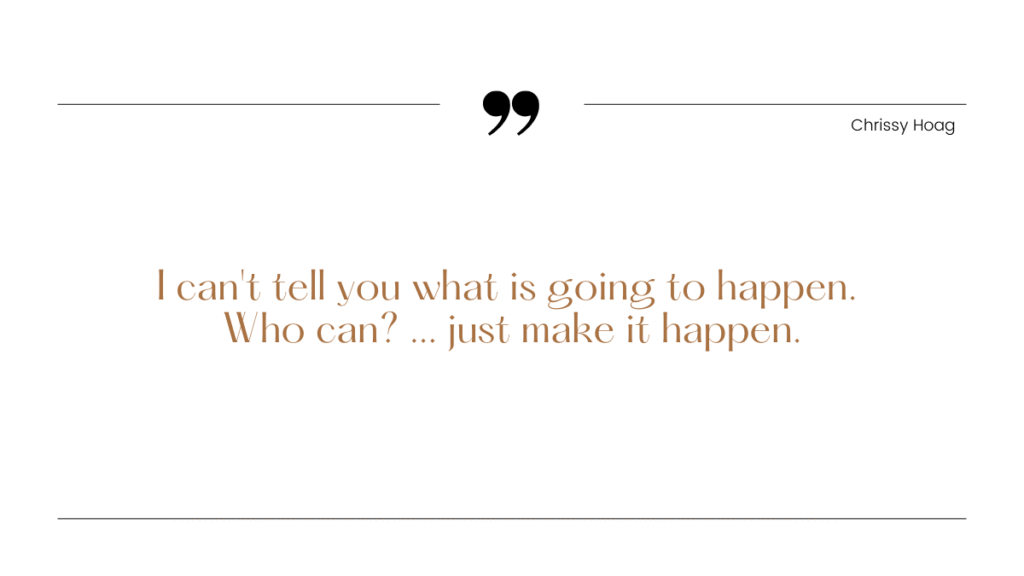
Chrissy: Oh, yeah. Yup. I really did not think I was ever going to get married. I didn’t think I was ever going to have kids. And I had a very good friend of mine that I’ve known for many years. Her name’s Carol. And at one point, I think it was right around age 30 or so I said to her, I was just really upset, I’m never going to get married, and I’m never going to have kids, and never, never, never, never. And she said, Well, I can’t tell you what is going to happen. Who can? But she said, I can tell you that if you want to be with kids, and you want to work with kids, and you want to be around kids, … just make it happen. And she said, You can still feel really fulfilled if you are around kids.
Liz: I love the advice that if this is what makes your heart sing, make it happen.
Chrissy: So the journey has been pretty wild. I mean, one of the things that’s been so cool is actually so many years later, now this June, finishing my master’s in social work was pretty emotional for me. I think about when I started this so many years ago. And it’s wild to now be doing what I’m doing and weirdly feeling like I can advocate so much better, I think, because I can say, well, I have a master’s in social work and I have a clinical license and people listen to you differently then when you just say, I have ‘15 years of experience being in some pretty tough spots and having to advocate really hard for people.’
Chrissy: But I think also having a tiny human and knowing that you want them to be a good person, too, has changed a lot for me.
Liz: There’s something about having your own and having the feeling of I want what’s best, and I’ve seen what can happen.
Chrissy: Yeah.
Liz: So I want to make it better for everybody, or at least as many as I can. So you established …
Chrissy: a pediatric social work position where I really advocated to have some support for our perinatal population, mostly because I think, one, it’s just really lacking, and two, it’s just really important, and resources are hard here.
and lots of people are moving here, and they don’t realize we don’t have anything. We don’t have services. We don’t have Behavioral Health Support.
As we talked about the families she was helping, the first responders who needed their own support and the children we couldn’t save try as we might, I couldn’t help but think of the wildflowers. The tall sunflowers that reach as high as they can, that turn their faces to the sun no matter what. The tunnels and safe places and shade they create by growing together even with weeds growing at their roots.
Child: There’s another tunnel right here.
Chrissy: Oh, that’s cool.
Child: And more tunnels.
Chrissy: Those are shorter tunnels. I bet you could get through those tunnels all by yourself.
Child: And you come. I move this stuff for you.
Chrissy: What, babe?
Child: I moved this stuff for you.
Chrissy: You moved that stuff for me? Oh, thanks, sweet love.
Child: You’re welcome.
I am reminded of my earlier walk with Sharon – that we ache to return to these early days when our children relished our company and wanted us to come too. We marvel at the adults they are becoming. We delight as their curiosities bloom into passions. No longer able to pull weeds and water the ground as they plant themselves in other areas, we advise and support. But… sometimes… in rare moments… as happened just this summer … Grace or Ella reach over to hold my hand as we walk. Not wanting to make a big deal of it, I silently send up a prayer of gratitude for the reminder of their innocent, sweet love.
They are always our children. As is my habit, I joke a bit about that.
Liz: I have to tell you, I have a 21 and a 17-year-old and dating a 65-year-old. And the one thing I say is I I should have given up the diaper bag. Everybody still needs a wipe and a snack and a cool drink.
Chrissy: Yes. Yeah.
…especially when you are tending your garden in the heat of the sun, nurturing the children who burst into your days like an unexpected summer thunderstorm—delighting you with their wonder, frustrating you with their fierce independence, amazing you with sudden wisdom. Did I tell you my wildflower garden is blooming against this merciless August heat? I watch it all unfold and I cannot wait to see what blooms next and what transforms.
My simple unmarked packet wildflower garden teaches me what I need to know about motherhood: these two souls entrusted to me—my beautifully impossible gifts— will bloom exactly as they are meant to, in their own time, in their own magnificent way.
Not your typical researcher or consultant, Liz connects lived experience to transformative leadership. To uncomplicate leadership and education, every story matters and she is just getting started.
There are seasons to this adult life that arrive with the predictability of weather patterns—each decade bringing its own particular storm system. There’s the decade when your weekends disappear into a blur of white tulle and champagne toasts, when every Saturday means squeezing into another bridesmaid dress or clutching a bridal shower gift all chased by baby showers where you marvel at how much stuff one tiny human apparently needs.
Naturally the decade of sports, dance and science fairs follows close on its heels when your social circle revolves around bleacher conversations, playdate planning, and last-minute carpools. Adult friendships are forged and sometimes lost on the sidelines.
I find myself in what I’m calling the “How are your parents?” decade. Every conversation finds its way to that loaded question, followed by discussions about assisted living choices, medication schedules, and the peculiar art of finding caregivers while we ask ourselves shouldn’t we be taking care of the people who took care of us?
In that first decade I found myself thinking “When is it my turn?” In the next, “Will my turn at this ever end?” and then “Oh no, it’s my turn.” There is something about the fact that we all go through it that makes us minimize or downplay our emotions.
While I expected this particular benchmark to stretch ahead of me like a marathon, my turn ended up being more like an unexpected sprint—barely a year of racing home from work to get someone to a doctor’s appointment or befriending the pharmacist for medication packets before I lost both parents and my step-mother in what felt like a macabre game of musical chairs, or should I say, hospice beds. It was just my turn.
I had some naive notion I could write a blog that could help other people be better prepared when their turns come. I have realized that is not possible. There is no advice, no wisdom, no checklist that works universally. Turns out, that’s like trying to write instructions for falling in love in that first season. Some experiences resist being tidied up into helpful bullet points.
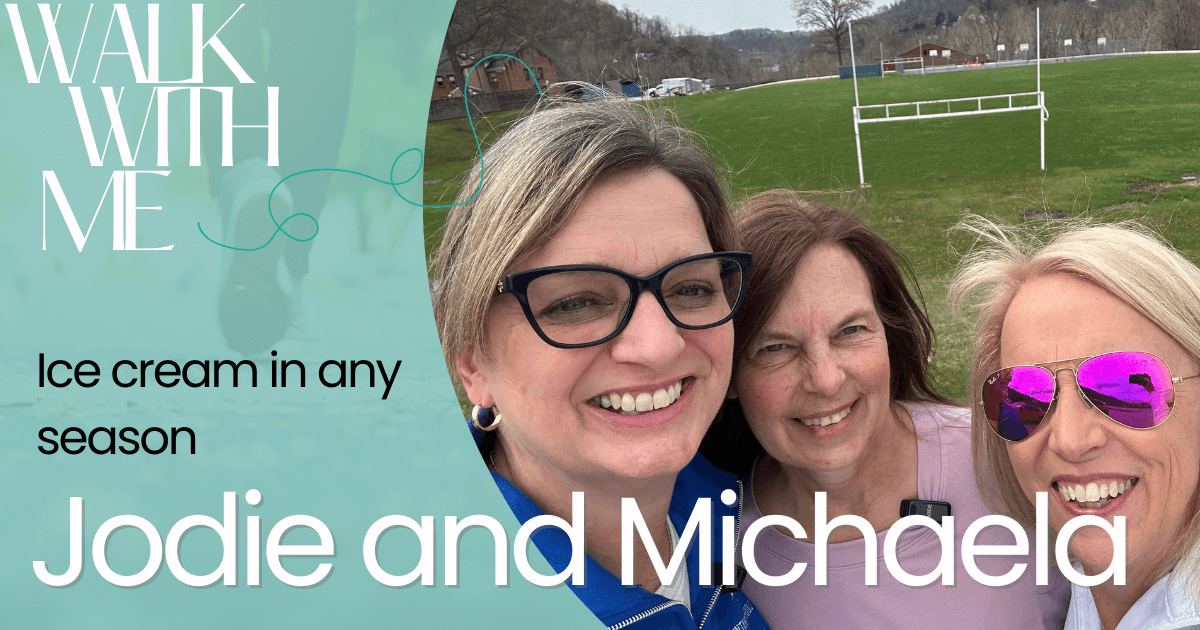
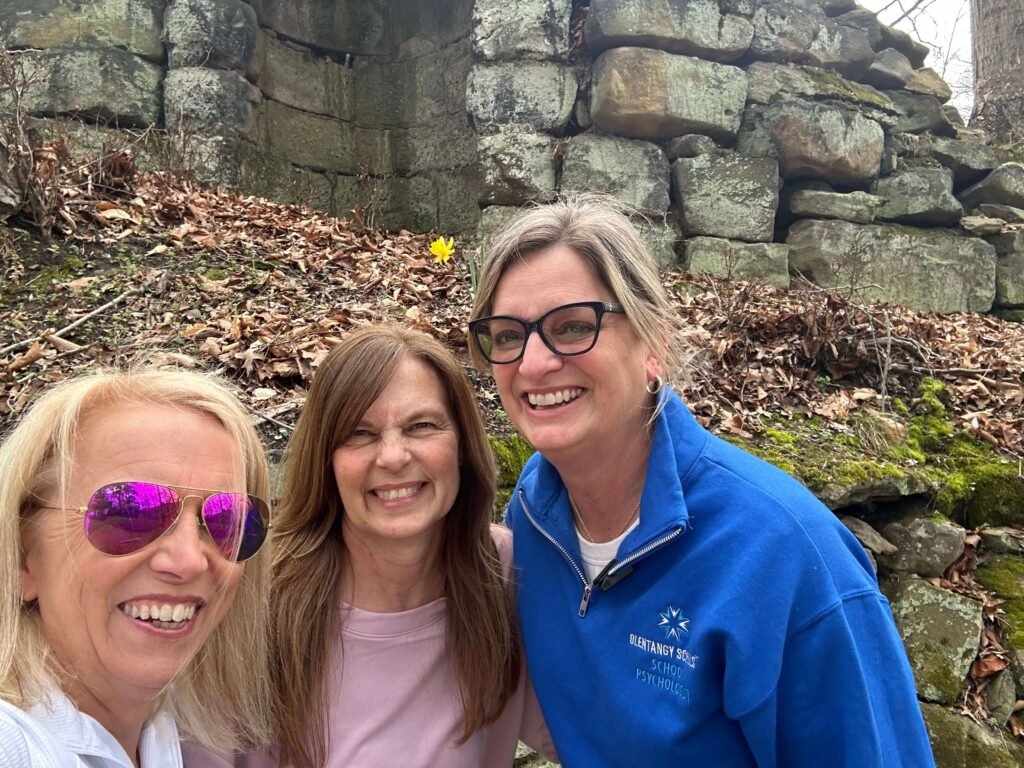
On a walk with two life-long friends who have both lost their mothers, Jodie and Michaela, I found the comfort of leaning into the emotions specifically with two friends who knew my parents well. We have college roommates, sport-induced adult friendships, and even work friends who all support us, but there is a warm hug in the friendships that formed when our mothers and fathers were integral in our daily lives. Jodie and Mich were loved by, provided for and scolded by my parents almost as much as I was.
It feels rich to share our stories with people who knew our mothers almost as long as we did.
Liz: I don’t think I understood what it was like to lose a parent until I lost a parent. You made the comment that when Gigi’s dad died, you had this feeling of…”that can’t happen to me.”
Jodie: Not in the way like, it can’t happen to me. Like, it’s not going to happen to me. But that cannot happen to me. I would not be able to live through it.
Mich: Yeah, I know. Dan lost his parents in December and March. Even though I’d been in the family for 25 years, they weren’t my parents. And I don’t… It sounds crass, but they weren’t my parents, you know. But my mom dying, I have never had anybody, any relative die, because I never had grandparents. They were already dead before I was born. So I never had any of that.
Jodie: I feel it all the time for Carter. I just don’t know. I can’t imagine. I always say he’s alone. And I couldn’t imagine how that feels. And that’s why I think I was always so quiet around you two, because I don’t know what else to say besides I’m sorry. Because I can’t even imagine how that feels. And the only thing that I can say is I’m sorry. And that just seems so little.
Before Carter became the love of Jodie’s life and the father of her children, he was my brother from another mother. Living just three houses away we spent long summer hours together in the middle of the street wondering how cars would dare to drive down Poplar Avenue and disrupt our games. He lost his mother to cancer 32 years ago and lost his father 7 years ago. I didn’t support Carter enough when his mom died. I wasn’t there for him like I would be now. I didn’t know. As I said, you don’t know what it is like to lose a parent until you do. The thing to remember is that here is no expiration date.
Liz: Somebody could tell me today, I am so sorry you’re living without your mom and your dad, and it would mean as much as if you had said it five minutes after.
Mich: I think I wanted somebody to just say, “I’ve got you.”
When Mich’s mother died, they had a very small service for her. I was one of two people who attended who were not relatives. I think I forced Mich’s hand to include me. I knew what it meant to me to have friends who attended my father’s funeral. I wanted to return the favor. If I am being honest, I needed a space to show up. Attending a funeral is easier than finding other ways to show support. It is a tradition. Our bodies know how to move through traditions. We know to show up there.
Liz: So who is a funeral for?
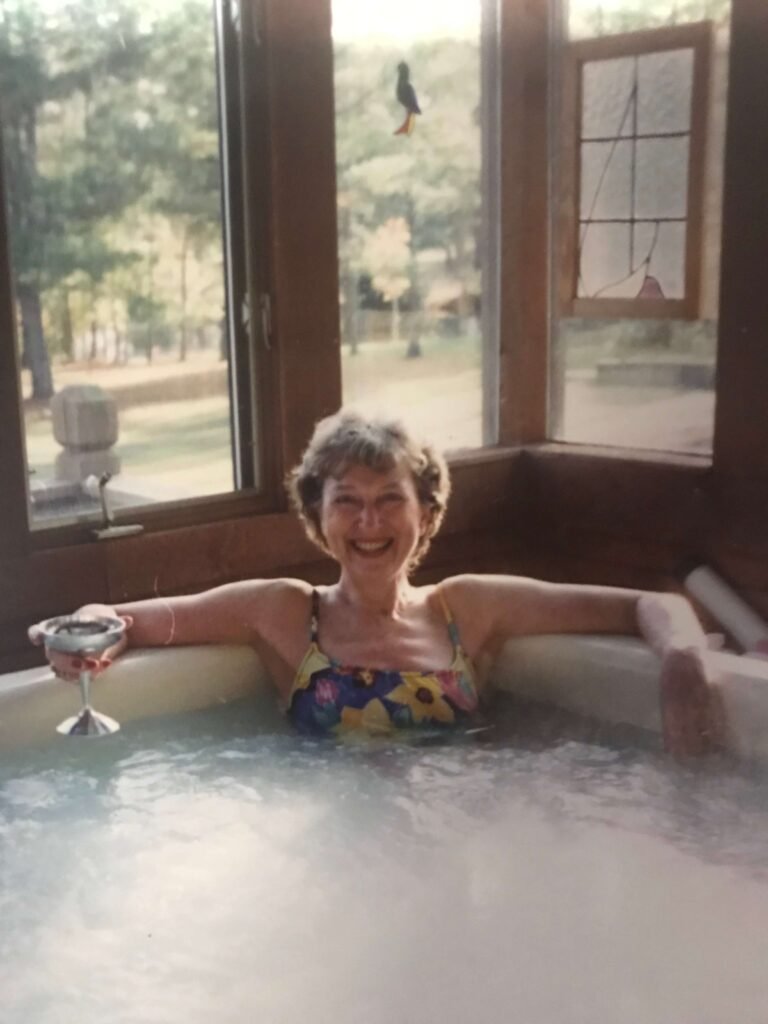
Jodie: I don’t know. You know what my favorite part of your mom’s was? That picture of her. I mean, I think that said it all. And I think if people would just have walked in and seen that and turned around, that’s all that was necessary. That picture of her, I loved it. I mean, because that’s who she was. She looked so happy in that picture. I loved that.
Liz: She survived enough of her friends that she knew she wanted a party, not a funeral.
I look at that picture when I write. While my diplomas don’t hang in my home office, my mother’s hot tub picture does. I love that Jodie noticed that detail. I love that the picture brought joy to my friend. That is how we remember our mothers in the small moments that made them the happiest.
Mich: I kept meaning to get recipes. She always made this bread that both my girls adored. And I remember we had Alex make it with her a couple of times. So Anneliese and Alex had written down some of the stuff. And I remember that it was on the refrigerator at her house. It was on a post-it note. And then it disappeared. I always thought, Oh, next time. I’ll get it next time.
Liz: Well, we all know my mom couldn’t cook, so there were no recipes. Like, none.
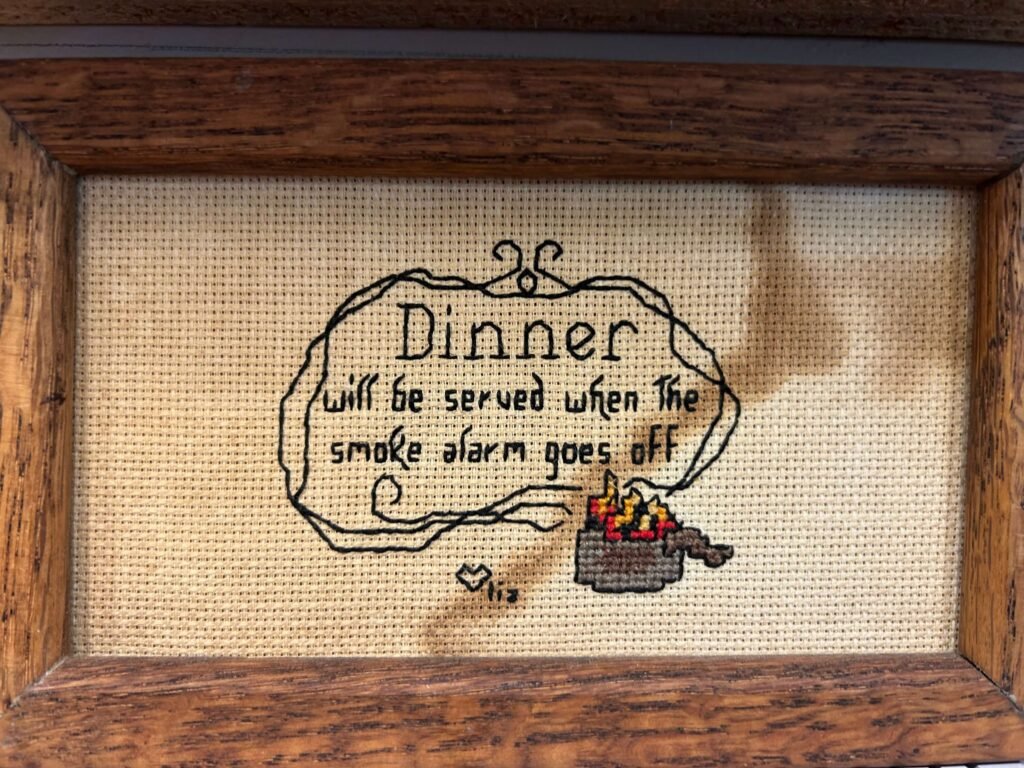
Carter would remember that my mom was famous for burning the bread. He could look out his back door and see a baking sheet with flaming triangles of pita bread. Framed in my own kitchen now is a crossstitch I gave her years ago. Dinner will be ready when the smoke alarm goes off. I will proudly tell you that I summon my own children in a similar way. They never understand why I am smiling as I run to open the back door, so the smoke can clear. It’s just a little hello from Mom. I can almost hear her laugh lovingly at me in revenge.
Jodie: There’s just so many moments now, at this age, that you just want your mom. There’s been so many times that I just want to call her.
Liz: I think there were so many moments at every age. But you could always call her.
Jodie: Right.
Mich: I had talked to her every day on the phone, every day. That was my… I drove home, picked up the phone.
Liz: I have my mom’s phone. It’s in the drawer. Sometimes I still text her. I think the last text was “Today was really shitty.” Just because that’s who I’m going to send it to.
Jodie: My mom’s phone wasn’t turned off for a long time. And so when my dad had to… If his phone was lost or he couldn’t find it, or if his was dead, he would call from my mom’s, and that would just freak me out.
Mich: Oh, boy.
Liz: When you guys were talking about messages you had from your moms my messages are, I took my meds. I regret that in the end I was managing my parents instead of being with them.
I read Being Mortal years ago. Atul Gawande taught me something profound when he wrote about asking his aging father what mattered most to him—not what the doctors recommended, but what brought him joy. His father’s answer was beautifully simple: he wanted to be able to eat chocolate ice cream and watch football on television. Not the sugar-free version of living, but the real thing. I had taken advantage of that advice and asked my dad what brought him joy. He too said eating ice cream, but he wasn’t sure that was a complete list. I wasn’t sure if he wasn’t just influenced by the example. We never revisited that conversation, but I never once denied the call from him to run to Dairy Queen late in the evening. I thought I had time to have that conversation with my mom. I would assume her answer would have been to travel, but she still loved life after that last trip that left her confused in LaGuardia airport. I wish I would have asked her, but my mother had internalized this. As a doctor, she knew the value of quality of life and counseled families masterfully at the end of life.
Liz: I feel like you guys got it right. Don’t you feel like you got a lot of time with your mom at the end? And wasn’t there a time where she went from being combative and confused to just being- funny. With really good skin.
Jodie: Right with beautiful skin. Yes. We just took on a new attitude with her, too. We just went with whatever she said, and it was a lot easier then. And like I said, we just laughed a lot.
Jodie: What I’m most happy about is everyone says I have a lot of her characteristics. I act just like her. Sometimes I look in the mirror and I’m like, “Oh, gosh, that’s my mom.” And I love it. Carter will say sometimes, That’s just like your mother. And I always go, “Thank you.” So I’m pretty happy about that.
Mich: Everything that dad and I talked about for the year afterwards, was constantly the same story about how they met, how he left Austria because he failed an exam at medical school, and they said he wouldn’t be able to take it for another year. He wasn’t sure what he could do next. And then he saw something about being a resident in England, but didn’t speak a word of English, so he took his dictionary, took the train, then took a boat to get to England, and ended up somewhere, not in the same hospital as my mom, but somewhere close. And he just goes on and on about how they met. And dad was supposed to go out with somebody else, but he chose not to. Or mom was, I can’t remember. I should know it by now. But they just happened to end up in the same place at the same time. And he said, for a year, they dated with a dictionary, an English-German dictionary. He said, the first time we spent together, we sat for five hours, and neither of us knew what either one was saying.
I love the thought of Mich’s parents falling in love without speaking a word to one another. My parents were in the same study group in medical school until my dad kicked her out because his buddy wanted in. I guess dating him was the consolation prize. The stories are legends now. No opportunity to fact check or correct the intricacies – they will just echo about in our memory. This summer, four years after her mother died, Mich’s father died.
Mich: We carried on a lot of conversations early in May. And then when I got there later, he had really lost his voice. And then he was trying to talk, and he was then starting to say things in German and English. And then he had no voice at all, but he had things he had to say. There were a couple of times he grabbed my hand, and he was earnest, very earnest in what he needed to say. I don’t know what he said, but he looked me in the eye, and he’d held my hand. That was enough.
Liz: Well, you gave him the chance to say it, even if you didn’t hear it or it makes sense to him.
Mich: And we didn’t dismiss him. We, what was that dad? It wasn’t like, oh, okay. Because I think he would have, even where he was at, I think he would have felt dismissed. And I certainly didn’t want him to feel that way.
Liz: I told you, I have a friend who’s done death and dying. And he says the three things we’re supposed to say are Thank you. I love you, and I forgive you. And that that’s all the person needs to cross. And I bet your dad needed to know on some level that you forgave him.
That friend is William Peters, the Founder and Executive Director of the Shared Crossing Project. He offers a profound framework for end-of-life conversations that transforms how we approach these final moments. Rather than focusing solely on what we’re losing, Peters suggests reorienting ourselves through three essential expressions: thank you, I love you, goodbye. “Thank you for being my mom” shifts our attention from loss to appreciation—acknowledging all the wonderful connections and experiences we’ve shared rather than dwelling on death. The gratitude statement becomes a celebration of the relationship’s gifts, honoring its fullness.
He explained to me that I might include “I forgive you as well if that’s necessary, and it most likely is in every relationship.” Forgiveness must come before we can offer an authentic “I love you.” Without addressing the times we’ve been harmed or disappointed, our expressions of love might seem incomplete. “I love you inclusive of any harm or meanness—when you weren’t the best form of yourself—I love you.”
The final goodbye offers a modicum of control in an otherwise overwhelming moment. While literature might tell us otherwise, death is not the enemy—it’s the most natural part of life. There is no battle to be fought, only a transition to be embraced with grace and presence. It seems to me there is so much wisdom in the thread of thank you, I love you, goodbye. I’ll have to ask William to walk with me.
Liz: Without her generation, it feels different. Have you experienced that yet?
Mich: Generation in the family?
Liz: My mom and her brothers have all died now.
Jodie: Well, I’m not quite there yet, but that’s my biggest fear is that I’m not going to consider Wheeling home anymore because I consider my mom and dad home, and I am just so nervous about that, of not wanting to come back to Wheeling because it’s going to be too hard for me not having them here.
Mich: Even with your siblings here?
Jodie: Yeah, because I just think that I’m just going to have that big hole.
Liz: Now I feel like I can leave. It’s very clear to me every day I stay in the three years since mom died, I used them as an excuse because it was easier to stay than leave. Now I’m using Ella in school as an excuse. I’m the adult. If I really want to pull her and move somewhere, I should do it. But I think that’s part of my problem right now is without them, I don’t feel like I have a home.
Mich: My parents had always been, Go, just go. But once there were children, I never knew my grandparents, so it was very important for me for my children to know their grandparents. And that was what kept us in Wheeling. That was why we’re still here.
Jodie: As soon as we had kids, my mom and dad came down every morning, especially my dad, every day. And then he took Collin to Easter Seals and to all his appointments so I didn’t have to take off. And then when we moved to Fairmont, they were down there every weekend or every other weekend. And then just as we moved further, they would just come down for every holiday.
Jodie: I do think that the family will stay together, and Wheeling will be the home base Yes. But I just think it’s going to be really different for me coming and calling this home like I do now.
Mich: Yeah, because your parents are home. Our parents were home.
Mich switches to the past tense. In that grammatical shift we sense the uncertainty of our footing, the uneasiness of not knowing where home is or who we are once we lose both of our parents. Am I still a daughter?
I am. And while someone else now lives in the homes my parents inhabited at the end of their lives and also in the home where I grew up, I know I still have the home from my childhood. I can find it in these lifelong friends. People who knew me when I was Lizz – with two z’s for pizzazz – and still thought I was beautiful with braces and a senseless perm. People who could only reach me on a shared land line at night or through a note passed surreptitiously under a wooden desk. People who played ping pong in my basement… who know that calling me “Elizabeth” with a slight lilt at the end still makes me think I am in trouble.
Fifteen years ago a group of these childhood friends initiated an annual reunion. There is no typical posturing one would expect at such a reunion. It is much more authentic than that. It is as if we walk over the threshold of the door and transition into our sixteen year old selves… and we are home.
In all those seasons throughout life, we lost touch. We followed other paths. I don’t know their middles, but they were there at the beginning and they are there as we experience the endings.
The beautiful, messy truth is this: there’s no universal playbook for life or its details. No matter what – the seating chart for the wedding is a pain in the ass, the coach won’t always be fair to your kid like he is to someone else’s, the packing list for the college dorm room will be too long and still incomplete, and the medication list for improved quality of life will have its contra-indicators… but somehow we all muddle through, and it works out… or it becomes essential fodder for a great story at the next reunion.
In all the seasons of our lives, but especially in this one as we move out of the caregiver role … first to our children and then to our parents if we are lucky… I hope we all live by Atul Gawande’s advice and articulate what gives us joy in this life. Ask yourself, “What really matters?” What is your version of eating ice cream during the big game?… regardless of the season.
Not your typical researcher or consultant, Liz connects lived experience to transformative leadership. To uncomplicate leadership and education, every story matters and she is just getting started.
In 1995 my love affair with the moon began. Professor Eleanor Duckworth introduced us. As part of her T440 (Tea for 40) course at Harvard Graduate School of Education, she required us to keep a moon journal. She asked us to write down every time we saw the moon – what time it was, what day it was, where it was in the sky and what it looked like. We could draw what we saw. We could simply write. Regardless, we needed to pay attention to the moon … consistently.
It was hard to explain to my dad that I was moon watching as part of my masters at Harvard. Let me put the assignment in another light for you. She made us, as educators, become learners together. She asked us to learn about an object we thought we already knew. She didn’t tell us anything to watch for, nor give us a rubric for how to get an A in moon observation. She just asked us to pay attention and to keep a moon journal.
The assignment wasn’t about astronomy. It was about learning to be learners. Stumbling around Belmont, MA in the dark, I was experiencing firsthand what my students feel: the discomfort of not knowing, the thrill of discovery, the way understanding emerges slowly from patient observation rather than quick instruction.
This brings us to one of Duckworth’s most counterintuitive insights: not knowing is far more valuable than knowing… and I would add, far more fun. Think about the last time you watched or listened to a young child encounter something new. They ask. They tinker. They hypothesize. “Mountains actually change shape when you drive around them.” or “There are more steps going up than going down.” When children wonder and come up with their own ideas, it’s the same fundamental process that scientists, inventors or artists do. Duckworth calls this “the having of wonderful ideas.”
Liz
We were just talking about Eleanor Duckworth and her work of the Having of Wonderful Ideas. And the second piece of that is, and kids should have a wonderful time having them. And I feel like that’s what this is.
Jane: We try.
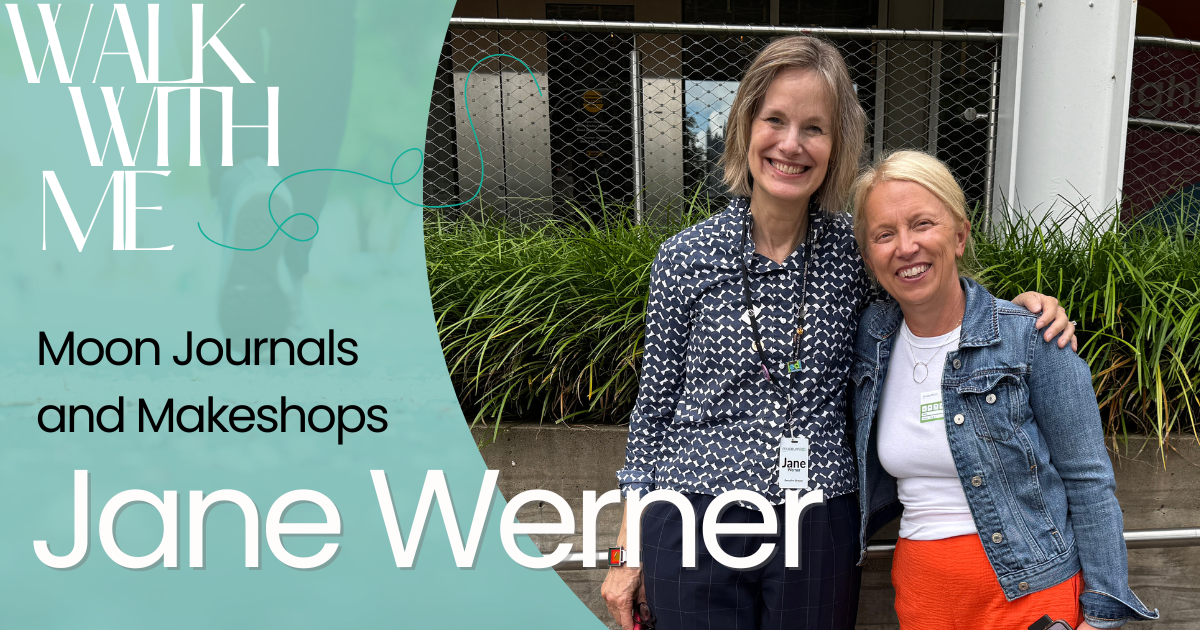
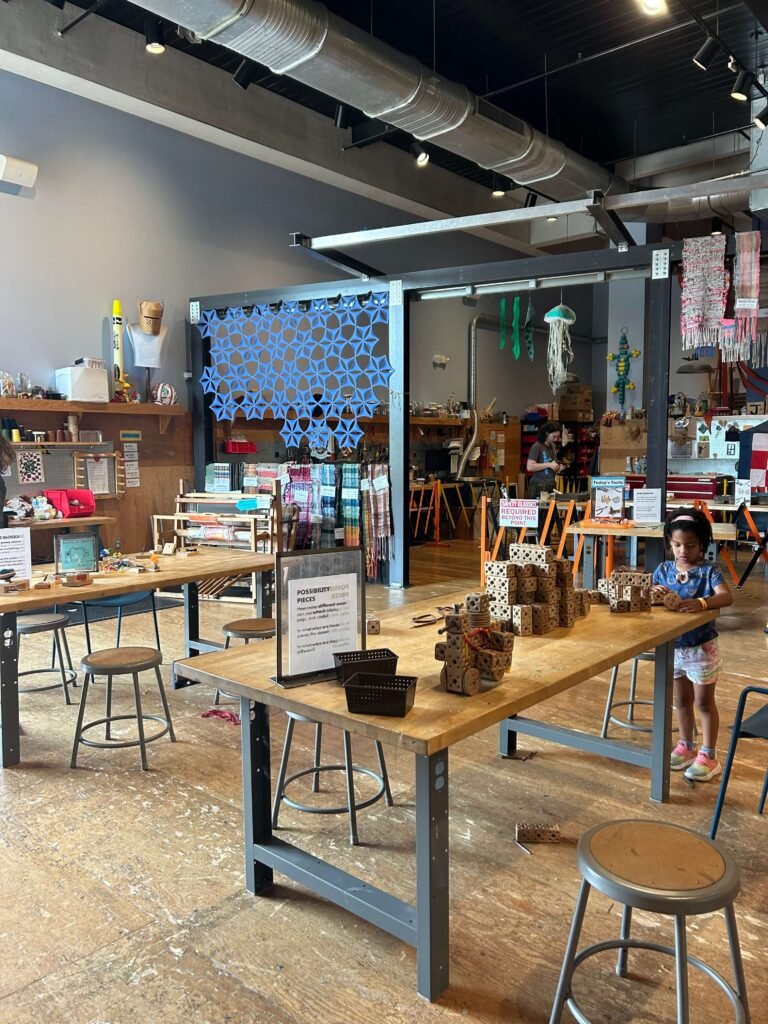
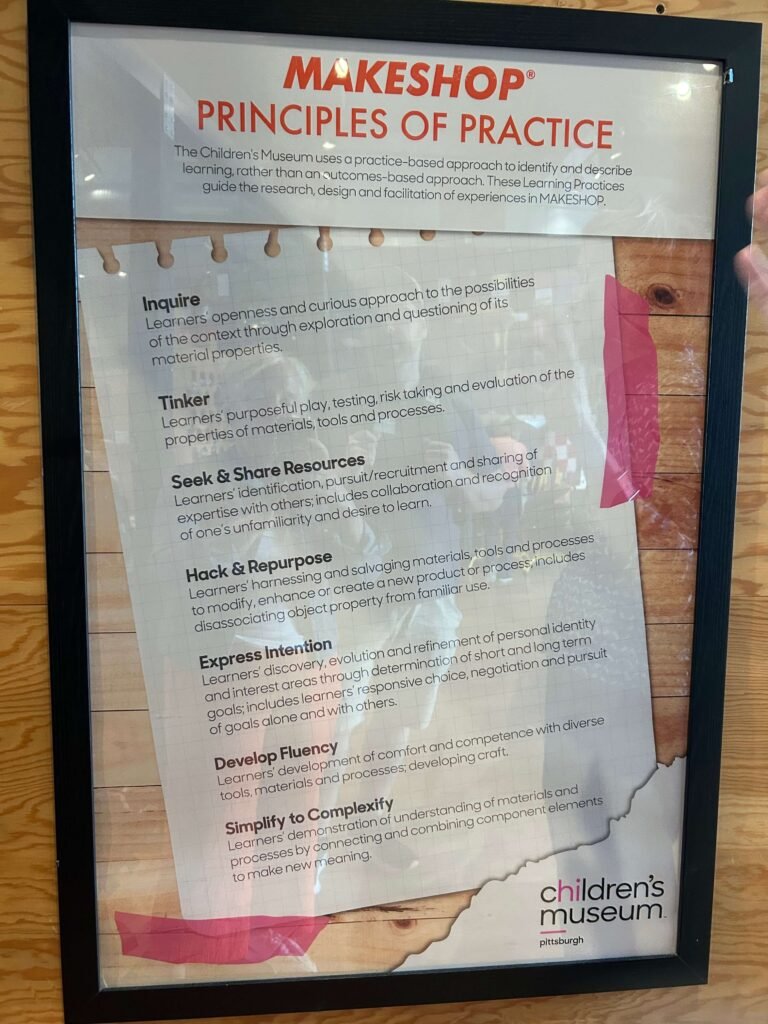
If you want to see Duckworth’s theories of how people learn in practice, look no further than the MAKESHOP, developed under the leadership of Jane Werner at the Children’s Museum of Pittsburgh. Just like Duckworth’s moon-watchers, visitors to MAKESHOP don’t come to be told facts. They come to explore, to tinker, to have wonderful ideas.
Jane
I always say that a three-year-old loves to sand. I mean, I’ve watched a three-year-old just sand away. Everybody can be makers. The day that I saw a grandfather sitting and making a pin cushion for his wife, I was like, Yeah, we got something here. This is pure gold.
And I keep thinking, you can do a maker space with nothing.
Liz
With nothing?
Jane
Yeah. Really. Cardboard, some yarn.
It’s not the sophistication of the materials that matters—it’s what children (of all ages) do with them. A child who discovers that cardboard can be folded to create strength, or that a broken toy can become the foundation for something entirely new, is engaging in the same fundamental process of inquiry that drives all scientific discovery.
Liz
But you don’t need all that. You don’t need the circuit kits.
Jane
Yeah. These are actually stuff that kids have taken apart.
Liz
Yeah.
Jane
Here. … Look at this. Actually, I like that part of it, right? It’s like, oh, my gosh, you can do this. This is stuff that you can do at home. How simple is this? A little motor out of a toy. Now you’re ready to rock and roll. And some batteries.
Jane engages in the process of making a circuit herself. When I asked Jane to walk, I knew we would need to stop and play. We were in a children’s museum afterall. Our inner child never lives very far beneath the surface wanting to mess about and wonder in our own thinking… if we let it…and we really should let it much more often. Listen to her thinking…
Jane
I’m curious about what this one does. These are all new. There you go. They go slow. One of these goes very fast. Hmm. I did that wrong. Is that going to work? Yes.
Liz
Wow.
Jane
See, that, you should have videotaped. I put a switch in between. It’s fun, right?
Liz
And it started with $5,000. Yeah.
Jane
And we didn’t really need $5,000. We bought a couple of sewing machines. We bought some tools.
Jane explains how the MAKESHOP began.
Jane
It’s a little bit of a longer story. I went to the second Maker Fairs at San Mateo. I had a friend who was a neighbor of Dale Dougherty , who was the founder of the maker faires, and the whole maker movement out in California. He said to me, “My neighbor’s doing this really interesting thing that I think you’d be really into. Why don’t you come out?” So I did. I needed to go out to San Francisco for something else, but then I tacked this on. And I was blown away. There was one whole tent that just had sewing machines and piles of old clothes, and people were reusing the cloth. I’m a sewer, so I was like, That’s so cool. I can’t even describe it.
Back at the museum in a meeting with the Entertainment Technology Center at Carnegie Mellon University (ETC), someone
proposed this idea that was basically a maker thing. “Well, I want to do that.” So he and my friend from ETC, we all got together. I said, I have $5,000. I’d like to try this out this summer. So we actually put it in “The Garage.” It took off. Adults and children were here, then it suddenly was this thing.
When she says it took off, she means it.
Jane
I think we’re up to over 400 maker spaces across the United States, actually, now that we’ve been helping to put in not only schools, but hospitals.
Liz
So 400 that you’ve helped to put in?
Jane
Yeah, because we partnered for a while there with Google, and Google was funding them, and that was a great partnership. But each of the schools, each of the spaces are unique to the school or the institution. We have one in Western Psych. We have one at Children’s Hospital here. Those are two very different spaces. We also do professional development because these things do not go anywhere unless the teachers are really dedicated to it.
This is what we were doing in T440, learning to be dedicated to responsive teaching. Eleanor Duckworth would sit cross-legged on the floor, a collection of ordinary objects spread between her and an eight-year-old child who had been invited to explore with her. Around them, up to fifty graduate students leaned forward in their chairs, notebooks forgotten, watching intently as Duckworth’s gentle questions unlocked the child’s thinking. “What do you notice about what happens when you…?” she asked, her voice carrying genuine curiosity and then listening as if she’s never heard anything more important, asking follow-up questions that honor the child’s reasoning while gently pushing thinking forward as they are messing about. This is learning as it actually happens: messy, nonlinear and absolutely real. It takes patience. It takes practice. It leaves room for all kinds of minds to show off their learning.
Jane
Everybody learns differently, right? So I always have to just laugh a little bit when people say, I’m neurodivergent. I’m thinking, so am I, and so are you, and so are you. Because we all learn differently.
So let me take this moment to learn more about the ETC, a masters program and interdisciplinary research center founded by two co-directors; Randy Pausch, a Computer Science professor (and yes – the man who delivered his inspirational Last Lecture), and Don Marinelli, a Drama Professor. What a pairing – drama and computers. To quote the CMU website, “To this day, the ETC is one of the most inventive and impactful programs in the world. Randy Pausch liked to say that the ETC is the world’s best playground, with an electric fence.”
It perfectly captures what Duckworth knew about wonderful ideas—learners thrive when we allow them to mess about while taking their questions and their ideas seriously. It is what is happening under Jane’s leadership at the Children’s Museum and in her partnerships with the ETC.
Jane
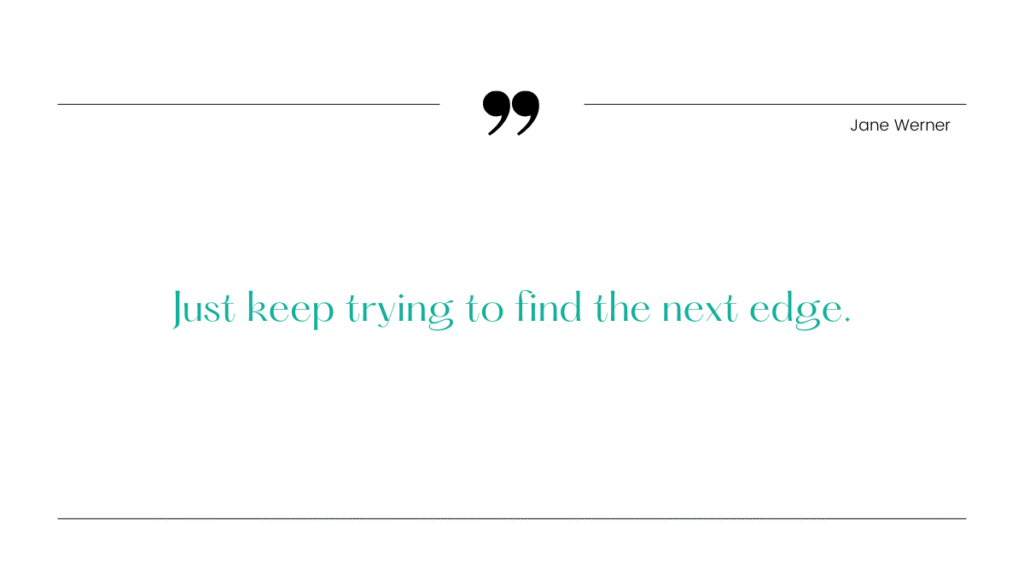
We’re just doing stuff and saying, Isn’t this interesting? … you take it from here. I mean, that’s why every maker space has to be different because everybody has different talents. They have different viewpoints. They’ve had different lived experiences. So use that and then just try to find the next edge. Just keep trying to find the next edge. So that’s what Museum Lab is all about, is looking for the next edge.
Liz
It feels like it’s a make shop on steroids.
Jane
That’s exactly how I describe it. For older kids.
She looks for the next edge – pushes the envelope – but makes sure the experience offers everything it can for the teachable moment. It is how they build exhibits.
Jane
So that’s what we do. We test and prototype.
Liz
So how much input or how often are you sitting in a meeting when an exhibit is being designed?
Jane
Not as much as I used to. I mean, that was my whole thing. But now I try to stay out of it because it’s not fair. We have the Charlie Harper setting up right now. Do you know Charlie Harper?
Liz: I do not.
I’ll spare you the hours I spent learning about Charlie Harper as I was writing this, but as I explored his art, I knew Eleanor and Jane would be proud.
Jane: He’s a West Virginian. He actually grew up in Buchannon. And he became a big-time graphic designer in the ’60s. He’s big with the mid-century folks. He did all the National Park posters. If you saw his work, you would be like, Oh, yeah.
So we have a partnership with his estate and his son, and we did this exhibit on Charlie Harper and Biodiversity. I really stayed out of it. They did the prototyping, and I have to say it’s the first time in a long time I went back to them and asked, “We’re traveling it, right? This isn’t good enough if we’re going to be doing biodiversity. This is a great exhibit about Charlie Harper, but very little about biodiversity.” To their great credit, they went back in and are prototyping some exhibits around biodiversity.
Because if it’s not right, we’re selling one thing, and they’re getting something else. And people notice. We have to make sure that our quality stays really high. For kids. I mean, it’s for kids.
When Jane says, “It’s for kids,” that means it is even more important to get it right. You can hear it in her voice. I am not sure that is the case when others say it. It should be.
There is an irony to the MAKESHOP and its location within the museum.
Jane
Mister Rogers’ Neighborhood was here. We actually took that out. I thought, “Oh, my God, Pittsburghers are going to hate me forever.” And then we put the maker space in here.
Jane
I always say he laid the groundwork for the rest of the place because he was just so influential in all of our lives, all the people who really expanded the museum. I really learned a lot from Fred. Fred was like the stars and the moon. But I love Joanne because Joanne was just like the water and the Earth. Every time she saw you, she would grab you and she’d say, I love you. You know how much I love you? And she meant it. She was just very funny and she was straightforward. She said things like, “Don’t make him a saint. Don’t ever make him a saint.” I’m like, “Okay, I got it. I won’t.”
Everybody says, “Oh, what would Fred do? What would Fred say?” I’m like, What a mistake. I mean, you have missed Fred Rogers completely if that’s what you’re thinking. He wanted you to do great things for kids. So what are you going to do? And what are you going to say? I think that that’s the better question.
Great questions, Jane. What are you going to do for children? This is why our world needs Jane Werner. She has kept childhood front and center since she began at the museum in 1991.
Jane
They called about this job being the Director of Exhibits and Programs. I thought, That’ll be easy. They’re a little place. I’ll do that for a couple of years. I’m thinking about having another kid. It’ll be easy. Easy peasy. Then I’ll do something else. And then here, one day to the next.
Well, we were 20,000 square feet. Actually, when I started, we weren’t even that, because we only had the basement and the second floor. The first floor was still history and landmarks. So it was little. It was 5,000 square feet total, let’s say. And now, that whole complex is ’80, and this one is ’40.
The larger complex is the Children’s Museum and the smaller one is the Museum Lab designed with middle school students in mind. Both are the very places where children mess about to learn and adults listen just as Mister Rogers and Professor Duckworth did – both cross legged on the floor, chins resting on their hands, eyes as wide as the child’s with authentic wonder.
It’s time to push the edges again, so Jane’s team is developing a new exhibit with Eli Lilly on character.
Jane
We want to explore some other things. This character thing is really interesting to me.
Liz
Especially when you talk about the mental health piece.
Jane
Right. I mean, it’s fascinating. And we’re working with the Fred Rogers Company. And the discussions about character I didn’t think would be so contentious. I don’t know why. It’s fascinating to me.
Who is to say what’s right and what’s wrong? I mean, there was a moment in time where a younger person than I am said “You can be too compassionate.” I was like, “I’m sorry?” She responded, “Well, if you give too much of yourself away, then you don’t have any compassion for yourself.” I could not understand this. The more we talked about it, the more I understood what she was talking about. “That is not my experience. My experience is if you do an act of compassion, it actually comes back to you. It’s not that it takes anything away from you, but it ‘s what actually enriches you as maybe even more than the person that you feel you’re doing it for.”
I left wondering if Jane has any idea how her focus on children and learning have enriched generations of “children.” And I hope it has all enriched her life, maybe even more. This walk reminds me that kids don’t need answer keys in the back of the book… things are rarely right or wrong exclusively… and wrong is just a more enriching path of learning. There is no wrong way to be a maker… no wrong way to walk through a children’s museum… no wrong way to observe the moon.
Not your typical researcher or consultant, Liz connects lived experience to transformative leadership. To uncomplicate leadership and education, every story matters and she is just getting started.
I didn’t set out to have Mister Rogers be such a backbone of so many of my walks, but that was shortsighted of me. Of course these walks were invoking our loving neighbor who laced up his tennis shoes and donned his cardigan. It was after all a series of walks through my extended neighborhood – the people in my life who had taught me something… who are still teaching me something. It became a chance to give back to some of those people in the spirit of Mister Rogers, who understood that children – and adults – flourish when they feel genuinely seen and heard.
Jeff: When I first moved to Pittsburgh in 1994 as a grad student at Carnegie Mellon, he was, of course, still alive, and he was still making his show. He retired, I think, in about 2000, maybe 2001. I was by then working at Shady Side Academy, and I was invited by a student to his graduation party. His parents were both producers at WQED, the station that made Mister Rogers’ Neighborhood. And in fact, his mother, like many of the people featured on Mister Rogers’ Neighborhood, was just someone who worked there, and was asked, “Will you play a part?” So she was the important, but little seen, Mrs. McFeely, So I go to this graduation party and I see Fred Rogers standing there.
Liz: In a cardigan?
Jeff: No, in a sport coat.
I had grown up worshiping that show and I was feeling heart palpitations. Like, “Oh my God, oh my God, oh my God, He’s here.” I thought, I’m not going to be that guy. I’m not going to go up to him. I’m not going to say, I love you so much. I’m going to give him his space. And then the boy’s mother, Mrs. McFeely, brought him over and said, “Fred, I need to introduce you to Jeff Suzik. He’s Michael’s favorite teacher.” And he said, “Isn’t that nice?” And then she, with intent, moved away. And I got to have a 20 – 25 minute conversation with him by myself.
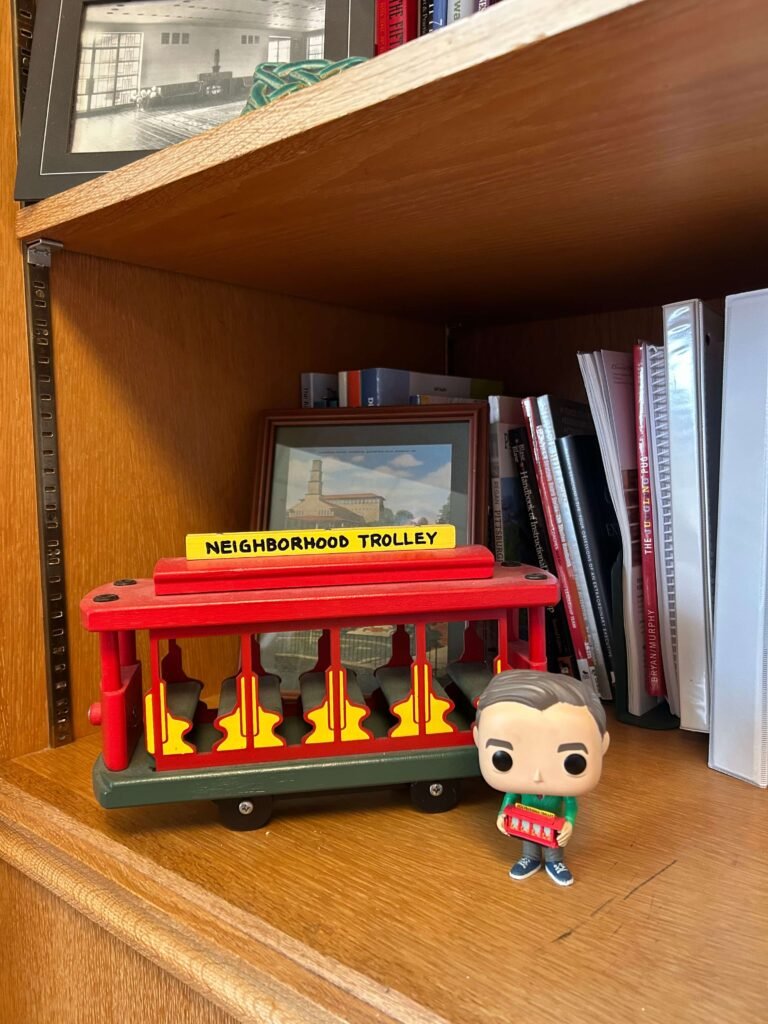
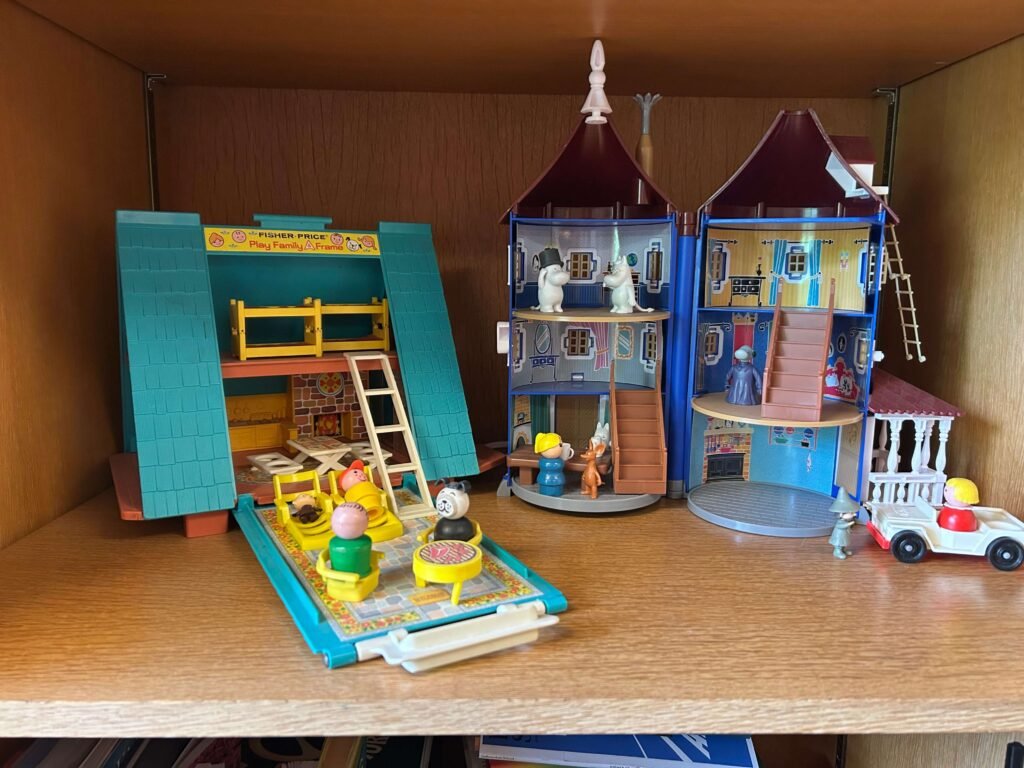
A dream come true. A hero in his presence. A moment preserved not just in his memory but in the toys that grace his bookshelves in the office of Dr. Jeff Suzik, Director of Schools for the Cranbrook Educational Community.
Liz: What do you remember?
Jeff: That he was exactly the person who we saw on TV. He was the most authentically that. It wasn’t an act. He wasn’t talking down to children or being saccharine or anything else. That’s who he was. And it was just a wonderful, wide-ranging conversation about children and their needs, what they deserve from us, what developmentally they should expect, how to partner with parents.
And then I said, just as part of the conversation, “So are you enjoying retirement?” Remember, this was like 2001, so a long time ago. And he said, “Oh, yes, I am. But I would really not categorize myself, Jeff, as being retired. So I’m working on a lot of projects.” I wouldn’t have known this, but he was then on the cusp of early development of Daniel Tiger. And he said, “The most recent thing I’ve done is I just launched my website. And it’s www.misterrogers.org. And I do hope that you’ll visit me in this new neighborhood.”
Liz: Oh, I love that.
Jeff: And then I learned later when I returned to Pittsburgh to lead Falk, that Falk had been the school that he had chosen for his son.
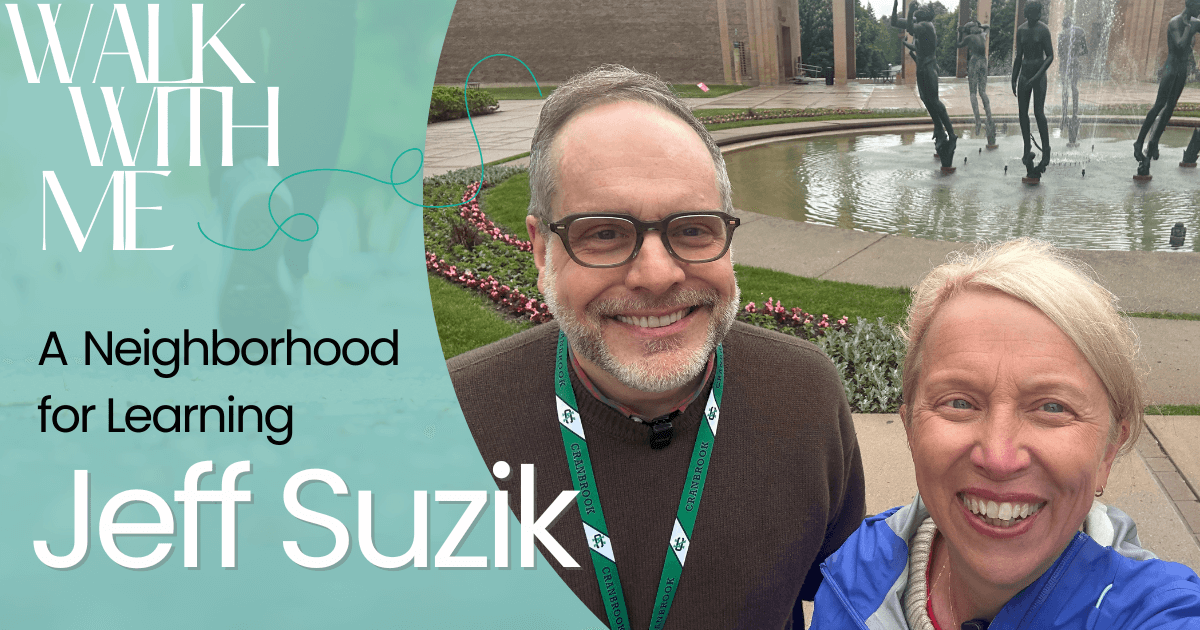
Falk Laboratory School. The place that had drawn Jeff back to Pittsburgh to be its Director in 2014. How I wish we had a recording of that dialogue of two men who honor childhood as a distinct stage of life…and who share a vision for a better future created by the very children in whom they were investing their lives’ work: Mister Rogers through educational television and Dr. Suzik through independent education in some atypical settings. You see, Cranbrook comprises schools, plural, and an art museum, an institute of science and a graduate art academy all sharing resources on a 319 acre campus. Indeed, in his website neighborhood, Jeff offers visitors “an enthusiastic welcome to Cranbrook Schools, where we believe that a childhood and adolescence filled with wonder, discovery, and curiosity is the greatest and most enduring gift a person can receive in their lifetime.” Mister Rogers would like that.
Liz: What do you think Mister Rogers would make of Cranbrook?
Jeff: I think that he would…That’s a great question. I think that he would recognize the elementary school’s inherently child-centered way of educating, I think he would appreciate its long-standing, fundamental and foundational commitment to “specials” classes (art, music, movement, technology, drama – things like that) and to children being given a lot of hands-on opportunities to learn. Because while the upper levels of Cranbrook are pretty traditional pedagogically, and that’s something I’m eager and committed to working on, the elementary school has always been more expansive and innovative in its practices.
Of course many, many elementary schools are like this, because they can be. But the elementary here was headed from its beginning, and then for 39 years, by a woman who was plucked out of the lab school culture of Greater Chicago in 1922. Her mark on this place is indelible. And so I think he would like all of that. And I think he would like the other major thing that I like here, which is the fact that this whole campus and the resources here, the other institutions that we are a part of, create this opportunity for learning for children and partnership that is just unparalleled. The potential here has been tapped in some ways, and in other ways, it hasn’t. And that was really why I came.
Jeff: The closest comparative models, I think, are schools that are part of universities like Falk. And so that prepared me well for being here.
Picture an independent school that operates almost like a living laboratory for education – it’s where theory meets practice in the most dynamic way possible – that is a university-affiliated lab school. I often compare it to a teaching hospital – but for education – where future teachers learn their craft in a real classroom setting with actual students, not just theoretical scenarios, and experiment with new educational materials, curriculum designs and pedagogical methods. In working with local colleges and universities, Wheeling Country Day School had been an informal lab. It allows me to understand what draws Jeff to such profound potential. There’s this incredible multiplier effect happening on your campus. Every innovative technique you develop, every breakthrough moment, every creative way you make learning come alive – it doesn’t just impact the children in your classrooms, it ripples out in ways you will never fully appreciate through the college students and guests that grace your campus as well.
Jeff: I came to Cranbrook because I could see so many tremendous, open opportunities for innovation and growth. I had so loved being at the lab school, and I loved the opportunity there to collaborate with other units of the University. So we’d be working on NSF grants with the School of Engineering that involved showing a commitment to translating the research into activities for the K-12 space. So we would get written into those and then they would do it. And those were fabulous. Or just working with School of Ed colleagues on new pedagogies and practices.
Liz: For K-12 and Higher Ed to consider because you’re where the rubber hits the road.
Jeff: Correct.
Cranbrook is different, wonderfully so. While there is no university affiliation, Cranbrook boasts a history museum, a planetarium, an observatory, a contemporary art museum, architecturally significant historic homes, outdoor sculptures and one of the oldest Japanese gardens in the US, with fountains, lakes, trails, and more. Indeed, it is an
Jeff: …amalgam of school spaces and nonschool spaces, but all of them are educative spaces, and all of them are, with some form of intent, built to elicit reaction.
This might be the only place in the world that I would choose to work, except for Falk. And so when approached about it as a possibility, even though I wasn’t looking for a job, I explored it, and there were aspects of it that were just so enticing. And I thought, the things I am engaging in here at the University of Pittsburgh could be done on steroids here, and with more ready partners in some ways, or rather with some more obvious partners, like an art museum, an institute of science that has a planetarium, and natural history specimens and a T-Rex and whatever else not.
What if the walls of a classroom could expand to embrace a larger community? This is the vision we had at Wheeling Country Day School which Jim Denova captured when he described it as “a constellation of learning spaces.” No longer confined to its original two-acre campus in Wheeling’s Woodsdale neighborhood, the school bloomed across the city—taking root on the branch campus of West Virginia Northern Community College and flourishing within the green spaces of a municipal park managed by the Wheeling Park Commission.
This expansion wasn’t about real estate; it was about reimagining where authentic learning happens. The seeds of this thinking were planted years earlier during a tour of the Children’s Museum of Pittsburgh with its Executive Director, Jane Werner. As a line of preschoolers wandered past us, I remarked on what seemed like a perfectly timed field trip. Jane’s response stopped me in my tracks: “They go to school here.” What?!? How had I not given my daughters such a rare opportunity? An idea was born.
Place influences culture. Context matters. Place-based learning doesn’t just expose children to new people and ideas—it dissolves the artificial boundaries between school and life, transforming every corner of a community into a potential classroom. When learning spills into museums, parks, colleges, and downtown spaces, students discover that education isn’t something that happens in isolation, but something they actively participate in as members of a learning community. Their larger neighborhood becomes their school. Just as Mister Rogers suggested.
Cranbrook has all of this available within the 319 acres that it calls home, but such access sometimes becomes a logistical dilemma.
Liz: The students actually shuttle between the campuses?
Jeff: They do, yeah, the Upper Schoolers, that is. There’s 15 minutes of passing time between their classes, which is a lot. It cuts into the day a lot. So we’re looking at the daily schedule now to create longer blocks of instruction, which I would like anyway, but it will also minimize those disruptions.
Liz: Isn’t it nice when logistics are the Trojan horse to get something programmatic?
Jeff: That’s right. It can prove challenging to get people to think critically and differently about the “boring” logistics when they are so deeply devoted, oftentimes quite rightly, to the perceived way that things have “always” been done. And always done well. This has been true, in some way or another, everywhere I’ve been, at every school where I’ve worked.
Liz: Is that a fear of change?
Jeff: Yes, I think it is. We humans seem, more often than not, to prefer continuity over change. It’s safe and it’s comforting. All of us love the rituals and the traditions that make our lives meaningful. But tradition can sometimes be a tricky concept to navigate. I have found for some it can mean “back off.” This is a tradition. So please look elsewhere in your quest to evolve things or contemporize them. We all run the risk of declaring rudimentary things, say, like daily schedules, to be traditions. And so for a long time now I’ve been on an educative journey to remind the people with whom I have worked that some things are just not sacred enough to be considered traditions; they’re practices. And practices should be continually interrogated and reinterpreted for contemporary use, while true traditions are to be celebrated and jealously guarded.
Liz: Practice in and of itself is a word that is a journey.
Jeff: Correct.
Liz: You’re getting better at something.
Jeff: Yes. And it’s unfinished, right? Because it’s a practice. And so people stare at me quizzically sometimes when I say this. And then they might go right back to like: oh, no, but having lunch at noon is a tradition. No, it’s not. It’s just a practice. But having mid-year exams is a tradition. Again no, it’s just practice. And step by step we’re getting somewhere with all of that.
The uniqueness of this place, the unicorn nature of it, is a significant part of its incredible charm, but it’s not helpful in every circumstance or situation. We sometimes can’t seem to identify any benchmarks because no one is quite like us. Why would we look to see what other people and places are doing, for instance, with admissions? Or with advancement? We do our own thing. Because there’s clearly no local peer, right?
Liz: Right.
Jeff: Then when people think about it, there’s just no peer anywhere so all the more reason for us to interrogate our practice.
Liz: Michael Fullen says it takes 5-7 years for a change in education. It’s true.
Jeff: It is.
Liz: Which scares me because so many of our heads are 5-7 year heads. It is very interesting.
Jeff: So true. And I think that one of the things that’s inevitable in those transitions, well, maybe not inevitable, but often part of them, is when whatever committee, board, group is creating the plan for finding a new head, whatever that happens to be, they end up prioritizing things that are the opposite of the things that the person brought to the table because they’re so focused on finding “fresh.” So if the last person was a very business-minded person, now we need a kid person. And if they were a kid person, now we need somebody with business and admissions and advancement acumen. Really, though, all of us have to be all of it. I think that that’s a tricky transition for institutions. I think sometimes it’s the thing that leads to these unlaunched tenures.
Liz: In other words, there is a problem of governance in our industry?
Jeff: I suppose there is, yes. And there’s the problem of the rapidity of change and the challenges that schools have faced, I would say since the financial meltdown of 2008, and the reworking that came with it of what people thought about their discretionary income, that the stakes are now so high for so many of our schools. I mean, this is something you learn through accreditation, right? When you go on teams and the school says, well, our hope is that we’re going to increase enrollment next year by 25%. That’s how we’re going to deal with our budget deficit. But hope isn’t a strategy. You can’t hope for something. But I think that boards sometimes do that. When I took on my first headship in Minnesota years ago now, the board in my initial contract tried to write into it that I would have a bonus only if I did X, Y, and Z. And I said, “No. I want you to give me that bonus if I spend five successful years here and you haven’t fired me. Then you should give me the bonus. I don’t know now that I can do these things. I don’t know this market. I don’t even know if they’re rational asks.”
Jeff might be talking about a governance concern, but he’s manifesting a bigger issue about the context necessary to make decisions, especially in the company of strangers. And make no mistake—despite shared mission statements and common purpose, board members and heads often remain strangers to one another in the ways that matter most for decision-making.
Malcolm Gladwell’s exploration in Talking to Strangers reveals just how poorly we actually understand people we don’t know well, even when we think we do. We fall victim to what he calls the “transparency illusion” – the dangerous assumption that we can easily read others’ intentions, motivations, and character. Without asking good questions and being explicit, we assume meaning and intent. As another walker told me, “I might be thinking of a doberman while you conjure a chihuahua – very different animals although we are both thinking of dogs.”
Gladwell’s concept of “coupling” – how behavior is inextricably linked to context – becomes particularly relevant here. A goal, achievable in another city or even in a different school across the same town, might be impossible based on context. Place matters. Keeping Gladwell’s theories in mind, how are boards and heads who are just getting to know each other best able to navigate decisions?
The industry warns that we don’t want a board of parents or friends—that creates different problems of proximity and blind spots. But if effective governance requires strangers to make complex decisions together about institutions they care deeply about, how do boards and heads create the conditions for understanding each other well enough to disagree productively and decide wisely?
In my history, a friend becoming board chair
Liz: …was the best thing that ever happened to Country Day.
Jeff: Oh, I bet.
Liz: He was able to call me on things, but he also was able to hold the board back to say, “No, we’re going to let her try this thing.”
Jeff: Well, and look what happened. You tried some pretty impactful and out-of-the-box things….
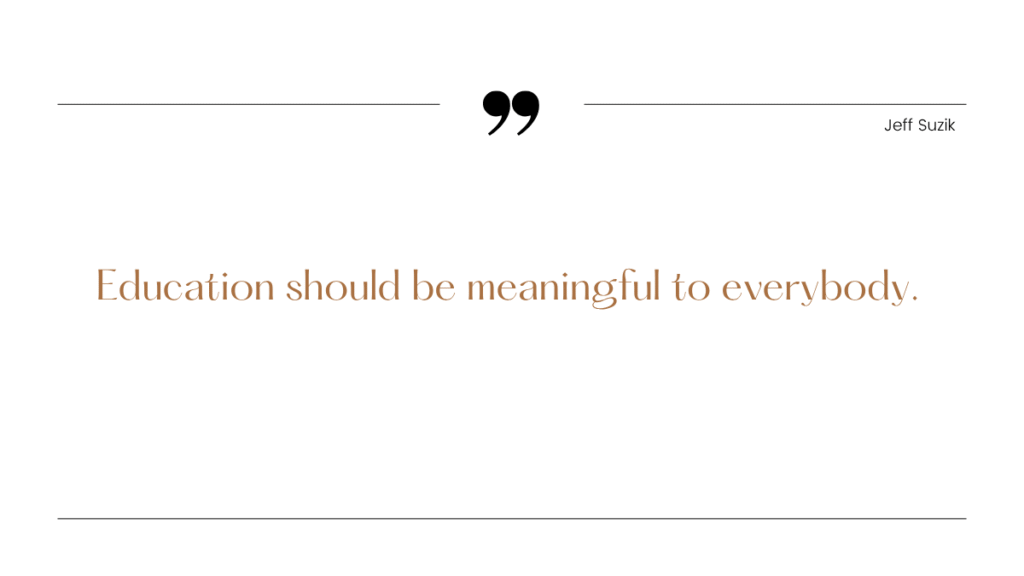
You sold a progressive, expansive way of thinking about children and school to people who would not normally be predisposed to like it, but in ways that made it meaningful to them, because education should be meaningful to everybody.
For me, everybody is the key element in that last sentence. I knew an independent school could pilot new theories and incubate fresh ideas, but I wanted it to serve more students directly than just those who walked through our doors.
Take Cranbrook’s HUB (Horizons Upward Bound) program, which serves the greater Detroit community. Through a 6-week summer residential component and Saturday academic series, this program prepares students with limited opportunities from the Detroit metropolitan area to succeed in post-secondary education. The program doesn’t just help those students – it enriches the entire school and transforms faculty lives too.
WCDS created something similar with the Edge program. We leveraged technology to transform our on-campus tutoring center into a virtual reading solution for afterschool programs like Boys & Girls Clubs – at no cost to the families served. That program reached far more people than just the children being tutored directly.
Liz: I was thinking earlier when you were talking about HUB, that that’s your Edge for Boys & Girls Clubs. I really think independent education needs that thing that is for public purpose.
Jeff: 100%. And I think a lot of us have thought that for a long time because it was something that I think I remember Pat Bassett popularizing eons ago. But I really think that that’s valuable.
We agree, it actually helps all of us with trying to change the perception of our schools as just, oh, fancy rich enclaves. When that’s often simply not what they are.
Jeff: Because one of the things that drew me to Cranbrook along with the uniqueness of the universe and the collaborating units, was that Cranbrook as a whole, not just the schools, is a major cultural force – or can be – in this region. And as this region reimagines itself, which is really what is happening right now, we should be a main partner in that. We should be helping the greater region to achieve that goal because we can be a place that is a draw for people, that is an example of what life can be like if you relocate to Greater Detroit. Not just if your kids go to school here, but all these things that you can do here. This is a publicly-facing place.
I love this idea of a school as a leader in a community. In my mind, the heart of a neighborhood is the education of its children—the very future of each community. This isn’t just educational rhetoric; it’s the lived philosophy that Fred Rogers understood intuitively and shared freely.
When Mister Rogers invited us into his neighborhood each day, he wasn’t just creating children’s television—he was modeling what happens when a community organizes itself around the care and development of its youngest members. His neighborhood worked because everyone had a role in nurturing children: King Friday, Mr. and Mrs. McFeely, Lady Aberlin, and many more. The neighborhood thrived because children’s growth and learning weren’t relegated to one building or one set of adults, but was a shared responsibility that connected everyone.
Schools have the unique opportunity—perhaps the obligation—to be the Mister Rogers of their communities, the convening force that reminds neighborhoods of the purpose of their existence. When a school sees itself as community leader rather than community service provider, it transforms from an institution where children must attend into a living demonstration of how learning happens everywhere, all the time.
Our schools are perhaps the only institutions with both the reach and the missions to ask the essential Mister Rogers question of their neighborhoods: How can we love these children well together?
If we could get that sorted out, so much else would fall away. I got the sense as I walked the Cranbrook campus that Jeff Suzik was in the right place, asking the right questions to find such an answer.
Not your typical researcher or consultant, Liz connects lived experience to transformative leadership. To uncomplicate leadership and education, every story matters and she is just getting started.
Palmer: And then the process gets easier and easier as you do it. And then finally, you get more comfortable doing it.
You get more comfortable. You reach the next level. You move forward stronger. Things change …good change. I do not live in constant fear that something is going to happen to my daughters. I have learned to let them live their lives…mostly. I very rarely cry myself to sleep in grief as I once did. My heavy emotions …and the humor I use to disguise them… are tempered. I cannot point to any single moment when things started to get lighter… but they did.
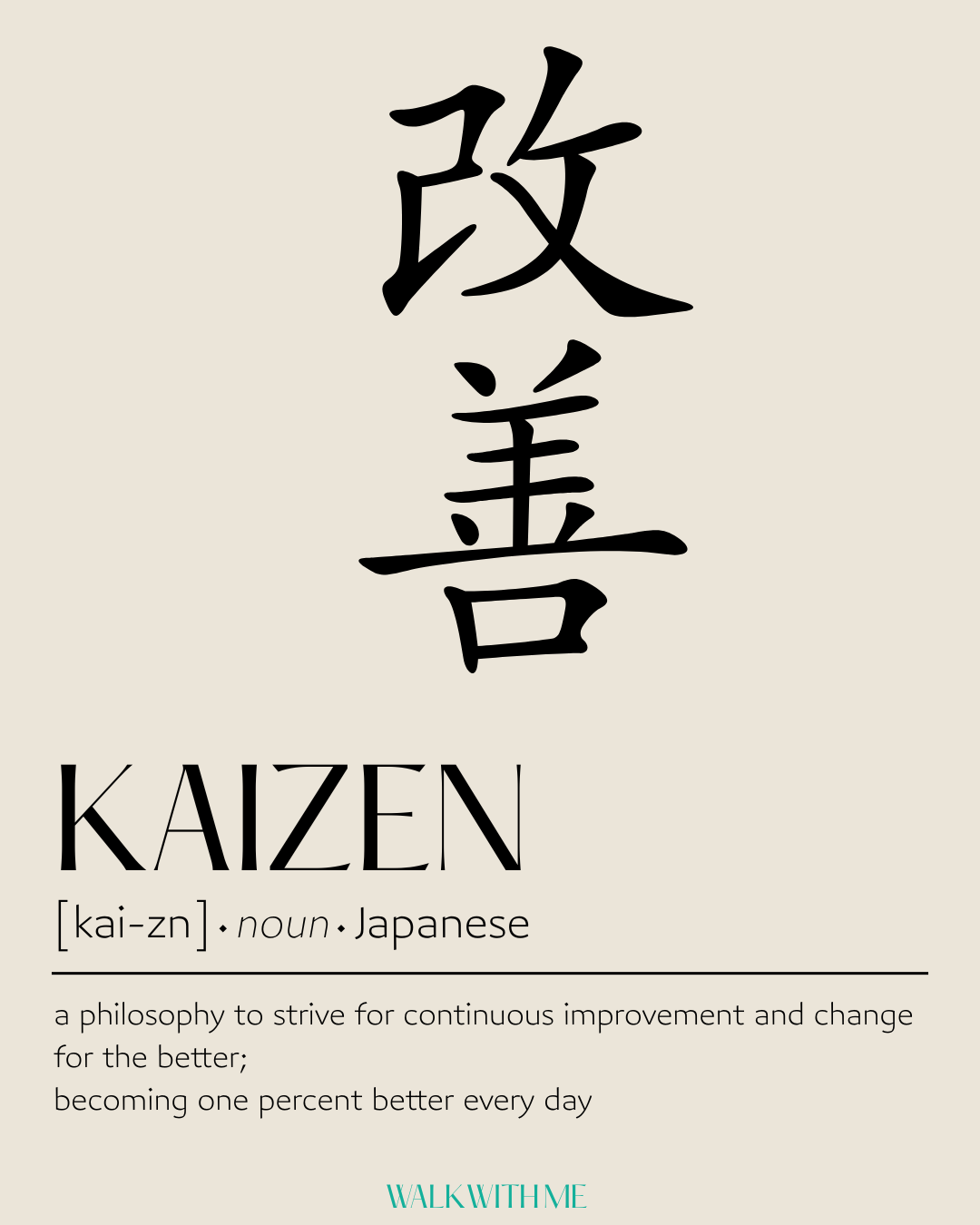
That’s Kaizen.
Translated literally to good change. One percent better everyday. It’s not a lightning strike. It’s a steady but light rainfall.
The beauty lies in both its gentleness and its accessibility. All of us can improve by one percent. We can make one small adjustment. We can take one more step. While the improvement may be barely noticeable day to day, stay the course. When I look back over months of conversations, my own unfolding is undeniable. When I consider each walk’s transcription another layer is revealed. Kaizen has been in the very fiber of these walks.
It directly showed up in the seventh walk with Rose Helm as we discussed supporting teachers and students.
Rose: How are we going to support students right across this spectrum of learning, which we’re saying has always been there and it’s the right thing to do …if we aren’t supporting teachers to be able to do that?
As these walks have proven to do, we circled around to an answer: Incremental improvement. Small, good change. Kaizen.
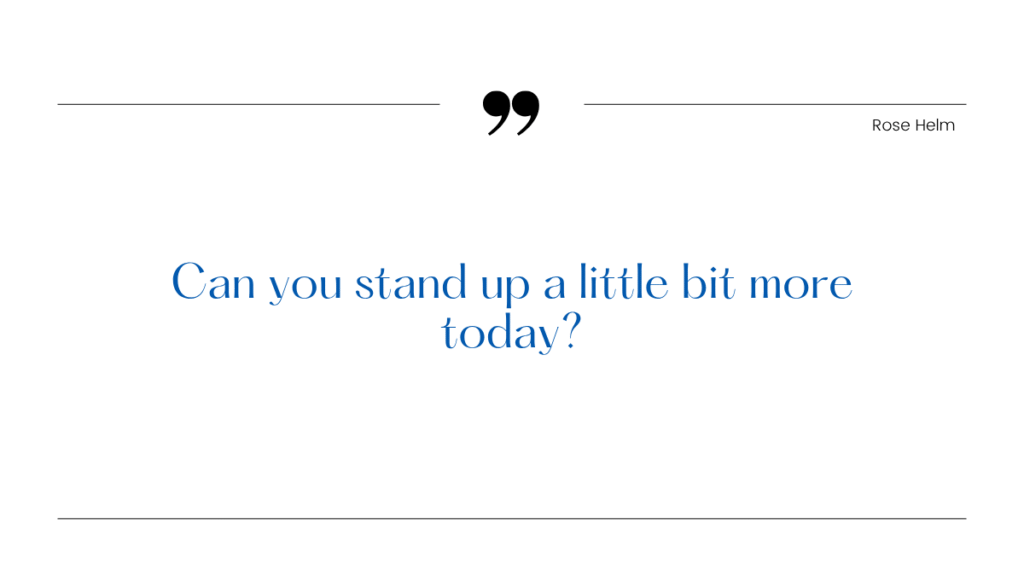
Rose: So what is that Japanese theory? I think it’s Kaizen, where it’s the idea of… What’s the next step you can take? They do this with people who are starting a weight loss journey or intimidated by an exercise regime. What is one thing you can do? Can you stand up a little bit more today? For five more minutes…or whatever.
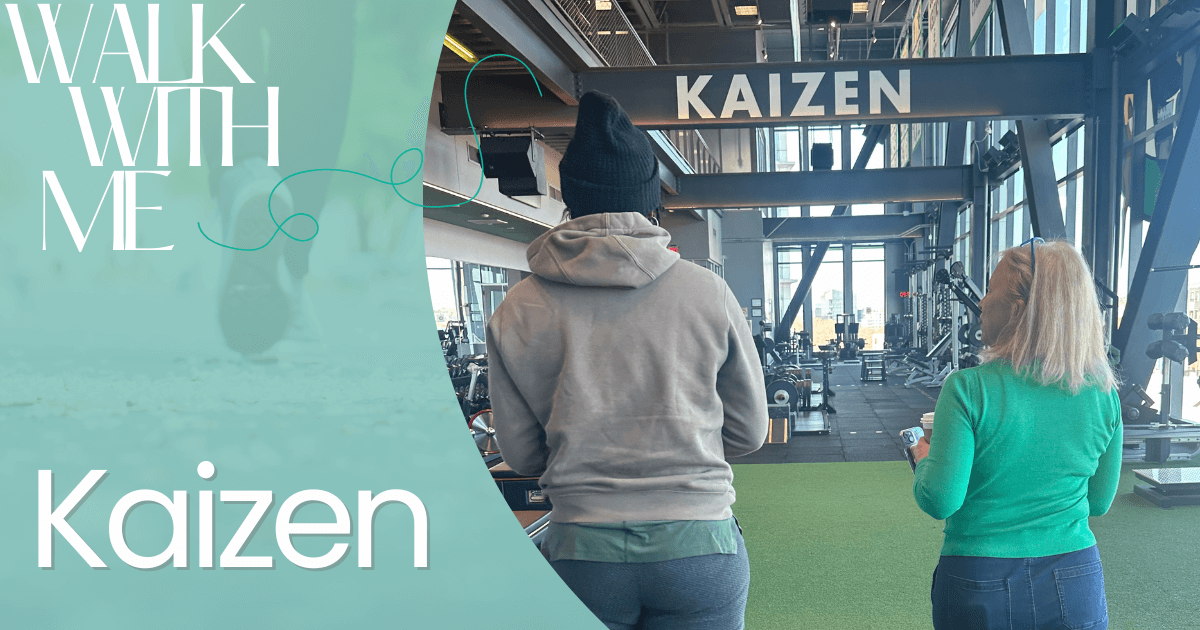
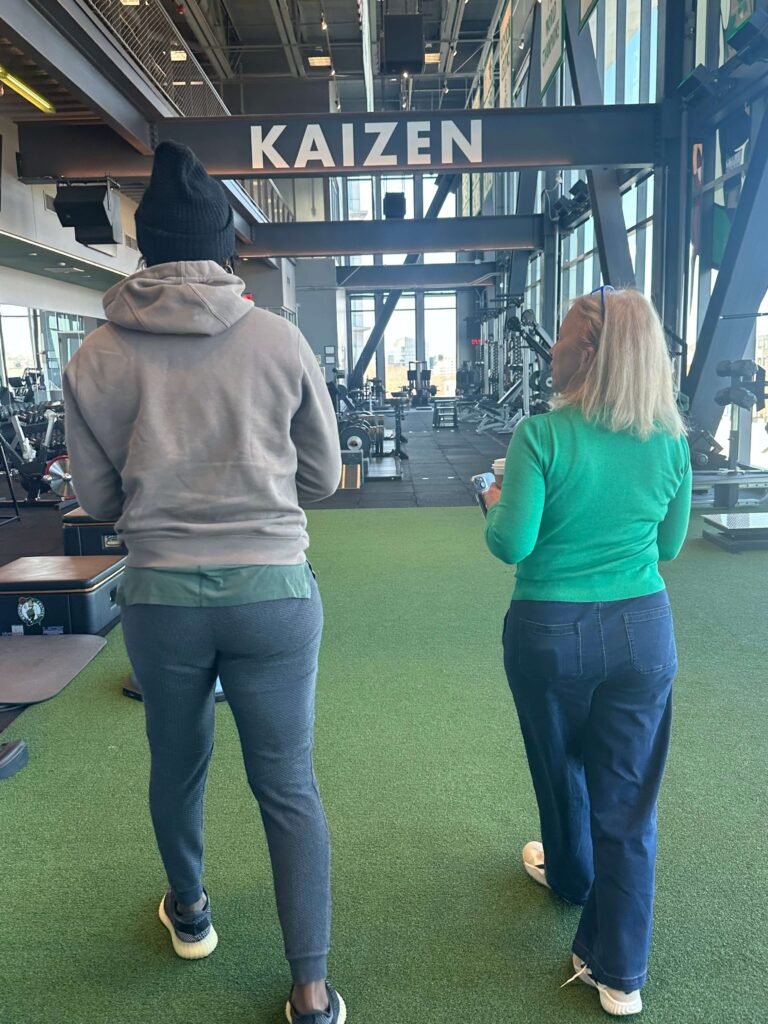
Nineteen walks later, Ashley Battle toured me through the Boston Celtics Auerbach practice facility. There, painted boldly across a steel beam overhead: Kaizen.
Walking beneath that beam, I knew I would write this blog.
We may not be able to pinpoint the exact moment when everything shifted—but it will shift. One more rep today than yesterday. One more mindful step. One more genuine question. Then you’ll look back after a month… a year…or even twenty-one years, and see the quiet, persistent magic of Kaizen …yes, some days will feel like setbacks and you may very well lose your footing in that quicksand, but you are still making progress… good change.
Not your typical researcher or consultant, Liz connects lived experience to transformative leadership. To uncomplicate leadership and education, every story matters and she is just getting started.
This is the very blog for which I am grateful that we decided to have an audio companion. If you are reading this, your mind is thinking about a stillborn. That is not how I think about it. Nicolas Hofreuter Landini may have died, but he was still born.
He would be 21. I don’t have to calculate that in my head. I always know. He is Grace’s twin brother.
If your heart drops when I say that, please don’t feel sorry for me, for their dad or for Grace. It is hard to explain, but somehow your sympathy makes it worse. I cannot speak to the pain of losing a child, but I know the pain of losing a baby.
I hope you never do.
This walk is written in support of those who suffer a similar death… the parents, the siblings, the extended family… or anyone who is trying to understand the grief of losing a baby.
Mark: I think the biggest thing is a lot of people can’t walk in your shoes.
Liz: Thank God.
For reasons I still cannot yet articulate, I only feel truly comfortable telling the story with someone else who has experienced the same loss. This is a collective story. Five other lives are inseparably woven into it. I spoke with each person individually, yet their voices harmonized to reveal a separate but shared narrative waiting to be told. Walk with me as Amanda and Chris, Jessica and Jon, Mark and I try to pull back the layers of what we experienced —hoping our journey might light the way for someone else walking a similarly dim path. What follows is the unravelling of the threads of our shared experience, hoping that in the telling, we might offer a lifeline to someone who needs it.
Jessica: I always keep track of how old he is and what he’d be doing. In fact, he’d be out of college now. I don’t think that ever goes away. I think the pain of what I went through will always be present. It’s not like I can forget that pain.
I never felt so alone as I did then either. I remember I would try to tell Jon, and he’d listen. He was there. But even telling him, I realized how completely alone I am. You know what I mean? Even if someone’s there. I think that was the first time I really realized that no one can protect you from anything, really.
Amanda: It just made me realize that as much as I am in control of things, I’m really not. For me, I always say, Carson’s death took my faith from being pretty passive to active because this is where the rubber meets the road. And it was knowing God’s there. And how can I trust him through this really terrible thing that just happened to me? Because now I’m scared.
Liz: Scared of what?
Amanda: Just the fact that people died. I mean, my child died.
Pain, fear, anger, loneliness… These are just some of the emotions that still play in our hearts as mothers who have lost. Nathan would be 23. Nicolas would be 21. Carson would be 8. I don’t know what a healthy pregnancy or birth is like. My only experience was the twins: my fragile preemie rushed through the doors to the NICU and then the dimming of lights for the hollow, clinical birthing of Nicolas. I’ve been told that in healthy births, oxytocin floods the brain with such fierce love that some women forget the pain of childbirth entirely. Their bodies, wise with forgetting, make room for joy. But my body remembers everything.
Liz: Everybody talks about the amnesia of childbirth, not when it’s still birth.
Jessica: Not so for me, I honestly don’t find that true anyway because I remember. I remember what I was feeling. I remember my worries. Like with Mary, there weren’t worries. I remember I’ll be like, oh, God, I hope I don’t pee. You know me, that stuff. I wanted this little romantic setting or whatever, a playlist and stuff, where after Nathan, it was like, I could care less. I don’t care if you have to go in there and knock me out, just take the baby. You know what I mean?
Jessica: That’s one of the hardest things for me is to keep my mouth shut when people say stuff like that because people are like, “Oh, I want this and that, and then the other.” And I’m like, “You don’t even –-beep – know what you want.
Liz: You want a healthy pregnancy and a healthy birth.
Jessica: You think that’s what you want. That is not what you want. What you want is a healthy baby.
I mentioned anger, didn’t I? You can hear that anger that exists just underneath all of the other emotions. We don’t talk much about the anger stage except with other mothers, but it is a normal stage of grief and shows up for mothers who have lost.
Liz: I went through a pretty crazy period of you deserved this.
Jessica: Yeah.
Liz: We were driving up for one of our appointments and there was a car accident, and we arrived pretty soon after the accident before they had stopped traffic, and we didn’t stop and get out. That was reason one. And then just feeling not good enough, not whatever, all the other things that go through your mind. Did you ever have any of that?
Jessica: Oh, yeah. I thought it. I still to this day think it was my fault. I ate a lot of candy the night before, and so I thought it was the sugar.
So add self-blame, guilt, and jealousy to the list of lesser discussed emotional landmines we still tiptoe through.
Liz: I don’t think anybody talks about their twins, that there’s not this weird, wistful reaction inside of me that quickly goes through… You’re lucky. Thank God for you. I’m a little jealous.
Mark: I’m jealous of twins for sure.
Neither of us like using the word, jealous, but words are difficult to choose when you discuss such grief. Articulating the raw honesty and complexity that still echoes in our hearts keeps us silent. That is not the answer. Turns out the word “jealousy” often implies fear of losing something you have, so maybe our lingering fears choose it subconsciously.
The actress, Julia Roberts, was pregnant with twins at the same time I was. Hazel and Phinneaus. Why do I know this? Because they survived. I’m not proud to say I harbor some rare form of anguished envy, because I am also so grateful that she never
Liz: …went in for a regular checkup, and there was only one heartbeat.
Mark: they couldn’t find the two heartbeats.
Liz: A nurse very, very kindly said, Hadn’t you been counting kicks? And it was enough to make me question, did I cause this?
Jessica: Well, I remember the night before that he was moving so much, like weirdly moving so much. Then, I never felt him move again. You know what I mean? But the weirdest thing was I had a dream that night … What I remember of the dream is that I was talking to God, or Jesus, I don’t know. They were pouring liquid out of a container, and I was just crying. I said, “No.” They said, “Not this time” or something like that. I woke up and I just knew he was dead, but I went into work, and I literally got all the billing done. I got the payroll done for that week. I got everything done by 10:00 then I went to the hospital.
Liz: You knew.
Jessica: I knew, but I wasn’t… Then you know how you second-guess yourself? Oh, yeah. Everything’s fine. You’re just ridiculous.
Amanda: Okay, so I woke up on St. Patrick’s Day, and in hindsight, when I say this, it’s not an exaggeration. The day was dim. There was just a darkness over it before I even knew he had died. I thought, This is weird. I never wake up at 7: 30 comfortably in my bed without feeling kicks in my ribs and all that stuff. I went downstairs, I drank some water. I tried to get him moving. I took a warm bath because it always got him moving. That’s when the panic set in, and that’s when I just started praying, “God, what? It can’t be happening, not to me. It happens. I know that, but not this late in pregnancy, not to me.” I mean, as silly as this sounds, I’m a good person. This is what is going on in reality. I had called my doctor and they said, Come right in.
I knew on the way there, it was raining, and I just felt it. I knew, but I didn’t want to believe. Even when they confirmed and said, his heart stopped, I wasn’t ready to believe that he had actually died. The machine was wrong, and there’s still hope, and this isn’t happening.
Once your fears are confirmed, the world rushes at you, but you are not really living in it.
Jonathan: It’s like you’re on a ride and you can’t get off from there on. I remember asking, what was the option? I remember saying “Okay, you can just do a C section. Just knock her out.” “No, we can’t, oh, no, she has to give birth.” That’s when I thought, “This is punishment. What do you mean?”
Amanda: There’s so many decisions that you have to make, and it happens in the blink of an eye. One minute you’re waking up, and the next minute you’re like, “Am I going to go be induced, or do I want to wait till labor starts naturally? Are we going to have a funeral or memorial? Are we going to do nothing? Is this real? Are we going to cremate him or bury him?”
Mark: It was all a rush. They rushed us in there to begin with. I was worried about you. I was obviously worried about Grace because we knew we had already lost Nicolas. I didn’t want to lose it all.
The world hits fast-forward while we are floating somewhere near the ceiling, observing this as if it is somebody else’ life falling apart in real time. They rush in with protocols and procedures, but using gentle voices and hushed tones. The questions come like bullets. Do you want to be induced? Would you prefer to wait for natural labor? Will you hold the baby? Do you want photographs? Funeral or memorial service? Burial or cremation? Each question felt impossible and urgent all at once. Being carried along by a current with no power to resist. Making decisions that felt scripted by someone else while we had retreated somewhere deep and unreachable. The world rushed in with its demands and timelines and necessary cruelties. And mother and father move through it like ghosts, going through the motions of the living while feeling fundamentally separate from life itself.
Liz: If I could do one thing, based on my regrets, it would be to help a family say things like, “It doesn’t matter, you have time. Take some time. You don’t have to decide that today.” I wish somebody had just said, “Take a breath.” Really, the only decision either one of us had to make was, “Are we going to deliver today or later?” And nothing else had to be decided as quickly as we were told.
And then there was telling our families. How do you pass on such grief? How do you find words for something that has no words? For me, hearing myself say the words out loud cut the grief even deeper…and I had to do it over and over again.
Jonathan: I remember making the calls, and I remember calling Marianna and Nanette. They must have been together somewhere. They just dropped everything. The next thing I know, I remember them coming down the hall. It was the middle of the night.
Liz: It’s interesting because I remember making those calls. And part of you feels like.
Your whole world is shattering and people are saying the most stupid shit on the other end of the phone.
Amanda: I feel when we go through these things, people don’t know what to say. The filter goes away. And it happens with people that we love very much. It happens with people that we don’t know at all. I always say when people are going through hard things, it’s easier to sit in the silence because at least I would know you’re here with me instead of saying something wrong or, no offense, but stupid. That is hurtful. That just brings so much more internal tension to me as the person who is grieving their child.
Jonathan: It’s awful. And you just don’t. And you don’t even want that. Right? I mean, you want somebody, like I said, I reached out to a couple of my sisters because you just want somebody there.
And when they get there, the door of your room will have a card to mark that yours is a room of grief on the obstetrics floor.
Liz: I think about that placard that was outside the hospital room.
Amanda: At the end of the day, nobody really knows how to do this. Nobody really knows how to lose a child, how to grieve, how to be there for each other. I think we all just try our best. We’re going to fail. We’re going to mess up. But I feel like sending that grace and forgiveness to people.
Trying to comfort others when grief is incomprehensible to you is another level of pain. Carrying their grief was a weight none of us could bear. I wish I had been able to articulate that then. I offered grace to those around me, but left none for myself. For me the load only became a little lighter three weeks later when I received a letter and a book in the mail. Jessica had written to me. Its raw emotion gave me comfort. Allow me to share a small excerpt.
“ I know about the pain you are going through. When Nathan died at 36 weeks it was a complete shock to me… I hope you have a great network of friends and family to lean on. At times they were very helpful to me but sometimes I didn’t want to talk to people who had no idea what I’d been through and couldn’t fully understand my pain.”
Jessica: When Nathan died, several people reached out and… and it was totally different talking to someone who’s been through it. So I reached out to you.
I knew then it was a grace I would need to pay forward. Unfortunately, I had the chance years later when my friend Darryl Crews called to tell me his son and daughter-in-law had lost their baby.
Liz: I think when I showed up with you, that was what I really wanted, I wanted to say to Darryl, she needs space and love, and somebody make sure you’re taking care of Chris. I mean, that was something I know I said to Darryl and Judy.
Amanda: I remember when you showed up and said that. It hit me – I’m only living my experience, he’s having a whole other experience. He’s trying to make my experience of birthing a child that’s not going to cry be easier than what it was. I’m going to cry thinking about it because it was this selflessness that was coming out in him to try to comfort and console me. I’m like, “You don’t have to be strong for me.” Then we cried together. I don’t know. If you didn’t say that, I don’t know necessarily that I ever would have had that because I was so absorbed in the idea, I have to birth this child.
Liz: When I went to see Amanda Crews when their baby died, the most important thing to me was that people take care of Chris. We were in the midst of getting divorced. And I think I assumed if you didn’t take really good care of the relationship of the parents, what happened to us could happen to anybody.
Mark: I guess I understand that.
I don’t know how to articulate the pain a father feels, but I did live the effects of it on Mark, Nicolas’ dad. Chris tried to help me understand.
Liz: Talk to me about being the father and how different that is from my process of being the mother.
Chris: So if you think about it, as the mother, you felt that child, right? It was part of you. We didn’t feel that. I mean, we felt the kicks every once in a while. So I feel like it’s completely different.
I don’t know if this is valid or not, but I felt like I had been through a lot of loss in my life already. And so I felt, Oh, I’m old hat at this. I just need to be there for Amanda, whatever she needs. You knew my dad, right? So everything gets bottled in. Oh, I’m good. There were people that came up and said, and you might have been one of them, actually. Everyone’s asking Amanda how she is, but how are you? But the line was always, oh, “I’m fine. It’s whatever Amanda needs.”
Chris worries eight years later whether his feelings were valid or not. What devastating truth lives in that statement. When others unintentionally push us to “get through it” and “move on,” do we begin to question whether our emotions have any right to exist? And what happens when no one even recognizes your grief as grief at all?
This is exactly why I worry for the fathers.
Liz: So I actually worry about the husband because at least people think about the mother. I shouldn’t say husband, I should say father. But I never heard anyone say, how’s Mark doing?
Jessica: Yeah, no. And that was hard for Jon. Jon always said he’d come home from work and all day long, every single person he knew avoided talking about it with him. That’s how men deal, right? He’d come home at night after I’ve been dealing with it all day and reading and writing in a journal and all that stuff. And then we’d go out and have a glass of wine or whatever. You know what I mean? But that was the only time he had to talk about it. It was with me. Probably one of his sisters or whatever, probably. And if there was another couple there with us at dinner, he couldn’t talk about it, but I still could. You know what I mean? And it was like, everyone just let me talk. So that was hard for him.
Liz: Those societal norms are very difficult in this state.
Jonathan: This guy said, “Oh, yeah, I heard what happened to your wife. That’s hard on the women.” Yeah, it is.
Liz: That had to kill you.
Jonathan: Well, what do you say?
Liz: It invalidates everything you feel, you know.
Jonathan: Yeah, well, yes, it does, but I didn’t exactly take it that way. It really kind of just made me pause to think what it meant because I was going through all these emotions of loss, but I did not carry that child. So I felt guilty. I felt terrible for my wife. I still feel terrible for my wife. I’m still angry that she had to go through that. You know, as husband and protector that was one big emotion.
What an impossible contradiction—his own heart was shattered, but the father feels compelled to be the strong one. He was grieving the loss of his child just as deeply, yet somehow he also had to become the shield between mother and the world’s demands. Feeling the need to protect his family while his own pain went largely unacknowledged. The world expected him to be the provider and protector even when he was drowning too, creating an unintentional separation within our shared grief that still feels almost unbearable.
Liz: Isn’t that the role of a husband and father?
Chris: That’s how I see it, for sure.
Liz: But was that true? Did it kick you in the butt later?
Chris: It definitely kicked me in the butt later. But I don’t know, it still kicks me in the butt, to be honest.
Even after we delivered him and got to hold him for a little bit, there were still those decisions that we had to make. Like, how long are we allowed to hold him? What are we supposed to do?
Mark: The first thing I think about is that nobody can prepare you to hold a lifeless child. That’s the most vivid memory that I have, is when he was brought to us to hold him in that dark room. And it wasn’t for long, but it seemed like it was a long time.
Jonathan: But there’s also the fact that I never held him when he was alive, so can I feel the same loss? You know, it’s almost like you have to give yourself a break.
Liz: That’s what I think I’m starting to understand is that you have the loss, but you still feel like an outsider.
Jonathan: Absolutely.
Liz: If we got a call right now that someone else we knew was going through this. What advice would you give to the father?
Chris: So it’s funny you ask that because I work in a building with a lot of people, and I’ve had a few that have gone through the same thing or similar. And I don’t know if it’s the right advice or not, but it’s always been. And I say, You need to be there for your wife. Whatever she needs, you got to be there for her. You can worry about yourself later, which I don’t know if that’s the right advice or not. That’s what I did.
Liz: Did you worry about yourself later?
Chris: No.
Liz: But Amanda was there for you, too?
Chris: One hundred percent. For sure.
Liz: So what advice would you say to a female employee or colleague as far as taking care of the father of the baby?
Chris: Oh. That’s a good question. I guess just talk about it, really. Might be hard at first, but the more you talk about it, the more you can heal.
Talk about it. There is no statute of limitations. Bring it up today. It does wonders for me to hear his name on someone else’s lips. Their stories matter. They say a picture is worth a thousand words, so thank goodness all three of our families have pictures of our sons. We highly recommend it.
Jessica: When Nathan died, I wanted to acknowledge him. We had a big service and everything else. You know what I mean? And I had pictures and everything else. And everyone was like, you can’t put those up. It makes people uncomfortable or whatever. And I never did. And I get it. But I was not about hiding it.
There we are… carrying other people’s emotions. Putting their discomfort before our own grief or healing.
Amanda: After Carson died before his memorial, a friend said, “Just be prepared. This is not for you. This is for you to comfort however many people show up and to make them feel good. It’s in the moments after today that you will need it.”
We need you to understand it is in lots of moments after that day that we need your grace – and space for our grace for ourselves.
Amanda: I mean, there’s a dream before, but it’s a dream that died. Because you make all these plans. Like, what are they going to be like? They’re going to be cute, and they’re going to smile, and they’re going to probably cry. I’m going to have sleepless nights, but then none of that comes true. We had the car seat in our back seat of our Honda CRV for weeks leading up to this. We were prepared. The nursery was done. The car seat was installed. When we drove home from the hospital, we drove home with an empty car seat in the back seat to an empty nursery. Walking home into our house for the first time was not what I had dreamed of. It was my worst nightmare.
Mark: I don’t think people recognize the grief that we had with Nicolas quite as much because we had Grace.
Liz: Agreed. Do you remember all the people who sent us a pink card and a blue card? A pink, Welcome to the World, Baby Girl, and a blue, Sorry for your loss.
Liz: When Nicholas died, the difference for me was that it was twins, and I had Grace, and all the attention had to be on this child in the NICU. And my mom tried to get me to trust the nurses. “She’s in the best place she can be. I will stay around.” And I just couldn’t leave. I had already lost one child. I wasn’t going to lose two.
I threw myself into the joy instead of the grief, and I dealt with the grief in little pockets. It’s almost like having rooms, and you go into the grief room for 10 or 20 minutes and let yourself experience whatever that is. And then you have to come out because the baby needs to be fed. And feeding Grace was an all day job because you fed her. …You had to wake her to feed her because she was so young. And then I’d have to pump after feeding her because I had to express all the milk. So then it was double the time, even though it was just one baby.
Every feeding for 11 months was a physical reminder that my son had died. I sat alone in a beautiful yellow chair and pumped the milk that was meant for him … almost every feeding I cried or I prayed. This infant loss leaves wounds so profound that don’t come up in typical conversation. If you want advice on how to support a friend or loved one, show up and hold space for the stories. This infant loss doesn’t leave us.
Liz: Do you think you dealt with your grief?
Mark: I think I still grieve. I don’t think the grief is ever over. The grieving is never over losing a child. Because a piece of you is lost. You lose some of your future.
Jonathan: I reminisce about what he would have become? Where would he be now? What would he be doing? What would our relationship be like? You think about things like that, you know, and then you go back to living your life, but you don’t.
Liz: I think we live with a fear that some parents don’t know. I think there’s collateral beauty to the way we learn to cherish the miracle of pregnancy and life, but I think we have tasted the fear of losing a child and have fear in a different way too.
Jonathan: Oh, yeah.
This fear was palpable as it played out two years ago on a day as beautiful as I can ever remember.
Liz: We went to Italy two summers ago with Rick and his boys. He has four boys. I have two girls. We rented a boat. We were out on the Amalfi Coast, and we were stopping. And the captain said to me, “The kids want a cliff jump.” And I said, “Absolutely not.”
I was suddenly 19 years younger and feeling the pungent fear of loss… the pain was imminent and the anger followed close behind it.
Liz: Those kids swam very far from the boat to where the cliff was. And they had made a deal with me that they would do a short jump first to make sure they were okay. And I was so angry. I was so angry with everyone because I was the only one in that water that had ever… I mean, you said it. I was a mom who had lost. And you want me to sit here in this water and watch my kids? And they climbed to the highest cliff. And the boys jumped, and I could see how scared my girls were, and then they jumped. And when everybody was back in the water, Rick said to me, “See, they’re okay.” and I said, “It’s not okay.”
I wasn’t mad at anyone on the boat that day. I certainly wasn’t mad at my daughters. I was angry – just angry as a stage of grief that still jabs a left hook whenever it wants. What wasn’t ok? Me. I wasn’t ok…not in that moment all those years later.
Amanda: Especially being a mom who’s lost. It’s really hard to let go. And that’s where I’m at right now. Where is the line of, Hey, I’m being a helicopter parent, or I’m letting them be too independent, or I know they need me still, but that’s something I’m working on. I don’t know if I’ll ever be fully able to let go. And let them just leave the nest.
Liz: I’m so glad you articulated it that way because, yes, you’re having to let go, and you don’t have a choice. But it’s different.
Amanda: Because you can protect only so much within your limits. But when they go and they jump or they do whatever they’re going to do, it’s like, I just want to keep you safe for a longer because I don’t know that I can bear the loss of another child. I don’t think I could do it.
Liz: Most people don’t think they could do what you’ve already done.
Jonathan: You just don’t know where the path leads. So it’s hard to, what, 23 years later … just the path that it throws you down.
Mark: I would agree with that. You don’t know what your path would have been, though, if you would not have lost a child.
Jonathan: We hit this obstacle now we’re going to pivot, and we’re going to go this direction. And then, you know, and then you have a child that has autism, and you pivot, and you go, and you just keep going.
Liz: That’s that 30,000 foot thing.
Jonathan: Yeah, but you. Yeah, but then I was looking down and the world was spinning out of control. And now I may be looking down and be like, you know, okay, yeah, we had that and it was unfortunate when we went through it. And it changed us. I think it changed the way maybe, I hope maybe we’re more compassionate as human beings and maybe we’re just a little more like we let a little more run off the shoulder. We just don’t sweat the small stuff.
This isn’t about finding meaning in tragedy or believing everything happens for a reason. It’s about discovering that when you’ve lost completely, the smallest offerings of light become sacred. My capacity for gratitude has been forged in the fire of loss, and while I would trade it all to have my son back, I can’t deny that grief has taught me to receive joy with both hands wide open.
Liz: I think a lot about the fact that I didn’t get the opportunity to raise my son. I am almost embarrassed to say, I think to myself “Well, your grief isn’t as bad as someone whose child lived and then died.” None of it is relative. It’s still grief. It’s still pain.
Dr. Myerberg: Did you deal with it at the time?
Liz: Of course not. No. That’s part of what this sabbatical project is.
Amanda: I am working on getting Carson’s story out there on paper through a book, and the words that keep coming to me is… If only for one. And we said that at his service, If this is only for one person, in our case, it was to come to know Jesus, then it would be worth it. But it has to be worth it, right? But if it’s only for one person that you’re showing up and doing whatever it is that you’re doing, I think there’s so much beauty in that because that’s how we make a change through each other. It’s a connection.
Liz: The bottom line was the only number that matters is one. If one heart is changed. I love it. If only for one.
Amanda: I tell a lot of people who I talk to now because I talk to a lot of women who go through this. I tell them what you told me when I was in labor and you came to the hospital and you were by my bedside and you said, “This feels like an island, but you’re not on an island. You’re on this peninsula.” Jessica reached out to me after we lost Carson in a letter. It’s just like what we were talking about, if only for one, we go through these really terrible things, but then there’s beauty that comes from it because other people are going through the same thing. Maybe not the exact situation, but we have the power in our voices and in our testimonies and stories to encourage one another to keep going.
Liz: I’m sorry you lost your son.
Mark: I’m sorry you lost your son.
Unfortunately, somewhere, someone is sitting in a darkened hospital room with a card on their door, feeling more alone than they ever thought possible. Someone is driving home with an empty car seat. Someone is pumping milk that will never be needed. If you are the one who needed to know that the anger is normal, that fathers grieve differently but just as deeply, that there is no timeline for healing, that you can speak their name out loud, that you are not broken beyond repair—then every tear we’ve shed in telling these stories has been worth it.
If our words reach just one heart in that darkness, the brief lives of Nathan, Nicolas and Carson created ripples that reach far beyond what we would hope. They were still born and their stories matter.
Not your typical researcher or consultant, Liz connects lived experience to transformative leadership. To uncomplicate leadership and education, every story matters and she is just getting started.